Savino Preservation Device Works!

Tags

, ,

Wine industry innovation has been pretty limited beyond winemaking. Arguably, screw caps and synthetic closures have been the most influential innovations in recent years.

Grape Sense LogoSavino founder Scott Tavenner believes his wine preservation device will revolutionize how consumers view a half bottle left after dinner.

“There is nothing like it that’s effective, easy to use, and elegant,” Tavenner said. “We have hit that resonance point of something that is beautiful to look at; you can pour from it, it’s easy to use, intuitive, and it’s effective. It covers up 98 percent of the surface area of the wine. When those things come together, magic happens.”

Savino Founder Scott Tavenner

Savino Founder Scott Tavenner

Simply, the Savino is a glass cylinder with a stopper that floats atop the leftover wine. There is a lid which locks into place to seal the attractive decanter.

It all started years ago when Tavenner’s wife put a glass of wine in the refrigerator to save it for another day. “I kind of laughed at her and said ‘that’s not going to work,’ We ended up trying out all the different wine preservation gadgets out there.”

After 15 years “stewing on the problem” Tavenner, who spent most of his career as a business development executive, decided to do something about it. He started raising funds through Kickstarter and raised 425 percent of his goal. The Savino went on sale through the company website April 17 with 2,500 pre-orders.

He hired a designer, shared his vision, and within 30 minutes had an initial drawing that looks much like the finished product. “I knew with my focus groups, and my own network, people were responding well. But it’s really validating when people you don’t know decide to pull their credit card out and purchase one.”

Device ShotBefore making the Savino available, the team tested the device with blind tastings, master sommeliers, and a few wine media people. The Savino shined in nearly every test.

Tavenner tells people wine will keep at least a week but suggests a Tuesday to Saturday test. “If the bottle lasts a week, that’s a standard we are very, very comfortable with and people will be happy with,” he said. “I think it will go longer.”

Savino will change the way people think about their fine bottles of wine, he suggested. “There isn’t a bottle of wine that I won’t open on any given night because I haven’t thrown away a glass of wine since I started using this device. The freedom that brings is really hard to describe.

“It’s intellectually intuitive. I love inventions when you see it, it’s obvious. We’re not the iPhone but the iPhone was an obvious extension of what a phone could be. When people see the Savino they say, ‘Oh, this is obvious and it’s great.’ “

Howard’s take:

I wanted to be skeptical of the Savino having tried all the methods available to preserve a half bottle of wine. The old journalist wanted to be very cautious because it was a trade sample for me to test.

The Savino works. Of all the pumps, stoppers, smaller bottles, and other solutions available, the Savino beats them all. I thought the wine was 95-100 percent of its original flavors on a second and third night. I conducted Tavenner’s Tuesday-Saturday test and could tell a difference but thought the wine was great.

It’s not a device everyone is going to buy at $49.99. But for serious wine drinkers, Savino is  an innovation you’re going to want in your kitchen. It’s available through the company website.

The newspaper column Grape Sense appears in 22 newspapers, mostly Indiana but also in Illinois and Michigan, every other week. Combined circulation of those papers is more than 300,000

Lafayette’s Wildcat Creek Thriving

Tags

, , , ,

Tasting500LAFAYETTE, IN. – Rick and Kathy Black’s Wildcat Creek Winery is in it’s fourth year just off I-65 on the east side of Lafayette. And saying ‘just off of’ couldn’t be more accurate. Coming around the old house which now houses the tasting room, you pick up hints of trailer-truck exhaust and hint of the sound of cars zooming up and down between Indianapolis and Chicago.

cherryLabelIt was a nice short drive for a Sunday afternoon but visitors must access a country road west of I-65 and follow it a mile or so to find the winery. Once there the unassuming farmhouse gives way to a simple but nicely decorated tasting room.

The staff was a lot of fun and welcoming but didn’t have a lot of knowledge about the wines. I don’t expect all tasting room workers, especially in Indiana, to be able to talk about malolactic fermentation, barrel selection, and the fermentation process of each wine – but I think they should be able to answer what grapes are in each of the wines and where the grapes are grown. And if they can’t that’s ok but put such information on the tasting notes.

I did not call in advance nor attempt to set up an interview with owners. I will try to follow up and do so. I always like my first experience at any winery, especially in Indiana, to be a cold call. I want the same experience the average consumer has when visiting.

The wine is made from juice, not fruit, purchased in Indiana and Southern Michigan. And frankly, for serious wine people that should be a red flag. With that being said, the wines were consistent with mid-level pack Indiana wineries. They seemed balanced but some of the flavors were off and hard for my palate to pinpoint.

They do a Lafayette Red which is similar to almost all Indiana concord wines, though not as sweet. The sweet red was nice. The Traminette was balanced and won a double gold medal at the Indy International Wine Competiton. It was definitely on the sweeter side but not cloying so! It’s a great representation of Indiana’s signature grape. The Aunt Minnie’s Cherry Tree wine was pretty yummy. I’m not a big fruit wine guy, obviously, but it was nice! Most of the wines ranged $13-$15.

Entrance350The Chambourcin was odd in that it was quite tart and herbal but not in a bad way.  I prefer the Pinot Noir-like versions often produced in Southern Indiana. Some people will like this ‘different’ version with a sharper edge. As a matter of fact, the young tasting room attendant told me the winemaker didn’t like traditional versions and wanted to make his different. But she couldn’t tell me what “different” meant for Wildcat Creek.

They also offer two dry wines – Peter’s Mill White and Prophet’s Rock Red. The white was a blend of Seyval and Vidal Blanc. The red was a blend of Marchel Foch and De Chaunac. Mark another grape off my list of 100 because I had never tasted De Chaunac not heard of it. It’s a hybrid red wine grape grown across the northern states and Canada.

I salute any Indiana winemaker trying to do really dry wines and experimenting with new grapes. The Peter’s Mill and Rock Red didn’t work for me but probably will for others and sell well for the Tippecanoe County winery.

A nice group of, what appeared to be, Purdue students wandered in as I exited. The nice tasting room folk said traffic has been good!

Wildcat Creek is not a destination winery but fills a void in North Central Western Indiana. And its location just off busy I-65 makes it a convenient. I’d love to hear feedback from others who may have visited!

Classic Zin, Good Rose, Killer Find!

Tags

, , , , , ,

There are good wines, great wines and wines which just bring you joy. These reviews offer a good mixture of all.

SEbastianiSebastiani Vineyards 2009 Zinfandel – This was really great, classic Sonoma County Zinfandel from Sebastiani – a family with roots in California dating back to the late 1800s.

The wine had wonderful balance, power, really dark fruit, pepper, and the dusty quality that really sets some wines apart as they age gracefully.

It’s what most wine geeks would call really “ripe fruit” but isn’t that what entices some wine buyers” I think so.

This wine is a great bargain that tops many at a higher price point. CellarTracker users gave it 89 points and I find that rating spot on.

I got this bottle in a blind “mystery’ half case sale through Invino wines online site.  What a pleasant surprise considering I got it for $10!

Sebastiani Vineyards 2009 Zinfandel, $14-$16, Highly Recommended.

cinsaultLes Jamelles 2011 Cinsault Rose’ – With summer approaching, I’m looking for great dry Rosé. My search led me to pick up this bottle last weekend after attending a large tasting of nearly 50 different wines. (No, I didn’t taste them all!)

Cinsault is a red wine grape and mostly used in blends. It’s also a popular component of many Rosé wines. It’s widely planted in Southern France’s Languedoc region. The 100-percent Cinsault was unusual and the price was cheap so I grabbed a bottle.

It’s a very light wine on the palate, making it perfect for hot summer weather. Frankly, I was looking for a bit more flavor. It also had a tiny bit of a ‘candied” mouth feel. I would by no means call it sweet though. I liked the flavors and just wish it was more pronounced.

But at this price, it’s a great dry Rosé for those exploring these delightful summer wines.

Les Jamelles 2011 Cinsault Rose’, $11.99, Cork & Cracker, Indianapolis; Recommended

RignanaInvino Online Wine Surprise! – I buy a lot of wine from online flash sites. These are sites which buy directly from wineries at a reduced rate. But the good sites, and there a plenty of sites, are sourcing interesting wines you may never find off a shelf.

That’s what happened when I scanned an Invino Wine sale Saturday morning. Invino was offereing Fattoria di Rignana Chianti Classico. I had visited Fattoria di Rignana on New Year’s Eve 2009.

Rignana-Chianti-Classico-2007-LabelIt was a cold gray day but I remember the Rignana was simply the best Chianti Classico I had ever tasted. I ordered three bottles off the site. It normally retails for $30 but I got it for $17,99 a bottle.

If you’d like an invitation to Invino, just drop me a note or leave a comment at the bottom of the blog. You need to include an email address. I’ve written about many of these flash internet sites. These web sales points are offering some of the best deals you’ll find in wine.

A White, Red, & 4-Day Old Wine!

Tags

, , ,

Is there anything better than great food and wine pairing?

How about a crisp white with crab cakes and shrimp? Follow that up with Atlantic Salmon and a delightful Burgundy?

Cline 2012 Estate Viognier – Viognier is often too cloying for my palate. Often the wine seems like an FTD bouquet shoved up the nose. (There is a bad analogy!)

ClineBut the Cline – the venerable producer of consistently good California wines at a value price – surprised again. Two weeks ago it was the Cline Pinot Gris that really surprised with its refinement and similarities to Gris from the great Northwest.

The wine had a wonderful richness not always found with traditional French Viognier bottlings. There were hints of honeysuckle and orange. It was a delightful glass of wine.

I had Mexican shrimp and a crab cake prepared as an appetizer for dinner and the wine worked really well with the seafood.

Cline 2012 Estate Viognier, SRP $15, Trade Sample, Highly Recommended

Domaine Albert Morot Beaune Les Airgrots, Beaune, Premier Cru – Great Pinot Noir is about as good as it gets. Admittedly, I’m consumed very little Burgundy as I continue to learn about the region.

MorotThe Morot Premier Cru explains why wine folk go crazy for Burgundy. I actually bought this bottle at Wine Merchant in St. Louis last fall. The shop is known for its Burgundy selections. I’m not shy about admitting what I don’t know. I asked the knowledgable sales person for a good Burgundy, if there was such a thing, at no more than $50.

He gave me a couple of choices and I bought the Morot for about $40. It was marked down from $69.99. And, it was easily the best I’ve ever purchased.

I could only describe it as elegant wine. It has beautiful red raspberry and maybe a hint of strawberry. It was rich and smooth but still the light-mouth feel you’d expect with Pinot Noir. This wine had consistent 90-point ratings with Wine Spectator’s 90 solidifying it’s cred!

One great Burgundy makes me want to explore more – it’s an expensive habit though.

Domaine Albert Morot Beaune Les Airgrots, Beaune, Premier Cru, $40, Very Highly Recommended. Best wine I’ve drank this year!

Savino – Tuesday to Saturday

I followed founder Scott Tavenner’s suggestion of using the new Savino wine preservation system for a Tuesday-to-Saturday test. After the very nice Viognier and outstanding Burgundy, my one glass of Cabernet wasn’t the best nightcap but it was all for science!

savinoThe Cab was pretty close to what I drank on Tuesday night. It’s really just that simple. It was not identical but the wine was still quite drinkable four days after being opened.

This device has a chance to really be a big hit. Because I’m testing this as a trade sample I find my inner and old journalist sensibilities tested because I want to gush.

Savino works well. I’m going to write about it this week for the newspaper column. The Savino goes on sale nationwide this week. (No cut here, but the investors have to be feeling good about this start up project!)

Testing Savino With Wash. Cab

Tags

, , ,

Several recent posts have featured the soon-to-be released Savino wine preservation device. During a transcription of a January interview with company founder Scott Tavenner, I was taken with his confidence in the product’s success and future.

Savino Logo BIGThe example he uses is “open it on Tuesday and enjoy it again Saturday.” I have used the decanter-like device two days past opening a bottle and found the Savino to be as advertised.

After the transcription, it was time to try the Tuesday-Saturday test.  I pulled a bottle of the Middleton Cadaretta 2009 Cabernet from the rack and enjoyed most of it with dinner. I took a nice full-glass portion and put it in the Savino. I’m going to leave it there until – Saturday night.

Interestingly, Tavenner suggests the wine will last longer. I’ll write about that in my next newspaper column.

cadarettaThe Cadaretta was an interesting bottle of wine. Middleton is the company which brings consumers Clayhouse from Paso Robles and it’s namesake wines from Washington state. The 2009 Cab is a blend of  88 percent Cabernet Sauvignon, 11 percent Merlot and 1 percent Petit Verdot.

It needed a decant but I also used an aerator on it for Tuesday night’s consumption. It had a dark fruit or black cherry flavor with pretty substantial tannins on the finish. It will be a good test for the Savino.

The wine is pretty good red. It seemed to lack some balance but it did not have enough time to really open up for me. Washington state continues to turn out great red wine values. The Cadaretta is a higher price point with an SRP of $40, but I also found it online for a few dollars less.

Cadaretta 2002 Cabernet Sauvignon, SRP $40, Trade Sample, Highly Recommended.

Everything Right Celebrating Malbec

Tags

, , , , , ,

Malbec has long been a go-to wine for many people. Malbec is one of the great value wine deals in the world.

The French blending grape found its way across the Atlantic in the 1860s and settled nicely in Argentina. The Andes Mountain foothills proved an ideal environment for the grape. That Mendoza region now produces most of the great Malbec wines of the world.

Grape Sense LogoThe best thing about Malbec is the ability to pick one up at a wine shop for $10-$18 and enjoy world class wine.

World Malbec Day is April 17 and reason to celebrate. Though celebrating Malbec could be any day of the year. It’s fashionable to have Malbec Day, Cabernet Day, or maybe even table grape day. But marketing promotions do help bring attention to the product.

Argentinean producers do not have the market cornered on Malbec; they just produce the best product. Malbec has also found its way into Chile’s Rapel Valley.

PrintThe grape thrives in both regions because of a hot and dry summer. The grape takes constant sun to reach its optimal ripeness.

France’s Malbec, with love to the French for making everything difficult, is Cahors. Keep in mind old world wine regions designate their wines by geography and not the grape.

The Cahors Malbec is usually a bit lighter in style than the rich Argentine wines. I find the few Chilean Malbecs I’ve tasted similar to Mendoza wines but a little less pronounced fruit.

Argentina has become a major force in the U.S. wine market.  According to WineSur, and data from Impact Databank, Argentine Malbec has grown from 625,000 cases in 2005 to 4 million cases last year. That puts Argentina fifth in U.S. imports behind Italy, Australia, France, and Chile.

Malbec is thought of as steak wine, much like Cabernet Sauvignon. But Malbec is a great choice when the beef dish isn’t as big as a charred, grilled piece of beast.  It’s awesome with barbecue, braised and stewed meats, lamb, and more.

Typically, Malbec has rich fruit, smoke, and spice on the palate. It’s certainly a full bodied, dry red wine. But with that said, most Malbecs will have a little smoother finish than a big Cabernet Sauvignon.

Howard Pick’s:

Amado Sur Malbec Blend, SRP $15: Big rich and smooth fruit, wonderful balance, acid, and tannin structure on the finish. Drinks like a much more expensive wine. This bottle is predominantly Malbec with a bit of Bonarda and Syrah. It’s a great example from Argentina’s Mendoza region. Trade Sample

Casillero Del Diablo Malbec, SRP $12. This wine is not quite as rich as the Amado Sur but pure Malbec flavors. It’s definitely a food wine but a great bargain. Trade Sample

Other great Malbec options:  Durigutti, $15; Maipe, $10; Graffigna Reserve, $12; Obra Prima Reserva, $16.99; Altos, $11; Dona Paula Estate, $15.99. These are just a few I’ve enjoyed in recent years. All are good examples of Malbec and represent nicely-balanced wines.

So whether it’s World Malbec Day April 17, or you just have the urge for something different with your steak, try Malbec!

Seguinot-Bordet Chablis a Classic

Tags

, , , ,

photo (4)I’ve written a lot about Chablis since visiting in October 2012. Having never been a big Chardonnay fan, I’m now taken by Chablis and its minerally, acidic whites.

Chablis also shines when perfectly paired with food. I prepared a Chicken Lyon recipe Saturday night I found on Food & Wine’s website several months ago. The recipe has a prominent splash of red wine vinegar that just works beautifully.

The recipe requires several steps but is quite simple to make and takes just an hour start to finish. It’s also a flexible dish good for a weeknight dinner or dress it up a bit and serve for guests. The real kicker is most of the ingredients are probably in your kitchen already.

I like doing it in an iron skillet which is perfect for the oven as well. It also adds that wonderful rustic feel to the dish when served from the skillet on the table.

Here is a link to the full recipe and cooking directions.

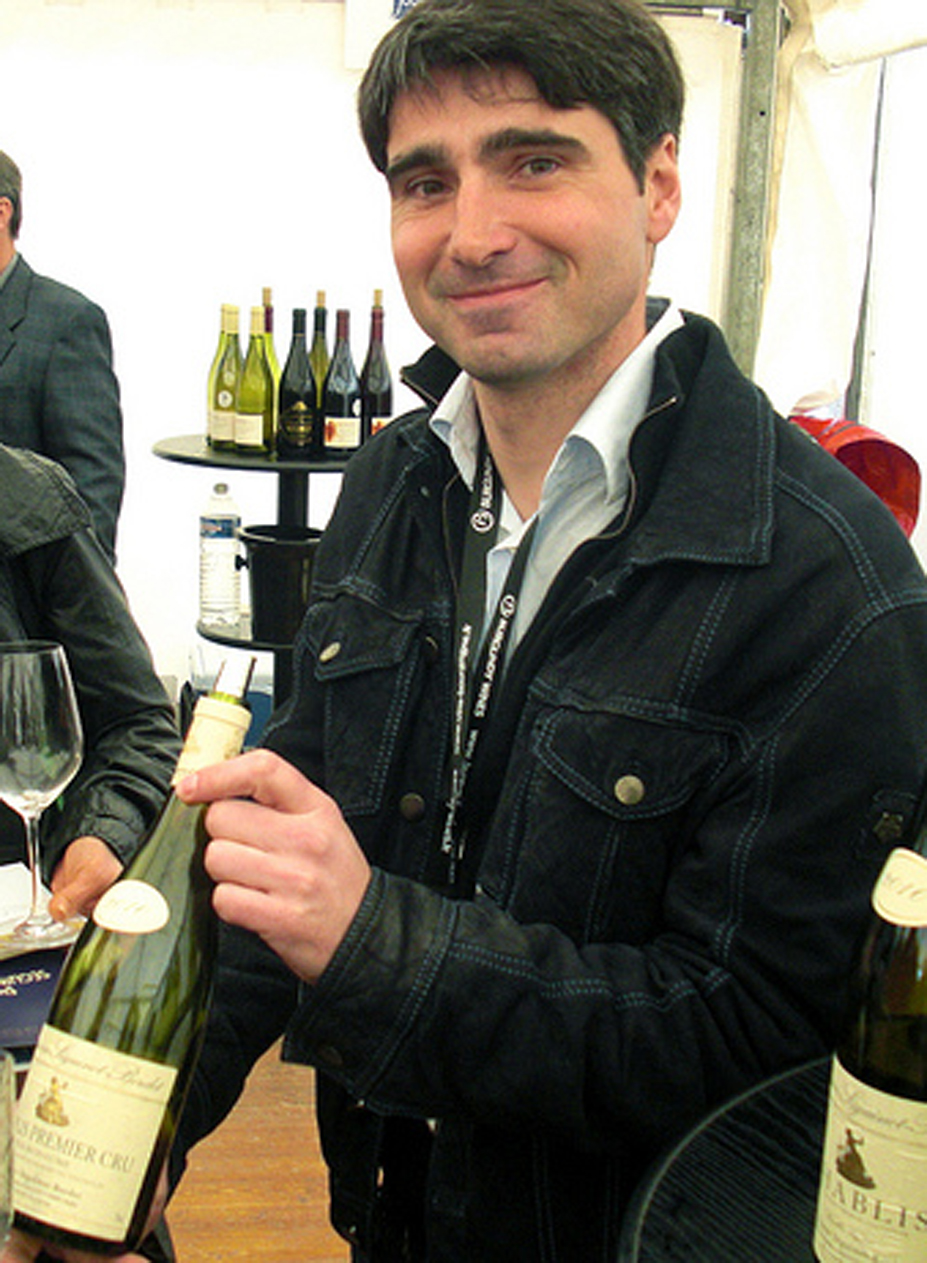
Bordet

Bordet

I opened a bottle of Domaine Seguinot-Bordet Chablis. The basic Chablis can be found $18-$20 at better wine shops. I had dinner with Jean-Francois Bordet in Chablis and recently had a phone chat that I turned into a newspaper column.

This is great white wine and just perfect with the chicken. It’s try with a bit of tart citrus, great acid and wonderful minerality. It’s exactly what comes to mind with Chablis.

Check out the recipe. It’s become one of my real favorites.

Not Evil but No Taste Either

Tags

Most would think anyone who consumers as much wine as a wine writer could not be lured in by marketing and the oddity of a $6.99 Burgundy. Right? Well, wrong!

The very thought of $6.99 Burgundy tells any wine drinker there can’t be much going on inside the bottle. Right? Right!

Pinot EvilBurgundy at $6.99 is going to be awful, right? Wrong!

Awful no, more non-existant.

Awful is subjective while non-existent is void of characteristics which could make one label a wine good or bad.

Pinot Evil Pinot Noir made its way to the shores of the US-of-A for Octavin’s boxed wines, many of which are pretty good bargains. This $6.99 bottle enjoyed a really big display in a high-end Indianapolis market that called to me like a siren’s song.

I threw it in the cart. Big Mistake!

Disgusting? No!

Drinkable? Yes! As long as you’re not looking for something that tastes like Pinot. It doesn’t taste like —- well, anything.

Taste? There isn’t any. Nothing there. Not unpleasant, but no flavor. Try bottled water, perhaps? You search and think long enough you might get a weeeee bit of cherry like those flavored waters.

Downside? Don’t buy wines with monkeys on the label!

Pinot Evil Pinot Noir, non-vintage (a clue), $6.99, Not Recommended.

Interesting Story About Boston Chef

Tags

,

Grape Sense jumped platforms a month ago today.  I used that opportunity to make several changes. I used to link up several other bloggers that were interesting to me and I thought would be interesting to others.

I elected not to do that here and instead just link up blog posts from other wine writers, foodies, and such when they really had something to say.

That happened this morning with a post from The Passionate Foodie. Richard Auffrey has a substantial following. He is an attorney, Certified Spanish Wine Educator, Certified Sake Professional, and Certified Wine Location Specialist (think Champagne and Port). So the point is he is serious at what he does.

He tells an interesting story about a Boston-area chef’s alleged misleading practices. The chef has built his reputation on fresh and local sourcing when quite the opposite might be true.

With the explosion of the farm-to-fork and local sourcing movement, this blog from The Passionate Foodie is worth a read.

Huber Stands Up to Any Pedigree

Tags

, ,

Midwestern wine is always the misbehaving little brother of the so-called “important” wine regions of the west coast.  Until a visit to several of Indiana’s best wineries late last summer, it was difficult to argue such slurs were incorrect.

Indiana wines are known as ‘all that sweet wine” – Concord, Niagra, and others with cute names. That’s changed dramatically in the last few years. The sweet wines pay the bills for Indiana wineries but also allows the winemakers to go in brave and exciting new directions.

HuberOne of Indiana’s very best red wines is Huber’s Heritage. The Huber Heritage 2008 HSR is a blend of just Cabernet Sauvignon and Cabernet Franc. “Just” is appropriate because depending on the vintage, winemaker Ted Huber uses different grapes – including Petit Verdot and Malbec.

Huber enjoys a very specific micro-climate overlooking the Ohio River Valley that lets him grow grapes that won’t survive in many other Hoosier locations.

I’d gladly put this wine against many California and Washington state blends as a great red wine. But back to that snobbish attitude expressed above, it would have to be a blind tasting. I think the Indiana wine would fare well!

The wine is aged at least a year in oak for each vintage. The 2008 Heritage has a bright blueberry flavor with big tannin and acid. Additionally, it comes in at a very reasonable 13.6 percent alcohol that makes it an awesome pairing with bold food. I   enjoyed the wine with nicely grilled, thick ribeye steaks.

Huber wines are available in a number of Midwestern states. The Huber reds are some of the Hoosier states very best.

Huber 2008 Heritage, $24.99, Highly Recommended.