Rosso di Montalcino a Great Wine Buy

Tags

, ,

Wine made from the Sangiovese grape may be the most diverse in the world.

The little black grape is closely associated with Italy and rightfully so. But it is also grown in Argentina and California. But in Italy, Sangiovese is king – the most widely planted grape in a country that ships more wine to the U.S. than even France.

Perhaps some readers have never heard of the grape? But if you’re a regular wine drinker it’s highly probably you have consumed wines made from Sangiovese.
That popular 60s and 70s bottle with the basket covering – that’s Sangiovese. If you’ve ever consumed a Chianti or Chianti Classico in a restaurant or bought a bottle – that’s Sangiovese wine.  Perhaps you’ve picked up a Rosso di Montalcino or the high-end Brunello. Both of those wines are Sangiovese.
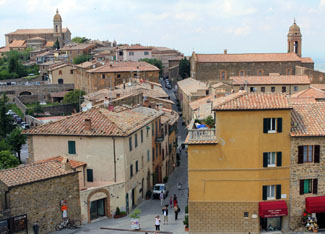
A view of the hilltop town of Montalcino

I recently returned from Italy on a business trip and had the opportunity to drink a good amount of Rosso di Montalcino, or ‘baby Brunello’ as some will call it.

But first, let’s do some geography for novices. Florence sets in the north central region of Italy. Tuscany starts north of Florence and runs down through Siena. Just south of Florence you find the Chianti region of Italy and at its heart is the Chianti Classico designation. Remember, old world wines from France and Spain are named by region and not the grape.
Italian law dictates the blend for Chianti and Chianti Classico has to be 75-100 percent Sangiovese, up to 10 percent Canaiolo and up to 20 percent  of any other approved red grape variety such as Merlot, Cabernet Sauvignon, or Syrah.
A little farther to the south you enter the Montalcino region, centered around the lovely hilltop town of that name crowned by an ancient castle. The grapes there are also largely Sangiovese. Montalcino is the region for Sangiovese’s best representation in a bottle, Brunello wines.
Brunello is 100 percent Sangiovese and must be aged in oak at least two years. The wine tends to be silky smooth and full-flavored with considerable acidity which makes it perfect for food.
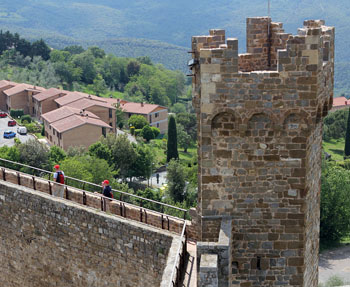
A photo I took from atop a castle tower in Montalcino

The problem with Brunello for many consumers is you can barely touch a bottle in the U.S. for $50.

The better alternative for most will be Rosso di Montalcino. The differences are, frankly, easy to understand. The winery owner or winemaker selects the very best grapes from their vineyard to make Brunello. The remainder of the crop goes into the Rosso which is often referred to as ‘table wine.’
Rosso di Montalcino is aged for just one year so you get a wine that is less tannic. The Rosso is richer and easier for wine novices to drink than it’s big brother Brunello.
I’m nearing the conclusion that Rosso di Montalcino might be the best value-for-the-money wine that you can pick up off a wine shelf. You can find Rosso wines anywhere from $15-$30. There are plenty of great selections at $15-$20.
You’ll get a great food wine but also a wine that can be sipped. The taste will have a smooth and often silky flavor. It will feature a recognizable cherry flavor from the great Chianti-styled Sangiovese wines. It will be less tannic and more rewarding for novice wine drinkers.
Sangiovese wines are great with red sauce Italian dishes, pizza and red meats.
Rosso di Montalcino is a wine you might never find in a supermarket and few liquor stores, but it’s worth the search. Most wine shops with a good selection of Italian wine will have a few bottles of Rosso di Montalcino.
Ciao!
Howard W. Hewitt, Crawfordsville, IN., writes every other week about wine for 18 Midwestern newspapers.

Send comment or questions to: hewitthoward@gmail.com

What Drinking Organic Wine Really Means

Tags

, ,

<!–[if !mso]>st1\:*{behavior:url(#ieooui) } <![endif]–>
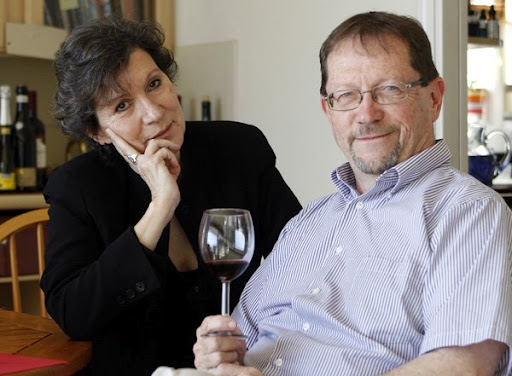
Late last year I met one of the real iconic figures in importing organic wines to the U.S. Veronique Raskin has been fighting the good fight in the name of organics since 1980. She helped arrange my inclusion on a January press trip to France’s Millesime Bio trade fair in Southern France. I got to meet Veronique during a March trip to California. She has written this piece about organics. So for the second time in a week, I’ll share this as a guest column.

Veronique Raskin, The Organic Wine Company – You have been eating organic food faithfully all these years but, you may not have yet added to your organic meals what many cultures do: a glass of wine. The time may have come.
When you go pick up a bottle of organic wine to accompany your organic meal, part of your problem may be in not knowing exactly what an organic wine is. With all these terms getting thrown around like eco friendly, “NSA”, sustainable, green, natural, truly organic, etc., who could blame you?
Having founded The Organic Wine Company in 1980, I am certainly one of the elders of the organic wine movement. I have been actively involved in the developments of organic wine standards and even I am frustrated and confused, so I can imagine that you are just about ready to throw in the towel. So, let me offer some pointers for you based on thirty years of observation and experience in this industry.
Veronique and I during a delightful lunch meeting in her home.
What is really critical for all of us in choosing an organic wine is to make sure that they’re made with  certified organically grown grapes. That’s the key. Inspect the label and be sure that an agency has certified the vineyard’s organic practices. Do not be content with vague terms like sustainable, natural, and green; they can be misleading). When it comes to your health, the workers, and our planet’s longevity, 100% certified organic grapes should be your number one criterion. The rest, in my opinion, is well-meant misinformation, poor science or straight up propaganda for commercial purposes.
If you wish to buy wines that promote the health of our planet and every creature on it (including yours), then the clear choice is a wine made from third-party certified 100% organically grown grapes. The rule of thumb is that if it doesn’t say it on the label, don’t buy it. Organic wine, like organic carrot or orange juice, is made from grapes grown without the use of pesticides, herbicides and chemical fertilizers.
In the USA, the two types of wines typically bundled in this category are “Wines Made With Organic Grapes” and “No Sulfite Added Organic Wines.” Wines made with 100% organic grapes are made with just that and an additional preservative (elemental sulfur dioxide), so the wine has structure enough to last the journey to your table. No Sulfite Added wines (or NSA wines) are produced without this preservative and are made by only a handful of winemakers. In Europe and Canada, organic wines are called “vins biologiques”; they are made with certified organic grapes and may contain up to 100ppm added SO2.
We want to bring to your family table highly drinkable, affordable wines, with structure, character and personality. Wines that are reflective of their terroir(a deep and mostly untranslatable word describing the soil and land in which the grapes are grown.) Wines that are pleasurable to your palate and  promote the health of your body, the workers and our planet. I am extremely proud to say that our portfolio represents the work of many passionate, deserving wine makers from around the world and include vegan and biodynamic wines.

Send comment or questions to: hewitthoward@gmail.com

Summer Drinking – Two Whites & a Rose’

Tags

, , , , , ,

Summer time is lighter wine time for most of us and I’ve definitely been going down that path in recent weeks.

The more wine I’ve consumed in recent years, the more I’ve come to appreciate really well-made whites. I might argue the learning curve is accelerated because of the red wine dominance on my wine rack. Many will disagree, but for me it’s a little easier to identify the characteristics of red wine. White and Rose’ is more nuanced.

Enough of the geeky stuff. Here are three easy-to-find wines I purchased in Central Indiana – all under $20.

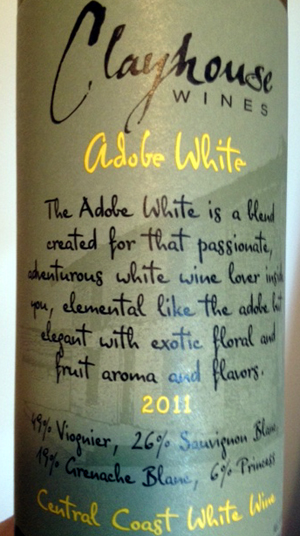
Clayhouse Adobe White – The Adobe line of Clayhouse wines from California’s Paso Robles are really great value wines. I just received samples of the 2011 vintage with a couple bottles I’ve not previously sampled. These wines clearly taste above the price point, are nicely balanced, and are available at great prices. The suggested retail on the entire line is $14 or $15.

The tasty blend is 49 percent Viognier, 26 percent Sauvignon Blanc, 19 percent Grenache Blanc, and 6 percent Princess. Princess is often called a table grape and is said to resemble Muscat in flavor. It was a new one for me. I have found Viognier I’ve loved and hated – it’s very floral and fruity normally. I remember last year’s Adobe White and was put off just a bit by the Viognier. The 2011 blend is a perfect mix.

The wine has floral, identifiable orange, peach, and honey flavors. Portions of this wine are barrel fermented, but not aged, resulting in a real creamy feel on the palate. The alcohol comes in at 12.8 percent.

Simply, this is a great summer sipper or white for lighter meals.

Clayhouse Adobe White, SRP $14, Trade Sample, Highly Recommended

Arona 2010 Marlborough Sauvignon Blanc – Sauv Blanc from New Zealand often takes a hit for the big acid, over-the-top fruit, and that ‘grassy thing” many wine drinkers don’t like.

Check out Arona Sauv Blanc if you are one of those folks. I tried this wine at a tasting conducted by Derek Gray of Graybull Wines. I loved it.

This wine is much lighter on the palate than many NZ Sauv Blancs. It still had the crisp acidity which would make it perfect for lighter seafood dishes, particularly white fish. Think passion fruit, pineapple, and aroma-pleasing citrus.

If you like NZ and California Sauvignon Blanc but want a bit lighter mouth feel, grab a bottle of Arona.

Arona 2010 Sauvignon Blanc, $13.99, I bought this wine at Mass. Ave. Wine Shop in Indy. Highly Recommended.


Gerard Bertrand 2010 Gris Blanc Rose’ – I’ve been on a real Rose’ kick and this one is different as they come. First, Gerard Bertand is one of the most respected winemakers in Southern France. His wines offer great value for the price point.

This wine is a blend of Grenache Blanc and Grenache Gris. Most notably, is the very – very pale – salmon color often associated with Provence’s fine Rose’ wines.

I got peach and maybe hint of a red raspberry. The wine is lighter on the palate than many but it does have pretty serious acidity. It’s also seriously dry Rose’. It would be another choice for white fish, shell fish, or a summer salad.

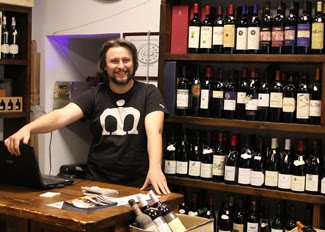
I picked up this unique Rose’ at Vine and Table in Carmel.

Gerard Bertrand 2010 Gris Blanc Rose, $13.99, Recommended.

Send comment or questions to: hewitthoward@gmail.com

A Look at Vintage Indiana through Younger Eyes!

Tags

, ,

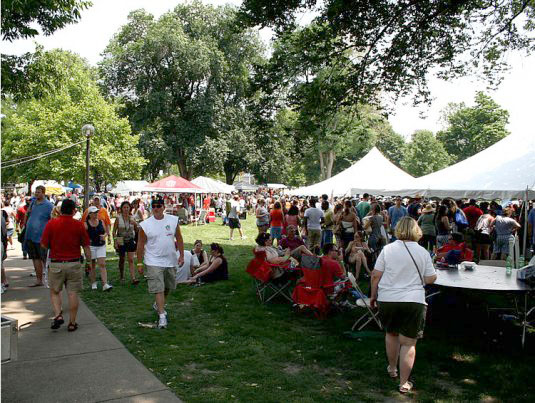
I don’t write much here about my real job too often but one of the joys is getting to know so many interesting young people who are students at Wabash College. Tyler Swaim, a young man who worked for me as a blogger his freshman year, was at Vintage Indiana a week ago. My schedule prevents me from attending each year. He recalled my blog and asked if I’d like him to share some impressions! I thought it was a great idea. So here is Guest Blogger Tyler Swaim, Class of 2013. He’s from Indy’s southside.

Tyler – I got got my hands on a few of the featured wine lists and we (he and girlfriend) visited about half of the booths, so I can recall some of the more interesting selections, but for us the main enjoyment was found in meeting new people. 

Swaim

Upon arriving at the festival, we took a few minutes to get oriented with the aid of a map and soon jumped into the shortest line we could find. All things considered, the first line we waited in seemed like the longest line of the day, although perhaps the progression of our wine tasting adventure granted us more patience. The first lady we met was a frequenter of wine and beer festivals and, taking note of our “festival virginity”, soon explained all the ins and outs of sneaking in line, including a cunning tactic for beer festivals which involves having the girlfriend politely ask inebriated men to jump ahead in line and then inviting the boyfriend to join her when she gets to the front. Although we did not take advantage of her well-learned advice, the conversation itself set the tone for several others we had with strangers throughout the day, including a discussion with an older couple regarding their trip to New Orleans. 

As we moved from booth to booth, we discovered we both favor semi-sweet wines to sweet wines and that, with a few exceptions, do not like dry wines. Having only recently turned 21, we were both new to wines in general and looked at this event as an opportunity to learn more about our tastes than about the specific wines. We were both surprised at the variety of wines Indiana has to offer. From mango and pomegranate to blackberry and cider, the bouquet of flavor was overwhelming. I made a point of trying the Chambourcin at each booth as a means of gauging differences between wineries and found that, while I liked the White Chambourcin at Indian Creek Winery, there were very few others that satisfied my taste as effectively. Overall, there were three wineries that really stuck out: McClure’s Orchard, Carousel Winery, and River City Winery. 
McClure’s Orchard specializes in hard ciders, but the variety within that class alone was vast. In particular, they had a jalapeno cider which was unlike anything I had ever tried, and to be honest I didn’t know what to make of it. The sweetness was very characteristic of a cider, yet the smell of jalapeno was thick and robust; it was as if I were eating a piece of apple pie with a piece of melted pepperjack cheese on top. To be sure, it was a far stretch from the Woodchuck I have come to know and love and probably something I will never try again, but the lesson learned was that wine, unlike most alcohols, has the potential to be anything. 

Carousel Winery on the other hand, was a far more traditional taste, though again very eclectic in flavor. Included in their vast selection were mango and pomegranate wines that did not disappoint, but for me the crown jewel was called Lady Luck. For fans of the Harry Potter series, this wine is what I imagine the felix felicis potion to look and taste like. To assign it any traditional flavor description would not do it justice, so I describe it as thus: the golden liquid caressed my palate, gently holding it in an embrace where time stopped. I never thought I’d speak of a taste as such, but the wine definitely did justice to the name Lady Luck.

Although River City Winery offered one of my favorite selections of wine, including a dry red blend very aptly named The Robert E. Lee and sweet red blend called Colonel’s Legacy, the main point of interest was in the winery itself. From the brief conversation we had with the volunteer school teacher serving wine samples, I learned that the winery is owned and operated by a couple in New Albany. The wife is a teacher as well and the husband is a police officer. It was at this point in the day that I began to really understand how unique Indiana wineries are. Unlike my previously held stereotype of wine aficiondos as being exclusively rich snobs (no offense, Howard), I began to see a side of wine that included a class of small business owners and community fellowships. This is a group that devotes extensive time, energy, and resources to providing a drink which in turn brings people together. Above all, this is what I learned from the Vintage Indiana Wine Festival. 
Upon entering the festival, everyone received a souvenir wine glass which many were wearing on a lanyard around their necks. Although I thought this was a neat idea, the woman we met in the first line seemed to view them as a stigma for identifying alcoholics, suggesting that only that group of people would consider carrying the glass in their hands as too much of a burden.
While waiting in line for one of the wineries, we were approached by a reporter for Hoosier TV on Comcast and interviewed. We were asked a few questions relating our shared interest in wine to our interest in each other (e.g. What one word would you use to describe both your favorite wine and your significant other?) and then we played a game called “Wine or Not a Wine” where we were given several names and asked if it was the name of a wine or not. Being new to wine, we did not fare so well in the game.

Send comment or questions to: hewitthoward@gmail.com

Nothing Like the Food and Wine in Italy

Tags

,

I’m just a few days removed from a week in Italy and still basking the the culinary afterglow.

Anyone who has been there knows the feeling. Italy is such a beautiful country with so much art, history, and culture it sends the senses into overload.

I was in Siena and Assisi for work and not wine writing. Frankly, I had hoped to have a little time to do some wine work but it just didn’t happen. I work at a small private liberal arts college and was there on an alumni travel trip.

Federico Pieri, Cantina del Brunello

We had some fabulous meals and great wine throughout the seven days I was on the trip. Much of that experience is detailed in this related photo album.

But a few conclusions, obvious and not so much. Italians make the best pasta in the world; pizza – not so much.

The Rosso wines of the Montalcino region far surpass the Chianti Rosso wines. As a matter of fact, I’m nearing the conclusion that a good bottle of Rosso Montalcino might be one of the great wine buys in the world.

I was fortunate to taste a lot of Brunello. But with a spread of Italian meats, cheese, and bread, nothing beats wines from the Montalcino region. I’m not sure if it matters whether your drinking a $40-$60 bottle of Brunello or $20-$20 bottle of Rosso, the atmosphere, scenery, and wonderful Italian people combine for moments to remember.

I did have two wonderful finds. I was on the trip for just one day in Assisi in the Umbria region. I returned early while the rest of the trip had another week. We had a marvelous dinner in Assisi which included ravioli with truffle, penne pasta with veal and more.

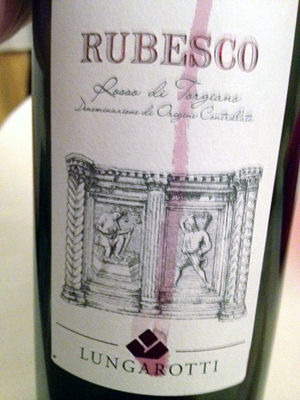
But it was the two wines that knocked me out. We had a Grechetto and Rubesco. I have had  Grechetto on a previous occasion and just loved it. It is often blended with other white grapes though our bottle didn’t offer any additional information.

So maybe we got a little sloppy pouring!

The Rubesco was a new experience and I found it  delightful for a value-priced wine. It is Sangiovese (70%) and Canaiolo (30%) which has been designated a proprietary blend for Lungarotti. If you find it and like Italian food and wine, buy it.

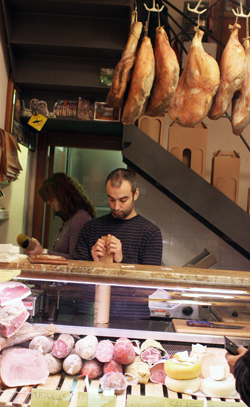
I found two wonderful wine shops while in Siena. Federico Pieri who owns Cantina del Brunello along one of the winding streets not far off Siena’s famed Piazza del Campo. His sign out front said “80 Brunellos” and there must have been at least that many.

The other shop La Cantina Dei Tolomei Prodotti Tipici (and I need to double check the name Thursday in the office) was my absolute favorite. I found it two years ago and returned. A young proprietor named Paulo and his girlfriend run the great little shop. It’s on the one of the main streets which eventually runs right down behind the Piazza del Campo with exits directly onto the amazing space.

Now it’s getting back to the wine writing routine.

I may have a really exciting trip coming up later this month. But I need to be assured of final details before going into it here.

Send comment or questions to: hewitthoward@gmail.com

Not Your Granny’s Pink Wine Any More

Tags

, , ,

Those silly looking pink wines in your favorite wine shop or liquor store are gaining respect through robust sales. Rosé is perfect for the summer’s hot weather and sales are even hotter.

The numbers are staggering. Since 2009, overall consumption of Rosé wines has increased 160 percent.

Arguably, the best Rose’ in the world comes from Southern France. Exports of rose’ wine from the Provence region to the U.S. grew 62 percent in volume last year compared to 2010. Value of exports for the 2010-2011 period increased nearly 50 percent to a record high of nearly $10 million Euro.
The booming growth can be dated back to 2003 when Provence exported 146,000 liters of Rosé to the U.S. Last year that number easily passed 1.7 million liters.
Bethann Kendall, Vine and Table

But the U.S. isn’t the only major importer of the salmon-pink Rosé wines. Sales have also increased significantly in Brazil, Russia and other countries.

“What we’re seeing in the U.S. market reflects a global trend,” said Julie Peterson of the Vins de Provence U.S. office, which provided the statistics above. “Those who appreciate great wine and the Mediterranean lifestyle are turning to Provence rosé for its versatility, food friendliness, and gold standard quality.”

Midwestern wine retailers have also noticed the explosion in growth.

“Rosé sales increase more and more very year,” said Bethann Kendall, wine buyer at Vine and Table, Carmel, IN. “Last year was probably almost three times more than what I sold my first year here.  And right now, in May, I’ve already sold more than what I sold all of last year. It’s looking great. It’s going to be a huge increase probably 15-20 percent.”

Provence Rosé is made from a blend of basically six grapes. Grenache, Cinsault, Syrah, Mourvedre, Tibouren, and Carignan can be found in Provence’s signature wine. But around the world you can find Rose made from just about any grape varietal imaginable. Oregon, home of some of the U.S.’s best Pinot Noir, makes great Rosé of Pinot Noir wines.
For years “pink wine” was soiled in reputation by white zinfandel but no more. “I think there is still a huge misconception on Rose but we taste it every Saturday,” Kendall said. “I’m always opening a bottle to try to sway people in the right direction. It’s not all sweet. I tell them if they don’t like Provence Rose they’re just not going to like it from any region at all.”
Howard’s Picks:
2011 Bieler Pere et Fils Rosé – Simply Unbelievable Provence for a miserly $11-$14. This dry delicious Rose is a blend of 50 percent Syrah, 30 percent Grenache, and 20 percent Cabernet. Bigger than some Rose’ but the cranberry color and wonderful taste of red raspberry makes it a real must buy. “I was excited to finally get it into Indiana,” Kendall said. “It sells out every vintage and it’s just true to the area with very beautiful strawberries and raspberries and a nice chalky texture which comes from the soils of Provence.
2011 Mas de Gourgonnier – Cherry and classic Rosé strawberry with hints of spice make this Rose a real treat for around $15. While a little lighter in style than the Bieler, it’s equally dry. This wine is 60 percent Grenache (my favorite) with a 40 percent blend of Syrah, Mourvedre, Cinsault, and Cabernet. This is a perfect hot weather wine and gorgeous pairing for lighter foods.
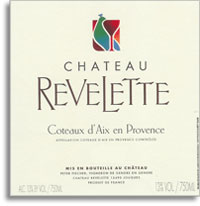
More choices: Chateau Revelette Provence Rose’ (Wine critics: 89-90 Points and the best I’ve tasted this year); Acrobat Oregon Pinot Noir Rosé, $15; and closer to home Butler Winery’s Rosé of Chambourcin, $14-$15.

POSTSCRIPT: Rose has been in the news a lot lately. Here are some links to additional stories about Rose.

From SFGate, San Francisco, another from the San Francisco Chronicle, from the Cleveland Plain-Dealer, the Los Angeles Times, the Chicago Tribune,  

Send comment or questions to: hewitthoward@gmail.com

Off to Italy for Work, Maybe Some Wine

Tags

, ,

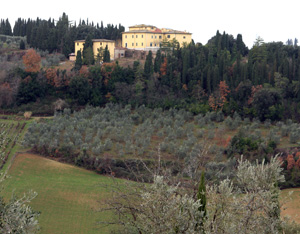
Tuscan winery I visited two years ago on Colleg trip

Working in communications and marketing does have a few perks. My work at Wabash College in Central Indiana affords me the opportunity to do some travel with college programs.

I’m leaving this morning with an alumni travel group headed to Italy. (I know, tough work, etc, etc. – trust me I’ve heard it all.)

It actually is work but I’d be lying to say it’s not a pretty cool assignment. A communications person accompanies some of these trips to blog, take photos and document the trips to help promote future alumni travel and our classroom-based immersion learning programs.

Great little wine and meat shop in Sienna

I hope to post here, probably brief updates, throughout the next week. It’s a two-week trip but I’ll be along for just the first week. We’ll land in Pisa Friday morning, then spend five days in the charming city of Pisa, just south of Florence. The group packs up and heads south again to Assisi for a four day stay but I’ll be off to Rome and back home during the second day in Assisi. The travel group continues on to Florence before returning home.

Besides enjoying the great food and wine of Italy, I’m really looking forward to Tuesday when we visit Montalcino, of course the center of all things Brunello.

So throughout the week I’m going to try to do quick wine posts and some photos. I will be writing daily for a work blog and that takes first priority. If you want to see what alumni travel looks like you can follow along on the blog I’ll be maintaining during the trip – Cartolina dall’ Italia – or Postcard from Italy.

Ciao!

Send comment or questions to: hewitthoward@gmail.com

Turmoil at a Beautiful Hilltop Mendocino Winery

Tags

, ,

There are so many hidden gems in places like Paso Robles and Mendocino county that after my trips there in 2010 and 2011 I was not sure I did them all justice.

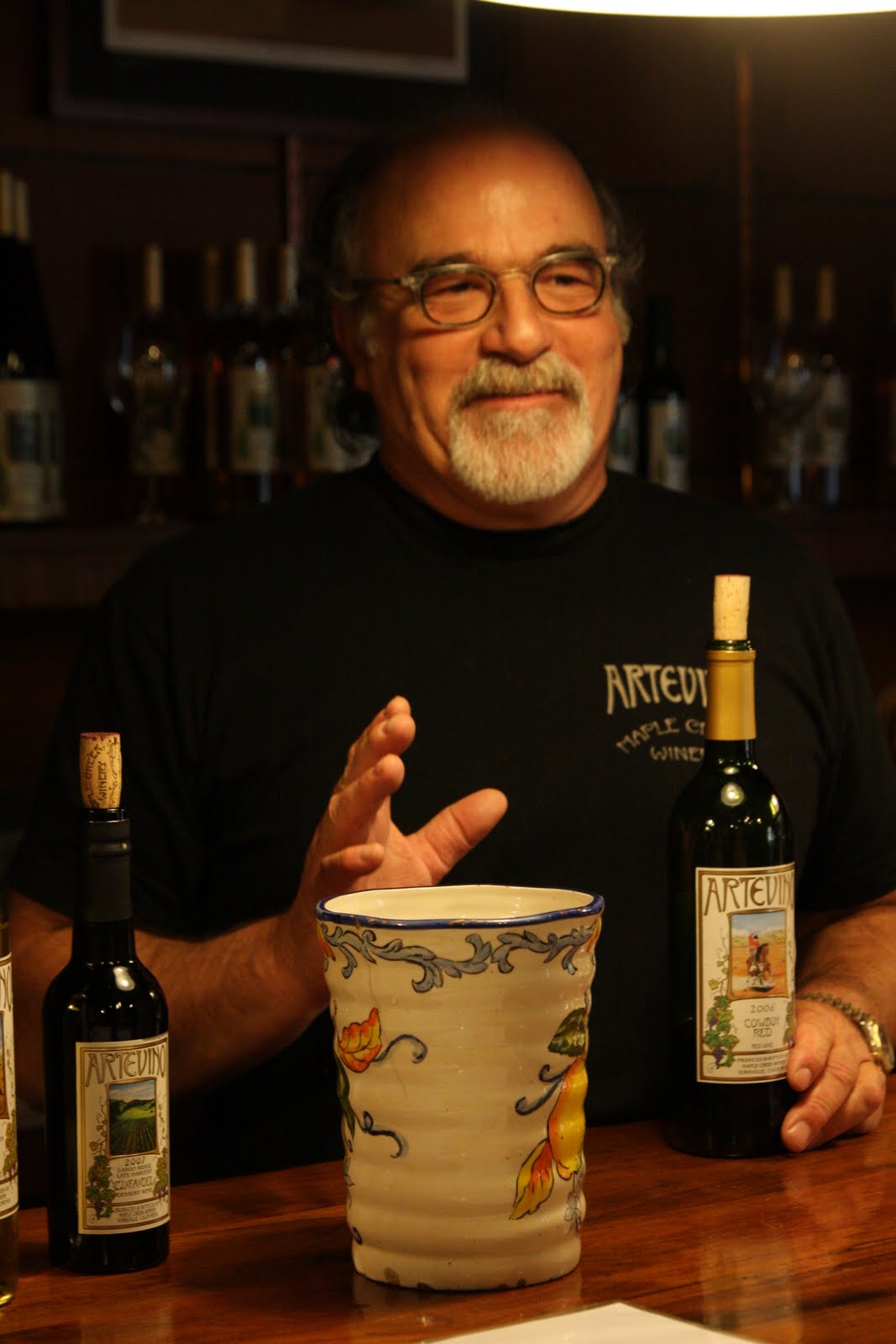
Maple Creek Winery was one of the most interesting stops of the visit but it just didn’t fit into the stories I wrote after the fact. I did write about the beautiful area, fabulous lunch, and great story of Tom Rodrigues.

Here is the blog entry I wrote the day of our visit.

Tom had some interesting varietals and wines and fascinating personal story. But you never know what’s going on behind the scenes. A fight over his winery and property is underway.

See the full story here.

Send comment or questions to: hewitthoward@gmail.com

Early Winner: Wonderful, Light Provence Dry Rose

Tags

,

For some time I’ve been trying to group my wine reviews but once in awhile a wine comes along that demands immediate attention and sharing.

I’ve started into my annual summer obsession with dry rose’ and, in particular, Provence Dry Rose.

Tonight I opened a beauty! Chateau 2010 Revelette Coteaux d’Aix en Provence has that incredible light salmon color that is the calling card for Southern France.

The genius in wine making from German winemaker Peter Fischer is using largely Cabernet and Syrah to create one of the lighter and most delicious Rose’ wines you’ll find under $20.

Despite the lighter feel on the palate the Revelette is a complex wine that is herbal, floral, and has a soft lingering finish.

I have some Rose’ stashed away with higher price points but this beauty is the early summer Rose’ champ!

Stephen Tanzer gave this wine 91 points. Wine Spectator rated it at 88. I just recommend but I’d be closer to Tanzer’s rating.

Chateau 2010 Revelette Coteaux d’Aix en Provence, 2010 vintage found at $13, 2011 vintage $17, Very Highly Recommended.

Send comment or questions to: hewitthoward@gmail.com

Story Behind Michael David’s 7 Deadly Zins a Tasty Tale

Tags

, , ,

The story behind one of the best tasting and most successful value wines has good winemaking, gratitude to terrible sweet wine, and a long family history of fruit production to credit for its success.

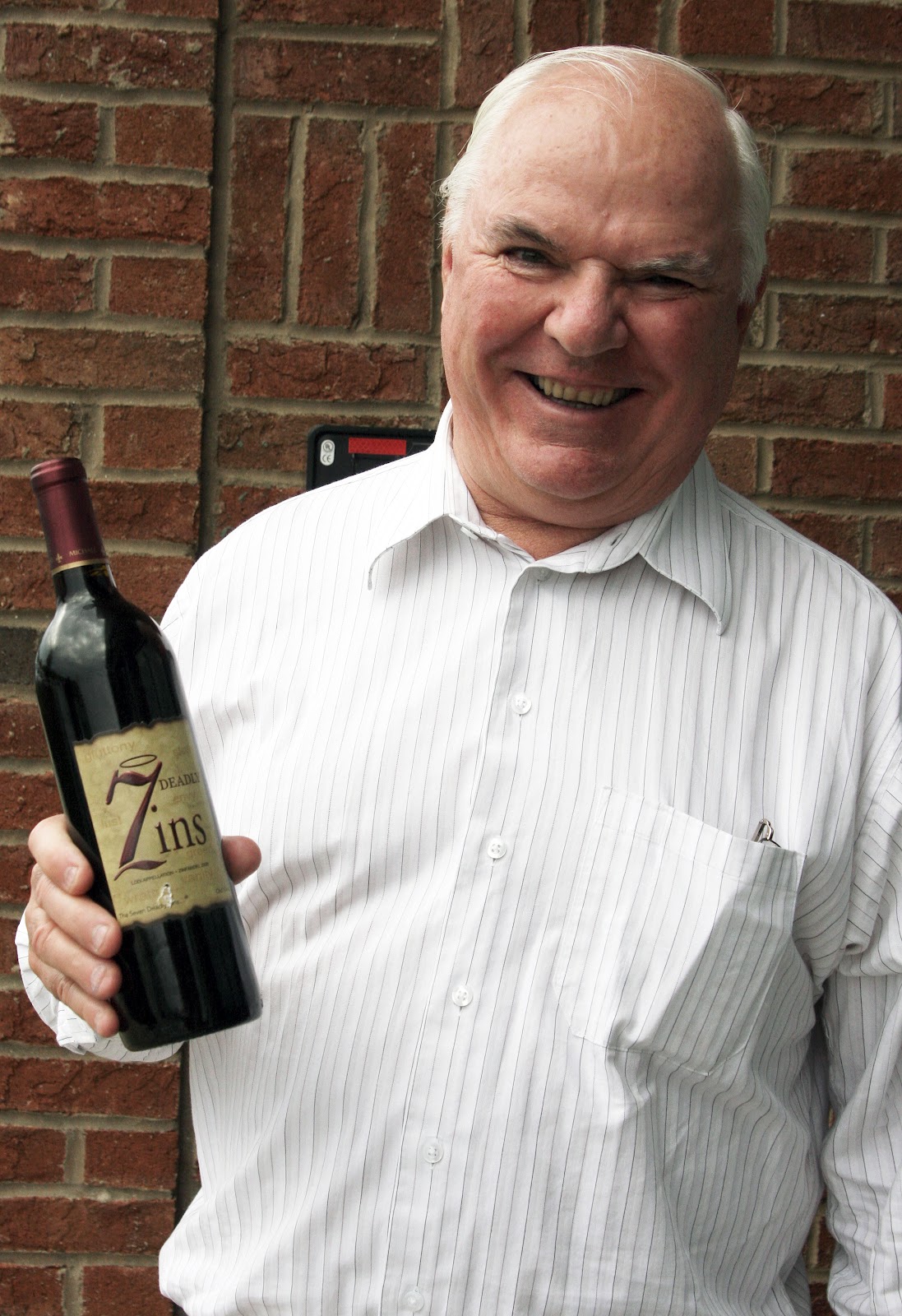
7 Deadly Zins is one of the easiest to find value wines in the $10-$15 price range. It’s 100 percent Zinfandel and consistently a favorite of critics and fans. It’s made by Michael David Winery, Lodi, Ca., an area best known for its full-flavored Zinfandel.

“I was in the winery making wine and I wanted to taste what other vineyards tasted like for Zin,” Michael Phillips recently told me. “So I bought some grapes from my seven growers and put them in barrels separately. You could taste the difference between those seven old vine vineyards. The grapes were grown by my uncle, neighbor across the street, cousin down the road, and my best friend from high school. We had a couple old vineyards next to the winery. They were all different to a certain extent.”
Michael Phillips during a recent Indianapolis visit.
Phillips recognized a distinct taste of Lodi in all seven wines but knew his winery couldn’t bottle seven different Zinfandels and expect success. 
“So I said lets combine all seven and call it 7 Zins,” Phillips said. “So I went to my brother (David), who was doing more of the marketing at the time and gave him my idea. He said let’s tie it to the seven deadly sins we learned in grammar school. We made 800 cases that first year and sold out in two months.”  
To say the wine took off is a bit of an understatement. The 2002 release of 7 Deadly Zins was gone in no time and the brothers knew they had found something special. The Michael David Winery today produces nearly 300,000 cases of wine annually with more than 200,000 cases under the 7 Deadly Zin label.
Back when it all started in the 1980s the winery was simply known as Phillips but there were other Phillips wineries in California so the brothers put their first names on the bottles to become Michael David Winery.
The family story actually goes back much further. The Lodi family farm has been producing fruit of all sorts since the 1860s.
The brothers have fun with the names and labels marketing wines under the names of Earthquake, Incognito, Rapture, and even Freakshow. But it’s that $9-$12 Deadly Zin that makes the fun possible.
Zinfandel has been called “California’s grape.” As opposed to Cabernet, the Zin vines thrive past 100 years old and produce deeply flavored grapes.
“That’s what put Zinfandel on the map,” Phillips said. “It’s that taste of spice, the fruit and it’s easier to drink than tannic Cabernet.”
Oddly, California’s old vine Zins were probably saved by what many consider the bane of the wine Zin industry – white zinfandel. “Whie Zin helped those vines survive,” Phillips said. “When Sutter Home wanted all that white Zin in the 70s it kept those old vines from being ripped out and planted to whatever Gallo wanted at the time.”
Zinfandel is one of those wines that is sometimes targeted for its over-the-top fruit and alcohol. Phillips fights right back.
“We have a style it took me time to develop,” he said. “The longer we let the grapes hang on the vine the better  quality gets. The alcohol is going to be a little higher, but if you handle it right it’s not a negative. You get better color, more body and basically that’s our Michael David style.
“Fruit is good. People want fruit. Now, it can’t just be fruit and it can’t just be high alcohol. It can’t just be big tannic wine either. That’s why Napa buys so much of our Lodi fruit because it has a fruit component they don’t have. That’s the kind of stuff they don’t want you to know or tell you about but fruit is the key. People like fruit, and so many people are switching to that style – and Lodi has it.”
Howard Pick’s:
7 Deadly Zins – This easy to find value bottle can be found at $9-$14 a bottle. It is consistent and easy to appreciate. It has a bold in-your-face dark fruit flavor on the palate that pairs well with food.
6th Sense Syrah – This French-style 100 percent Syrah is beautiful wine that’s stunning for the $15 price point. It has a huge rich nose, dark purple color with hints of licorice, juicy dark fruit and a very pleasant and lingering finish.

Send comment or questions to: hewitthoward@gmail.com