Michigan Seeks a Red Identity

Tags

, , ,

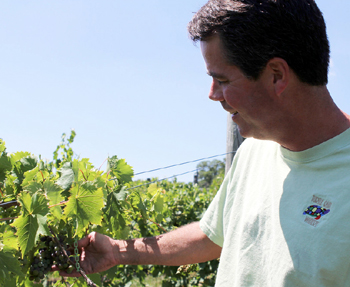
TRAVERSE CITY, Mi. – The idea of growing wine grapes in northern Michigan was unthinkable 30 years ago. But a few brave pioneers and many producers since have shown wine drinkers, skeptics, and wine competitions around the world the area can produce classy white wines.

Riesling is by far the most planted grape and the wine has turned heads across the country. Leelanau Peninsula and Old Mission Peninsula have more than 30 wineries. More vineyard is being planted as production soars. Wine production has increased 65 percent in the past eight years according to the Michigan Liquor Control Commission.

Grape Sense LogoA mid-April visit, following a 2010 introduction to Michigan wine, yielding a surprising surge in red wine quality. The area is still hanging its hat on the Reisling, Pinot Blanc and plenty of fruit wine. But the three primary red wine grapes grown in the cool climate are starting to show enough vine age to produce really good wines. Cabernet Franc has been the best wine and best seller. But Pinot Noir has made great strides.

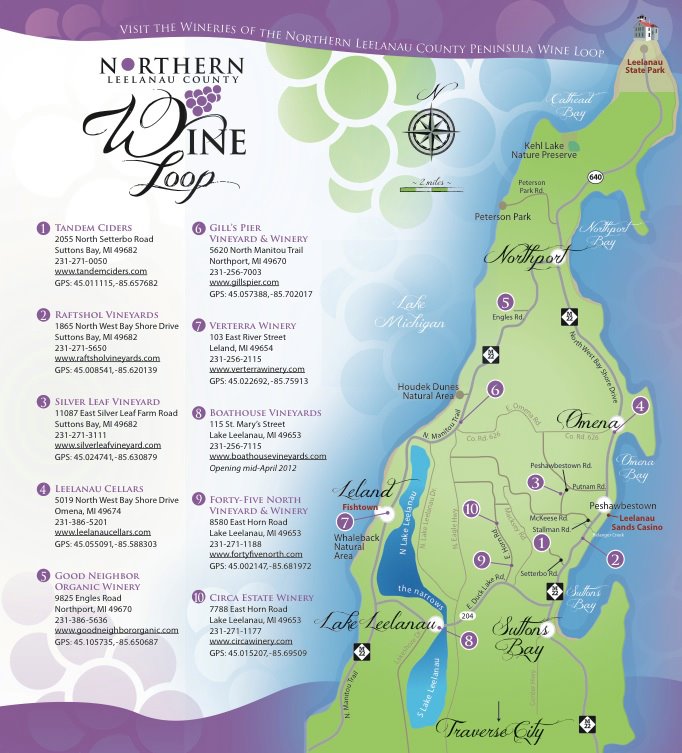
A tasting panel of two journalists, a sommelier and retailer sang the praises of four Leelanau 100 percent Merlots which were blind tasted for the Northern Michigan Wine Loop.

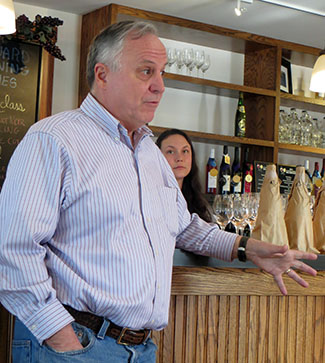
“We need red grapes here that mature a little bit earlier than varietals like Cabernet Sauvignon,” said Paul Hamelin, owner of Verterra Winery in picturesque Leland along Lake Michigan. “What fits here beautifully is Merlot. We can consistently get Merlot, as a Bordeaux wine grape, ripe here.

“We’re starting to see the expressions of it now. There are probably a half dozen wineries bottling 100 percent Merlot. You see the depth of the fruit and the character coming out in our Merlot.”

PaulHamelinLOThe beauty of numerous Merlots I tasted was the bright and fresh fruit without the muddled mid palate of California plonk. The upper-state Michigan Merlot had a nice silky mouthfeel and pleasant finish.

It’s hard to find agreement among winemakers about what the area’s red identity can become. But there is no question the Cab Franc, Pinot Noir, and the emergence of Merlot provides the area with three red wines of surprising quality.

The area has tremendous Pinot Noir possibilities. The 45th parallel runs through the area as it does through Oregon’s Willamette Valley. But Lake Michigan and Grand Traverse Bay demand grapes which can thrive in a cool climate resulting in lighter bodied wines.

As the vines mature and more expertise finds its way to the two Peninsulas, the wines will continue to improve and stand up to other areas’ bottles. But northern Michigan will always struggle with its growing season. In 2010 I was tasting 2008 and 2009 vintages which were terrible growing seasons. The wines were thin, not much fruit, and lacking character.

During the visit just a few weeks ago, the reds were rich and interesting.

Leelanau and Old Mission is an area to consider for a weekend trip. Traverse City offers an exciting food scene and the wines will really surprise you. Not much Northern Michigan makes it to Indiana. But a weekend trip to Michigan’s northern wine country will surprise and delight you.
Drinking Age, Contest, & Youth

Tags

, ,

I don’t grab a handful of wine-related items and post them here often enough. So here are a couple interesting ones today.

Win a Luxury Vacation in Sonoma

I’ve written numerous times about the various online wine sales sites. Underground Cellar is a new one. (Twitter: @ucellar) Instead of discounting wine prices, you buy whatever number of bottles at the lowest price with a good chance of getting more expensive wines as an upgrade.

In other words, you buy six bottles of wine for $30 each – four of those six, or more .. or less .. could be more expensive bottles from the same offer.

This site is new and they’re running a great giveaway to drive membership. I like the concept. I have bought from them and will again. If you’re interested in the contest, you can read all about it and register right here.

Eliminate the drinking age?

Here’s a topic I’d never given much thought to previously but the author raises some good points. From Time Magazine, a column about eliminating the legal drinking age of 21. It’s an interesting read whether you’re a supporter or not.

Compelling Struggle of Young Oregon Winemakers

I’ve visited the Willamette Valley three times and headed back there in June with my first Grape Sense wine tour. I’m always on the look out for new and interesting wineries and approaches to Oregon Pinot Noir, Chardonnay, and Pinot Gris.

This story in The Oregonian paints a fascinating picture of young winemakers struggling to get their wineries going in largely difficult, challenging, and certainly competitive times.

Wine Festivals Help Expand Palate

Tags

, ,

The only way to appreciate wine is to taste wine, different wines, and push yourself to try new things.

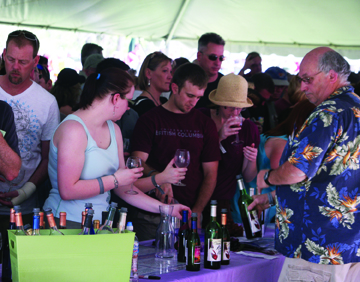
There’s no better way to taste more wines than the exploding popularity of wine festivals. There are many events in Indiana and surrounding states, many in Indianapolis, but two large ones which dominate the calendar. Story, Indiana hosts the Indiana Wine Fair April 26. Then Indianapolis hosts Vintage Indiana June 7.

Grape Sense LogoThe Indiana Wine Fair has grown to be wildly successful approaching its 12th year in quirky little Story, Indiana. The town is best known for its old inn – “One inconvenient location since 1851” and a world-class restaurant.

The wine fair runs 12:30-7 p.m. April 26th. Admission is $30 with a Story Inn wine glass keepsake for the first 4,000 at the gate. Designated Drivers are admitted for $10. The fair offers shuttle buses from picturesque Nashville and Bloomington.

The wine fair offers plenty of food options and entertainment. Story is approximately half way between Columbus and Bloomington about 10 miles south of Hwy. 46.

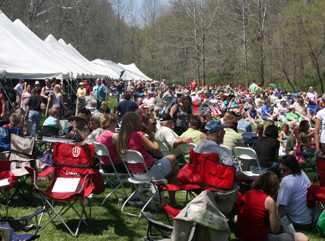
StoryCrowdVintage Indiana is the oldest of these mega-wine gatherings in its 14th year. Vintage is sponsored by the Indiana Wine and Grape Council. The noon-6 p.m. event is held in Indianapolis’ Military Park downtown. Admission is $25 in advance and $35 at the gate. The first 10,000 people receive a souvenir glass. A VIP program costs $50 in advance and gets you an hour of less-hectic tasting at 11 a.m.

Vintage includes entertainment, craft and food vendors along with a Wine & Food pavilion featuring presentations from chefs and foodies.

Both wine festivals present a wide range of wines from many of Indiana’s 80-some wineries. You can easily taste more than 100 wines at either event. Though a little advice for big wine events is learn to spit. Some people are uncomfortable sloshing wine around in their mouth then expelling it into a dump container at each winery’s booth. The trick is to learn to move the wine around from the front of your mouth (or palate) to the back. If you’re a little uncomfortable remember this is a world-wide practice commonly seen in Europe and even Napa Valley tasting rooms. You can practice it at home.

There are other wine festivals. Vevay, along the Ohio river, hosts the Swiss Wine Festival August 21.24. Vevay claims to be the location of Indiana’s first winery. At this time they have 12 wineries committed to pouring for the event.

Then there are other festivals and art shows which may feature a winery or two.

StoryCrowdBut the two big ones come up early in the year. Each features a lot of wineries. It’s not unusual to find 20-35 wineries at either event. Parking can be an issue at Story, a large abandoned field is used across from the Story Inn. Parking in Indianapolis is where it can be found but plentiful on the city’s near west side.

Both festivals are great fun. But a word of warning, Story’s Indiana Wine Fair is crowded into a small space. There are Hoosier winemakers who will whisper, off the record, the festival has grown beyond the space.

Vintage draws an even bigger crowd but the venue is much more spacious. Both venues feature long lines and crowds. Obviously, people are consuming alcohol at these events. There are always a few who have bellied up to the tasting table a few times too many. The wineries are very careful with the one-ounce pour but there is no policing how many pours anyone consumes.

With that word of advice, the wine fairs are a great way to explore Indiana’s improving wine industry.

Day 2 in Michigan: More Red Surprises

Tags

, , , , , ,

2 Lads Winery has an urban look and awesome views of the bay.

2 Lads Winery has an urban look and awesome views of the bay.

A nice view of Brys vineyard and East Traverse Bay

A nice view of Brys vineyard and East Traverse Bay

TRAVERSE CITY, Mi. – South Africa has something going in Northern Michigan at Brys Estate Winery and Vineyard. Coenraad Stassen, a native South African, is the winemaker at Brys. The whites and reds were very well made wines with great focus and balance.

The visit featured one of the best Chardonnays I’ve tasted here and a great blend of Cab Franc, Merlot, and Pinot – odd I know, but wonderful wine.

I spent today on the Old Mission Peninsula which is that small strip of land at the center of Traverse Bay. The day started with a drive out to the Old Mission Lighthouse, a small but historically significant spot that guided ships through the Great Lakes.

First wine stop was a second-time visit to 2 Lads Winery. The winery is surround by rolling hills and a spectacular view of the east bay. The wines are really nice with a great Rose’ of Cab Franc, the winery’s signature Cab Franc bottling, and another really nice 100 percent Merlot.

No one makes the trip up the peninsula without a visit to Chateau Grand Traverse. One of the area’s oldest and biggest winery has a big lineup of wines but still brings new bottles to the table. I remembered the CGT Gamay Noir from my last visit and enjoyed tasting that wine again. Just imagine a Gamay with a little more freshness and a tad less fun – Gamay Noir.

Not yr typical meatbals and pasta. Good stuff!

Not yr typical meatbals and pasta. Good stuff!

Then it was back into Traverse City and out to the old insane asylum now known as Traverse City Commons. I had a great lunch at Trattoria Stella and even a little gelato for dessert.

Then it was over to one of Michigan’s most honored wineries, Left Foot Charley. If you likes whites and like Riesling, you’d love Left Foot Charley. The Riesling ranges from bone dry to quite sweet, but surprisingly balanced, white. I was disappointed the latest Pinot Blanc had not yet been released and previous vintage was sold out. The dry Pinot Blanc is the calling card for LFC and called by many one of the best bottles of wine to come out of Michigan.

Tonight my Michigan trip ends where it began over in Leland on the Lake Michigan shore. Leelanau’s Northern Wine Loop producers will offer tastes of their 2013 vintages paired with food from the small village’s famous Bluebird restaurant. It’s an annual big social event.

Reds Emerging in Northern Michigan?

Tags

, ,

TRAVERSE CITY, Michigan – Spending the better part of a day tasting and judging 21 wines from the latest vintage of Northern Michigan winemakers is enough to kill the palate. But the effort showed this quirky corner of the northern state is producing some world class wines with more to come.

I was one of four invited to preview the 2013 releases of the Leelanau Peninsula Northern Wine Loop wines before a major public event Saturday night.

Our tasting panel discussing a group  of Michigan wines.

Our tasting panel discussing a group of Michigan wines.

It’s always a great and educational experience to taste with other wine enthusiasts to see where we agree and disagree. Our panel featured two wine writers, a restaurant sommelier, and a retail wine manager. And though we certainly were not lock-step on 21 wines we agreed far more than not. We even identified with more than a few quirky descriptions of particular wines.

Since my 2010 visit to this area the reputation of Northern Michigan wines, and the white ones in particular, has solidified. It’s widely accepted Michigan Riesling holds up against most of the great Reislings of the world. Riesling has become Michigan’s calling card and they get it right. It wins big in all sorts of wine competitions and is hailed as the state’s calling card in the industry.

Consumers have agreed buying up sweet, semi-sweet, late–harvest and bone-dry Riesling wines. Are they rivaling the Mosel River Valley from Germany? That’s probably another debate but Michigan Riesling is as good as any you can find in the Midwest.

The winemakers have capitalized on that knowledge and success with really good bottles of Pinot Gris, Grigio and Blanc. I tasted restrained Gewurztraminer that didn’t feel like someone was shoving a floral bouquet up my nose or down my throat.

Owner and Verterra winemaker Paul Hamelin led us through the 21 Northern Loop wines.

Owner and Verterra winemaker Paul Hamelin led us through the 21 Northern Loop wines.

Many also experiment with Chardonnay. You’d expect great unoaked Chard and Michigan has plenty to offer. But more winemakers are trying to produce traditionally oaked Chardonnay with mixed results. There are some great oaked versions, but it’s just not as consistent as the unoaked whites yet.

There is also a faction who believe Chardonnay can be big for the area. The grape does well with the shortened growing season.

Then there are the red wines and that’s been a past shortcoming that now looks like a bright future. In 2010, I tasted several Cab Francs and a few were decent. I tasted several Pinot Noirs and very few were varietally correct.

After one day of tasting, I liked the consistency of the Cab Francs I tasted. During the tasting event we blind-tasted four Pinot Noir wines and none were ready for prime time. But that being said, I had a couple of winery experiences later in the day where the 2011 Pinot was outstanding while 2012 remained unfocused and not ready to show.

But the surprise of the day – and many are saying it could be the dreaded ‘next big thing’ -was Merlot. We tasted three solid Merlot offerings during the morning and each panelist rated them with high marks. The wines were a tad lighter in style but varietally correct, rich fruit, and not as heavy, musty, and plodding like many California Merlots.

A couple of the winemakers agreed the growing conditions are perfect for good Merlot which can be a successful varietal with its growing season shorter than the widely planted Cab Franc.

On Saturday, I’m going to try to visit a handful of wineries I didn’t get to in 2010 and a few which were recommended today. Saturday night is the big public unveiling at the Bluebird Restaurant in the charming old fishing village of Leland on the Lake Michigan coast. Lots of Michigan wine, great food, and wine people – not a bad way to spend a Saturday night.

Back to Michigan This Weekend

Tags

,

A 2010 trip to Northern Michigan provided a personal taste that wine from the “other’ regions can, indeed, be world class.

An early July trip that year exposed me to wines from Southwest Michigan and the delightful Leelanau and Old Peninsula Bay wine regions. I found the whites up north to be dry, crisp, with beautiful fruit. Most had a delightful freshness from the unique cool-climate growing conditions. The reds were not on par with the great whites but showed promise. I tasted nice Cab Franc and promising Pinot Noir.

north loopI’m anxious this weekend to taste the wines with three more years on the vines and three more vintages under the winemakers’ belts.

I’m going to be attending the Northern Loop new vintage release weekend. I’ll take part in a private tasting on Friday from the Loop’s 10 wineries and then do visits throughout the weekend. Plan also call for return visits to a few of my favorites from 2010. If you want a last-minute road trip or plan to be near Traverse City, the Northern Wine Loops has a Facebook page with lots of info on this weekend’s events.

After the summer 2010 visit, I wrote a well-received piece for the national online wine magazine, Palate Press – Something is Going On in Michigan.

Here are some blog posts from my days in Michigan nearly four years ago:

Visiting an Iconic Name in Michigan Wine

First Taste of Michigan Wine Impressive

Two Lads, a Schoolhouse, and One Sharp Young Man

Friday Final Day of Michigan Wine Visit

I hope to do posts each evening but will definitely do some photos and Twitter updates – Follow me on Twitter at: @howardhewitt


Chilean Wine Keeps Improving

Tags

, , , , ,

South American wines played a key role in revolutionizing the concept of value wines in recent years. Argentina has had great success with its seductive Malbec, earthy Bonarda, and even the white difference of Torrontos.

Grape Sense LogoChile has been around longer but may be viewed more skeptically by growing mostly Cabernet, Syrah, and Merlot wines. Early on much of the Chilean Sauvignon Blanc was quite tasty. But the reds were marred with a green pepper or vegetal flavor that was a little more than unappealing to many palates.

The Chilean wines I’ve tasted in the past year are increasingly of higher quality and interest. Chilean winemakers are also experimenting with Pinot Noir and even Rhone blends. The unique and different growing regions could make Chile a real wine star in coming years.
A little background goes all of the way back to the 16th century and Spanish conquistadors introducing vines to the coastal nation. In the 1800s the French introduced Cabernet, Merlot, Cab Franc, and a somewhat obscure grape, Carmenere.

Keep in mind when thinking about the environment for grape growing is the unique terroir. The Andes and the Pacific Ocean sandwich the grape growing regions. That would be latitudes similar to Spain.

There are five major wine regions, arguably the Central Coast produces the best wines or at least the wines most often found on U.S. shelves. The Central Valley includes the three Maipo regions along with the best known Colchagua Valley area.

Some important folks and winemakers have taken notice of Chile’s potential in recent years through partnerships and investment. Robert Mondavi, Miguel Torres, Chateau Lafite Rothschild, and Chateau Mouton Rothschild have all partnered to make wines.

WinesChileLogoGreat Britain imports a lot of Chilean wines and even the higher end bottles. In the U.S., Chilean wine normally means value – or frankly, cheap red wine.

Where Chile may have a long-term advantage is the diversity of its wine industry. The Cabernet, Syrah, and Merlot wines are certainly a bit different than pulling one off the shelf from California. That little-known French blender Carmenere has been adopted by Chile as its signature grape. Carmenere is big, inky, deep purple wine that can be over-powering to silky and alluring.

The bottle line is affordable Chilean wine wasn’t all that good just a few years ago but it’s improving fast. It’s time to revisit the South America section of your wine store, move past Argentina for now, and try the improving Chilean wines.

Some names I can recommend: Montes, Errazuriz, Casa Silva, Miguel Torres, Terra Andina, Santa Ema, Carmen and Ventisquero.

The Ventisquero wines are at a slightly higher price point than many, they are really knockout wines. I received these wines as a trade sample.

Grey Single Block Carmenere – Blueberries, blackberries, smoke and spice make this a seductive glass of wine. It spends 18 months in new oak and is the kind of big wine that pairs really well with big food.

Grey Single Block Cabernet Sauvignon 2011 – The 96 percent Cab, 4 percent Petit Verdot wine was a wonderfully bold Cabernet with beautiful balance.

Grey GCM 2011 – This was the surprise of the lot for me. I had not had Rhone varietals from Chile and this wine blend of Garnacha, Mourvedre, and Carignan showed tremendous potential.

This label is widely available with all three wines at a suggested retail price of $23.99.

Nothing Wrong With a Soft Cabernet

Tags

, , , ,

The big brawny Cabernet Sauvignon wines from the US west coast are some of the most interesting wines in the world. The big bold flavor with a char-grilled steak is one of life’s real pleasured for serious wine drinkers. But that big smooth flavor and drinkability can easily run $50-$100.

But if you like the taste of a Cab and don’t want knocked off your feet, it can be hard to get a well-made and full-flavored Cabernet. Just don’t head west but head to the northwest and you might find the bottle to suit your taste.

tamarackWashington state red blends are some of the best US blends money can buy. A wide variety of affordable Washington Cabernets also fit that bill of full-fruit mouth feel, soft tannins, a nice finish, and imminently drinkable glass of red wine – even without food!

But if you’re like me and just like the taste of a Cab but don’t always want the power – you need a softer version. I have a go-to bottle now days I just love and it’s pretty easy to find. This is a wine to never buy just a bottle, grab six or a case!

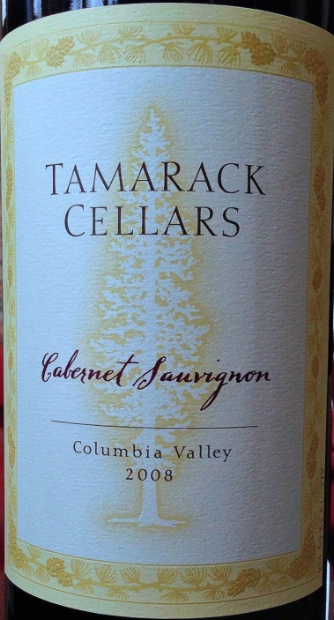
Tamarack Cellars 2010 Columbia Valley Cabernet – The best thing about Tamarack is the beautiful mouthfeel and balance from the tip of your tongue until the wine goes down the hatch with a delightful finish.

Just out of the bottle you’ll get some oak and moderately strong tannins, but it softens up with a decant or a day after opening with good storage practices. It has rich dark fruit, a hint of vanilla, and maybe some black raspberry.

The SRP on this wine may in the $30 range but you’ll often find it at $25-$30. It’s worth every nickel for the price point.

Tamarack Cellars 2010 Columbia Valley Cabernet, the 2011 Cab of the same heritage has a SRP of $36. Very Highly Recommended!

Wine Returns to Indiana State Fair

Indiana winemakers are anxious to pour their wines at the Indiana State Fair. Hoosier grape growers are ready to stand alongside Indiana’s other agricultural producers.

Grape Sense Logo“I think this is a recognition that grapes and wine are an Indiana agricultural product deserving of all the pride and local support that other Indiana ag products have,” said Jim Butler, owner/winemaker of Butler Winery, Bloomington. “It shows that Indiana is keeping up in this rapidly changing world.”

Indiana Governor Mike Pence signed the bill into law late Friday.

Jeanette Merritt

Jeanette Merritt

“We have been so fortunate that our Governor, Lt. Governor and Indiana State Department of Agriculture understand and appreciate our role amongst other commodities in the state,” said Jeannette Merritt, marketing director for Indiana Wines & Purdue Wine Grape Team. “I am thrilled that we will be represented and able to educate people on the grapes planted and the wines made from those grapes.  We will reach a huge audience who can enjoy and learn about our industry.”

Indiana’s wine industry continues to grow, strive for recognition, and build a substantial economic base from border to border. There are now 80 Indiana wineries generating an economic impact of more than $3 billion, according to an analysis by New York-based John Dunham and Associates.

There still seems to be some uncertainty of how the State Fair will implement wine and beer at the annual exposition. It certainly will be a restricted area. State fair officials have said they would expect Indiana winemakers to take an education approach to pouring their wines. That would indicate that “tasting’ would be a more appropriate term than having a glass of wine but no final decisions have been made. A legal ‘taste’ of wine in Indiana would amount to no more than a 1-ounce pour or what visitors get in a tasting room.

Jim Butler

Jim Butler

Indiana winemakers are cautious but anxious to participate at some level.
“If there is an “Indiana wine appreciation day” then it would be the place to be,” Butler said. “It would be a great chance to get our product out in front of people who are looking at other Indiana agricultural products.  It all depends upon how it is set up and organized. Wineries are limited to 45 festival permits per year. I can envision doing a day, two at the most, but not the entire fair. Festivalsare a lot of work!”

Dan Adams, owner/winemaker, Winzerwald Winery, Bristow, believes the legislation helps promote tourism, agriculture, and rural development. “We look forward to being able to promote our great value-added products to all the great fair supporters,” he said. “It gives us an opportunity to tell our story and showcase our products to people who enjoy the same things we do – farming, family and fun.”

Jim Pfeiffer

Jim Pfeiffer

Turtle Run winemaker/owner Jim Pfeiffer takes it a step further. “It shows our wine quality over the years has reached the level of national and international wines,” the Corydon-based winemaker said. “Mostly though, it indicates that Indiana consumers have a preference for our wines.”

Pfeiffer was uncertain how Turtle Run would participate but confident he’d be a part of the new exhibit.

Three Great Reds & a White

Tags

, , , , , , , , , ,

It seems each time I get around to doing some reviews it’s about ‘catching up!’ Today is not different with a few really good bottles I’ve enjoyed in recent weeks.

Let’s start with my recent “wine kick” – Syrah and an old favorite.

T-vineT-Vine 2007 Napa Valley Syrah – Winter is a great time for stews and beef dishes. Syrah is a great pairing with most of those dishes. Loved the huge nose on this wine and the taste of blackberry, all the dark fruits and good spice. Some serious wine drinkers would call the wine jammy but the mouth feel was not quite that heavy for me.

It’s a big wine with 14.6 percent alcohol but I liked the balance and smooth spicy finish.

The other odd thing about this was an extraordinary amount of sediment. I use a Vinturi aerator with a filter so it wasn’t a problem in the glass — but a large amount was left in the bottle!

T-Vine 2007 Napa Valley Syrah, retails at $40-$50, Highly Recommended.

Klinker BrickKlinker Brick 2011 Old Vine Zinfandel – This old Lodi friend seldom disappoints. The Zin has the kind of spicy or peppery finish you’d expect from Zinfandel along with nice dark red fruit – think cherries.

I remember more pronounced fruit from previous vintages but still such a solid choice. My only criticism is this wine is really hot – that’s 15.8 percent alcohol hot!

It’s a consistent winner though from year to year and a great house Zin.

Klinker Brick 2011 Old Vine Zinfandel, $15 in most stores, Recommended.

GreyGrey 2011 Carménère – The Vina Vintisquero Grey Maipo Valley Carménère was simply one of the best I’ve ever tasted.

Blueberries, blackberries, smoke and spice make this a seductive glass of wine. Gone is the green vegetal taste of way too many inexpensive Chilean wines! It spends 18 months in new oak and is the kind of big wine that pairs really well with big food. It’s a reasonable 14 percent alcohol.

The wine has long finish and will have you re-thinking Carménère. It drinks above its less than $20 price point! I couldn’t have been more impressed!

Vina Vintisquero Grey Carménère, $18.99, Trade Sample, Very Highly Recommended.

reserve-grand-veneur-blanc-domaine-grand-veneurAlain Jaume & Fils 2012 Grand Veneur Cotes du Rhone Blanc – The wine is your typical French Southern Rhone white blend. But what does that mean?

These inexpensive white Rhones are always very drinkable if not equally unremarkable. But that’s not always a bad thing. If you want a nice, soft French white for dinner or as a sipper you can’t go wrong with a well-made wine in the low teens. Most of the Rhone whites fall into that description.

“Rhone blend” usually includes some varying amounts of Grenache Blanc, Marsanne, Rousanne, Viognier, Bourboulenc, and Picpou.

Alain Jaume & Fils 2012 Grand Veneur Cotes du Rhone Blanc, $13.99, Recommended.