• About
  • Indiana Wineries
  • Michigan Wineries
  • Wisconsin Wineries

Howard W. Hewitt

~ … The "W" stands for wine!

Howard W. Hewitt

Category Archives: Oregon

Investors not all bad for small wineries

05 Saturday May 2018

Posted by Howard in Newspaper Column 2018, Oregon, Uncategorized, Videos

≈ Leave a comment

Tags

Alloro Vineyards, Don Hagge, Ghost Hill Cellars, Lenne Estate, Mike Bayliss, Oregon wine, Steve Lutz, Tom Fitzpatrick, Vidon Vineyards., Wayne Bailey, Willamette Valley, Youngberg Hill

Small Oregon wine producers have been leery of huge corporate investment in the Willamette Valley. But they also see a benefit for their strongest sales outlet.

grape-sense-logoThe investments from big producers like Kendall- Jackson and Louis Jadot makes competing for shelf space, distribution, and marketing opportunities difficult. But the big budgets also help bring more visitors to Oregon wineries. Real oenophiles love finding small, boutique producers when visiting any wine region.

“Being small and getting our wines out there in the market is our biggest hurdle,” said Mike Bayliss owner of Ghost Hill Cellars. “We’re seeing more competition from the bigger well-funded wineries, who make wine with volume and less expense and have more market dollars.”

Steve Lutz

Steve Lutz, Lenne Estate

Steve Lutz, owner at Lenne Estate, watched as Kendall-Jackson purchased Willikenzie Estate which is across the road from his small production winery. “I think that will bring more people to our location so I can’t complain,” Lutz said.

Wayne Bailey, who owns a beautiful inn and winery near McMinnville, Youngberg Hill, echoes the concept that big dollars bring more visitors. “It’s very exciting to have the big boys spending big marketing dollars on our region,” he said. “That awareness can only help all of us. Most wine tourists will tell you they prefer to discover small wineries that they are not familiar with (when visiting).”

Tom Fitzpatrick, winemaker and general manager at Alloro Vineyards, says the big producers have pushed Oregon Pinot Noir to the world stage. “This is tremendously beneficial for all of us,” he said. “This has created more crowding of Oregon wine in the sales pipeline. The hope is that the attention and the spotlight is widening the pipeline. In general, I look at it this way, the attention and dollars are coming because we have something truly great here. It was just a matter of time before this was discovered. Things that are truly great can’t remain a secret forever.”

Vidon Vineyards owner Don Hagge has struggled with distributors and selling all of his annual production. “I hope to get there in about a year or two,” Hagge said. “I have about two years of inventory counting unbottled wine.

“But I’m not concerned about big money much. There’s a market for wines from boutique operations that aren’t ‘factory wines.’ We have to exploit that big time, particularly with direct-to-consumer sales.”

Wineries realize the biggest margin, therefore profit, when distribution and retail sales are eliminated. A bottle of wine sold in the tasting room is all profit.

Mike & Drenda Baylis

Mike and Drenda Bayliss

The burgeoning success of all Oregon Pinot producers can lead to some of the smaller winery owners reconsidering their business model.

“Our production used to be much higher, around 1,500 cases,” Bayliss said. “Willamette Valley Pinot Noir fruit has become quite valuable so for the recent vintages we decided to sell the majority of our fruit.”

In 2017, Ghost Hill was down from 1,500 cases to 360 cases.

But there remains a strong market to explore the smaller wineries. Readers can google the wineries in this column and order directly from these small Oregon wine producers. There will be one more column focusing on the challenges and a bit about the wines.


Share this:

  • Share on X (Opens in new window) X
  • Share on Facebook (Opens in new window) Facebook
  • More
  • Share on LinkedIn (Opens in new window) LinkedIn
  • Email a link to a friend (Opens in new window) Email
Like Loading...

Small guys face distribution squeeze

26 Thursday Apr 2018

Posted by Howard in Newspaper Column 2018, Oregon, Uncategorized

≈ 1 Comment

Tags

Alloro Vineyards, Don Hagge, Ghost Hill Cellars, Lenne Estate Winery, Mike Bayliss, Pinot Noir, Steve Lutz, Tom Fitzpatrick, Vidon, Wayne Bailey, Willamette Valley, wine marketing, Youngberg Hill

When big companies invade boutique wine country with much bigger marketing budgets and resources, the little guy can feel squeezed out. Or, creative marketing and a changed paradigm could lead to more success.

grape-sense-logoOregon’s Willamette Valley has seen explosive growth in recent years in small and large wineries. But big investment from major players has an impact on the smaller wineries distribution and maybe even production.

In recent years Kendall-Jackson has purchased Willamette Valley vineyards: Penner-Ash, Willakenzie, Gran Moraine and Zena Crown. French icon Louis Jardot has bought in along with Chateau St. Michelle from Washington and Foley Wines from California. There are quite a few others.

As the quality of Oregon Pinot Noir continues to gain critical and consumer accolades, more small wineries are disappearing, and others are strategizing to find and hold market share. The bigger brands eat up the shelf space and dominate distributor’s selling efforts.

“We primarily sell out of our tasting room though we do distribute a small amount of wine in Colorado, Maryland and Illinois,” said Steve Lutz, owner of Lenne Estate near Yamhill, OR. Lenne produces about 1,600 cases of wine annually. “It is becoming increasingly difficult to find any distribution for small producers and not a very effective way to sell anymore.”

img_0209

Don Hagge

Some winery owners have simply given up or cut back on efforts to lure a distributor.

“I’m resigned to finding and working with a couple of distributors in niche markets to sell about half of my wine,” said Don Hagge, Vidon Vineyards. Vidon also produces around 2,000 cases annually. “We’re rolling out a new online system (called VinAlliance) this year that might help us and a few other small wineries.”

Hagge hopes the new alliance will allow consumers to buy wines almost like a wine club but from several different wineries on a regular basis.zpat

These small wineries depend on direct to consumer (DTC) sales for their success. “We had distributors in more than 20 states but last year scaled back to six,” Alloro Winemaker and General Manager Tom Fitzpatrick said. “It’s not difficult finding a distributor but it is difficult finding a distributor who can generate adequate sales. But they have their own businesses to profitably run just like us. Building brand awareness and recognition for a small unrecognized producer, in a crowded space, is expensive. Most distributors don’t seem to be able to do this.”

Alloro is the biggest of this group of winemakers at a modest 2,550 cases.

Experience, Fitzpatrick said, has told him that direct to consumer sales will probably always be 80 percent of his business.

Family Portrait

Wayne Bailey

Everyone has a website, and some are exploring the partnering options like Vidon. The challenge is to get a brand in front of the consumer. “Most of our wine is sold through our tasting room, wine club, and events,” said Youngberg Hill winemaker Wayne Bailey.  “Online sales are a big opportunity, but the current challenge is figuring out how to best reach potential customers or let them know you even exist. Even though you can ship to consumers in most states now, it is a very expensive and time-consuming process to gain and maintain the ability to ship into each individual state; making it almost impossible for small wineries to justify.”

The smallest of this winery group is Ghost Hill Cellars which produces less than 400 cases. Marketing is complex for such a small operation. “We have distributors who work with small producers but still even that is difficult,” said Ghost Hill owner Mike Bayliss. “We do online sales and a seasonal tasting room (April to November). Although we sell a good amount of our annual production we’re moving toward selling more grapes and making less wine.”

The upside of the investment by the wine world’s bigger players is additional attention. We’ll look closer at that benefit and at these winery’s wines in future columns.

Note: The next Grape Sense column keeps the focus on wine marketing and these small wineries.

Share this:

  • Share on X (Opens in new window) X
  • Share on Facebook (Opens in new window) Facebook
  • More
  • Share on LinkedIn (Opens in new window) LinkedIn
  • Email a link to a friend (Opens in new window) Email
Like Loading...

Fun comparing small-production Pinot

10 Tuesday Apr 2018

Posted by Howard in Oregon, Uncategorized

≈ Leave a comment

Tags

@allorovineyards, @GhostHillCellars, @lennewine, @vidonwinery, @youngberghillvineyards, Chehalem Mountains, McMinnville, Oregon wine, Willamette Valley, Yamhill-Carlton

There are lots of ways to enjoy wine with friends but when you want to add some twists and turns put the wines in a paper bag and try to identify or rank them.

Try a night of all one varietal or from different growing region. My small wine group, frequently referenced on this blog, has played about every wine game in the book and made a few others up.

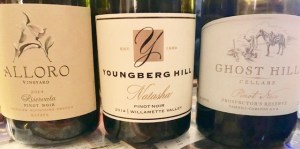
Back in December three of us tasted three, small production, Oregon Pinot Noirs and ranked them. All three wines were from the much-praised 2014 vintage. Youngberg Hill‘s Natasha Block, Ghost Hill’s Prospector’s Reserve, and Alloro‘s Estate Riservata were the three Pinot Noirs. Alloro was our favorite. Here is that blog post.

Alloro

Tom Fitzpatrick, Alloro

All three tasters that night were pretty experienced wine drinkers and big Pinot fans. We repeated the exercise April 8 with a group of 8 regular wine drinkers. We had three wines from the same wineries but different bottlings: Youngberg Hill Jordan Block, $50, 87 pts Wine Spectator; Ghost Hill Bayliss-Bower Pinot, $42, 91 pts Wine Spectator; and Alloro Vineyards Estate, $35, 93 pts Wine Spectator. The marketing firm had sent me an additional small-production wine, Lenne Estate’s whereI have previously visited. We included the Lenne Estate Pinot, $45, 92 pts Wine Enthusiast, in our Sunday night tasting.


These four wines represented the Willamette Valley AVAs McMinnville, Yamhill-Carlton, and Chehalem Mountains.

We tasted the four wines, and made comment, in a random order. Then we reversed order and tasted again. I would describe the group as three very serious wine drinkers, including myself, who have consumed their share of Oregon Pinot, two more guys who have tasted great Oregon Pinot but probably not quite as geeky, and three guys who are new to the geeky side of wine.

We ranked the wines simply by personal palate preference. Lenne was a strong new entry to this round. When all was said and done, our bigger group picked Alloro as the clear cut favorite for the second time in a row. I might add the four new tasters didn’t know the results from our first effort. And another note, as the wine writer here, I agreed with the ranking both times. But it was tougher this last batch

Lutz

Steve Lutz, Lenne

Alloro and Lenne were the picks with seven winos picking one or the other as the best with Alloro having a fairly sizeable margin of victory. Ghost Hill picked up one first-place vote. Youngberg Hill was one of the wines most debated.


There are a couple points to be made here. First, my palate or any of my friends’ palates have nothing to do with your wine choices. If you like it, it’s great wine. But we all rely on recommendations, particularly from friends. Second, these are small to very small production wines and are not easy to find outside of Oregon with a few exceptions.

The bigger point might be if you travel to any wine country leave time on your schedule to seek out a few of the really small wineries. You’ll find great choices and those little guys really appreciate your business. Most personnel tasting room employees are anxious to share recommendations. I’ve found some great wine by asking “who else should I go see?’ in Oregon and Napa.

BLOGGER’S NOTE: I’ll have comment from all four of these winemakers, plus Vidon Vineyard’s Don Hagge, in a couple of upcoming newspaper columns. Of course, those columns are always posted here as well.


Share this:

  • Share on X (Opens in new window) X
  • Share on Facebook (Opens in new window) Facebook
  • More
  • Share on LinkedIn (Opens in new window) LinkedIn
  • Email a link to a friend (Opens in new window) Email
Like Loading...

Howard’s 2018 Rose’ wine picks

29 Thursday Mar 2018

Posted by Howard in France, Newspaper Column 2018, Oregon, Uncategorized

≈ Leave a comment

Tags

2018 Rose', French Rose, Oregon Rose', Provence Rosé, Tavel

This post accompanies my every-other-week column which went out to newspapers and websites Mar. 29 about Rose. Here are some specifics wines to look for at your nearby wine shop and liquor stores. The full column will be posted on this site April 2.

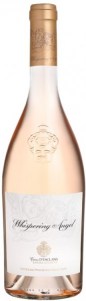
whHoward’s Rose’ Picks: The Whispering Angel and Miraval are very good representations of Provence Rose’ but there are so many out there to choose from. I recently attended a distributor’s Rose’ tasting of more than 100 wines. Obviously, I could only taste a few but here are my picks and a couple of other recommendations.
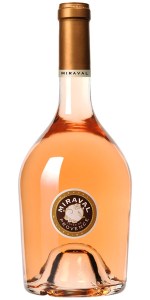
I’m liking Oregon and California more with every passing vintage but the French are still the masters. When everyone started jumping into the Rose’ market a few years ago, there were some wines that lacked depth and structure. More recent offerings have been darn good Rose’. As any regular reader of my musings knows, I love Oregon.

The wines listed here may not all be easy to find but they are all sold in Indiana: Tablas Creek Patelin de Tablas, CA. – a blend of traditional Rhone grapes; Conundrum Rose, CA. – A well-known producer growing gamay; Mirabeau Pure, FR. – traditional Provence blend and probably my favorite of the entire tasting.; Lunda Nuda, IT. – an unusual blend of Sangiovese-Merlot from Multipulciano; Maison Louis Jadot Gamay Rose’, FR. – light bodied from one of Burgundy’s biggest names;

b_Miraval-Rose_zoom_7Cloud Chaser, FR. – lighter than many of the others but nice freshness; St. Andrieu, FR, – a nice choice if you prefer a bit more mouth feel; Esedune Cab Franc,- a bit above average but Cab Franc Rose’ continues to improve and take market share ; Canto Perdrix Tavel, FR. Tavel is often too big for my Rose’ palate but this one is more understated; Susan Balbo Malbec/Pinot, AR, – tasted this Argentinian winemaking rock star’s Rose’ several years ago and was underwhelmed. The 2017 version is quite enjoyable: Willakenzie Pinot Noir, OR.  – nice, well-balanced Rose’ … one of many from Oregon.
Of course this means I didn’t taste somewhere around 85. There were also several I tasted that I didn’t care for very much.

Cheers!

Share this:

  • Share on X (Opens in new window) X
  • Share on Facebook (Opens in new window) Facebook
  • More
  • Share on LinkedIn (Opens in new window) LinkedIn
  • Email a link to a friend (Opens in new window) Email
Like Loading...

Four guys and three Oregon Pinots

22 Friday Dec 2017

Posted by Howard in Oregon

≈ 1 Comment

Tags

Alloro Vineyards, Carl Giavanti, Ghost Hill Vineyards, Oregon wine, Willamette Valley, Youngberg Hill

For wine geeky types there isn’t much better than a Saturday night with friends and a few good wines.

I’ve been doing the wine writing thing for 10 years now and I do get wines from marketers. Earlier this year I got a bunch of Oregon wine from a marketer representing several small-production Oregon wineries. Seemed like a fun idea to line up a wine from each of three wineries and get the “Wine Dudes” opinions. And boy, did they have opinions.

org winesAll three wines were from the much-praised 2014 vintage. Youngberg Hill‘s Natasha Block, Ghost Hill’s Prospector’s Reserve, and Alloro‘s Estate Riservata were the three Pinot Noirs. We tasted the wines in that order and then went back down the line re-tasting to form our opinions.

A short summary of some thoughts. The Youngberg wine got better the longer it was open. The guys were hoping for a little more structure than we found later as the wine opened up. It’s from the McMinnville AVA and retails at $50. We all thought it probably needed another year or two and possibly a long decant.

The Ghost Hill and Alloro were our two favorites of this exercise, even though we liked all three wines. We went back and forth for a couple of hours about these two wines. Ghost Hill takes its grapes from the Yamhill-Carlton area and is truly small production wine with just 141 cases made of this juice.


wine dudes

Dudes Barry, Patrick & Alex

The guys loved the balance of fruit and finish in the  Ghost Hill. The wine had the depth of character that makes you think about the Pinot in your glass. One of the guys questioned the $55 price point but I found it consistent with other wines  in that price range.


Alloro’s Estate wine from the Chehalem Mountains was the most drinkable of the three – even though it did have a slight advantage with a good decant. Bright red fruit and a refreshing lightness made for satisfying sips. Alloro makes just 300 cases of this wine for $45 a bottle. Interesting to note that Wine Enthusiast gave this wine an incredibly strong 95 points.  We agreed it was a 90-point wine but maybe not quite a 95.

These small production wines will not be easy to find outside Oregon, quite frankly. Small operations like this though should be on your visitation list if you go to Oregon. You can contact the wineries, linked up here, to see if they can ship the wines.

We had such fun doing this comparative tasting, I’m sure there will be more.

Share this:

  • Share on X (Opens in new window) X
  • Share on Facebook (Opens in new window) Facebook
  • More
  • Share on LinkedIn (Opens in new window) LinkedIn
  • Email a link to a friend (Opens in new window) Email
Like Loading...

Vineyard workers’ thinning ranks

01 Sunday Oct 2017

Posted by Howard in Napa/Sonoma, Newspaper Column 2017, Oregon, Wine Education/News/Updates

≈ 1 Comment

Tags

Immigration, Napa Valley, vineyard harvest labor shortage, Willamette Valley

Earlier this year Grape Sense featured a look at the potential of a labor crisis in Napa/Sonoma during this fall harvest season. The potential has become a reality for many in the nation’s premier wine region.

grape-sense-logoFor the past several years farm labor was paid $15 an hour. Napa has built dormitory type buildings over the recent past for housing as well. This year wages have jumped closer to an average of $18 an hour with some stories that big name wineries are paying more, much more. One unsubstantiated report had a $300-bottle of wine producer paying $45. Top pickers in Sonoma have been commanding up to $30 an hour the past couple of years.

The labor shortage covers a lot of issues. Federal immigration enforcement increased under the Obama administration. Additionally, as the largely Hispanic workforces ages their children are going to college and finding less physically stressful jobs. Sonoma County Winegrowers have more than 5,000 full time workers but hire an additional 2,600 seasonal workers for harvest. So it’s not a small problem.


HARVEST

Harvesting at Indiana’s Hubers a couple of years ago.

There are lots of anecdotes about husband and wife picking up their kids and moving to Napa. But after a few harvests, the married team learns they can work various positions in the thriving hospitality industry for more money and no back-breaking, long days of labor.


When harvest is complete, it will be interesting to see if there is actual fruit that got left on the vine because of worker shortages.

I’ve written several times lately about things going on in Oregon. The Willamette  Valley continues to be one of the more interesting regions to follow. The area’s Pinot Noir is now considered world class and is a hot commodity.

Family ownership of Silver Oak Vineyards, known for their outstanding Napa Cab, just recently completed purchase of Dick Erath’s last vineyard near Archery Summit and Domaine Serene – pretty fancy company. Erath, now in his 80s, was one of the valley’s pioneers. He long ago sold his ground-breaking winery to St. Michelle of Washington State.

The new money is being found from great Oregon Pinot Noir. It won’t be surprising to see more Napa names turn up there.

Speaking of Oregon, the vintners continue to kick up production. Sales grew by 12 percent last year from acreage of more than 30,000. In 2016 alone, 23 new wineries opened across the state. Cabernet grapes are the nation’s most expensive but Oregon Pinot grapes from top name vineyards can command more than $5,000 a ton. A ton of grapes will make about 60 cases of wine. There, you now can do some math.

Share this:

  • Share on X (Opens in new window) X
  • Share on Facebook (Opens in new window) Facebook
  • More
  • Share on LinkedIn (Opens in new window) LinkedIn
  • Email a link to a friend (Opens in new window) Email
Like Loading...

French continue buying in Oregon

31 Thursday Aug 2017

Posted by Howard in Newspaper Column 2017, Oregon, Uncategorized

≈ Leave a comment

Tags

Don Hagge, Lynnette Shaw, Oregon wineries, Republic of Jam, Vidon Vineyards.

Many but not all of the United States’ major wine regions could be considered ‘mature’ regions. There certainly is not much room for growth in Napa Valley. California produces more than 60 percent of this nation’s wine.

Certainly, there are areas in California still maturing – Santa Barbara and Paso Robles come to mind – but big change isn’t happening.

grape-sense-logoEstablished areas still seeing change include Virginia and to a much lesser extent Leelanau Peninsula in upper state Michigan. The scale is different but the impact is real when new players move into town. No where is this scenario more evident than in Oregon’s Willamette Valley – a personal favorite wine region.

Oregon’s wine industry grew organically from a handful of pioneers in the 1970s who had a vision. Those leaders were people like David Adelsheim, David Lett, and Dick Erath. The boom, arguably, started in the late 80s when French icon Joseph Drouhin bought property and opened its Dundee Hills winery. About that time Don Lange started his family operation along with many others.

img_0209

Vidon’s Don Hagge

Most of Oregon’s wineries are small operations producing less than 5,000 cases annually – or smaller. But in the past few years the really big guys have bought up wineries, vineyards, and cast an eye on the reputation and thirst for Oregon Pinot Noir. Names like St. Michelle, Kendall-Jackson, Joe Wagner of Caymus, Foley Family Wines, Constellation Brands, Burgundy’s Jadot, and many more have moved into Oregon in a big way.

The companies coming into the picturesque valley have big bucks, big marketing power, and they own shelf space earned over decades in supermarkets and wine shops nationwide.

“It’s good for us; the fact that these people are coming puts a stamp of approval on what we’re doing,” said owner and winemaker Donald Hagge of Vidon Vineyards. “It makes us an even more valuable property. Does it hurt the small guy? I don’t think so. Jackson Family is now 10th largest in the world. They own 1,500 acres here and three wineries but they pretty much claim to leave (previous ownership) alone, let them operate on their own.” EDITOR NOTES: Hagge has sold his wonderful small winery but the name lives on. Don is traveling and enjoying retirement.

Indeed, many of the big ownership groups have been rather stealthy in their purchase – at least to date. Few even realize St. Michelle owns Dick Erath’s winery – one of the valley’s real founders. Domaine Drouhin helped that second wave of the 80s establish the valley’s credibility but they are a big player. Drouhin proved that recently when it purchased a 200-acre vineyard south and west of its current property.

“I have no fears,” Hagge said. “They’re not interested in a place like this. Most of the wineries in Oregon are small and they’re going to stay small. Small wineries have difficulty; there is a lot of consolidation and many of them aren’t making any money. This is difficult but I don’t think that hurts us at all, it helps.”

Hagge makes a strong point that he can produce 1,000 cases of wine and sell it rather easily out of his tasting room. But his current production is slightly more than 2,000 so he struggles to sell his annual production. He has sold a good number of cases, discounted significantly by the nature of the business, to online flash wine sales sites.

The other major changes in the Willamette Valley through recent years has been the associated retail boom of lodging, restaurants and specialty shops. The natives are concerned about community but see the big investors as a welcome development.

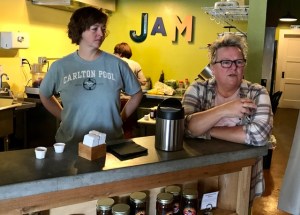
“I think it affects us and our business here,” said Lynnette Shaw, owner of Republic of Jam in Carlton. “Those big companies have a lot more reach than this area has ever experienced before so with that reach we’ll have more visitors. The more people we can get in here and expose to this the better off we are so that part is very, very good.” EDITOR’s Note: Shaw sold her business and new owners had to unfortunately new owners ohad to close the business down last year due to Covid and personal hhealth reasons.

Shaw’s jam business first appeared as a unique and quirky operation during a 2011 visit. The long-term viability was certainly a fair question. The business is thriving today with its very unique twists and variations on jam.

The lesson is even economic investment causes businesses of all size to consider their futures carefully.

Share this:

  • Share on X (Opens in new window) X
  • Share on Facebook (Opens in new window) Facebook
  • More
  • Share on LinkedIn (Opens in new window) LinkedIn
  • Email a link to a friend (Opens in new window) Email
Like Loading...

Winemakers face climate change

25 Thursday May 2017

Posted by Howard in France, Newspaper Column 2017, Oregon, Uncategorized

≈ Leave a comment

Tags

climate change, Gamay, Syrah, vineyards, winemakers adapt to climate change

grape-sense-logo“It can be a whim or a wallop that can have an impact on the international wine world and what you are drinking in your glass at home.”

That’s how I opened the last Grape Sense column a couple of weeks ago. I suggested the whim of more Oregon winemakers looking at Gamay as a response to market and establishing some diversity beyond the state’s outstanding Pinot Noir.

But in this column, let’s think about the wham – when winemakers are given no choice or see catastrophic change coming right at them, they act like any farmer. Winemakers are considering changes because of climate change. Forget the politics of climate change, it’s not even relevant in this discussion. Many vineyard owners across the world believe they must anticipate warmer growing seasons. That’s a fact and not a political statement.

California’s Napa Valley winegrowers have taken the issue seriously and been looking at climate change’s impact since 2010. Napa Valley Vintners joined forces with the Climate Study Task Force led by Dr. Dan Cayan and his renowned team of climate scientists at Scripps Institution of Oceanography at U.C. San Diego.

The task force reported early in 2011 that Napa had warmed slightly in recent decades but not as much as reported in some wine-related, climate change stories.

Anecdotally, there are French vineyard owners who have noted their harvests have moved from October to September. Temperature determines what grapes are planted and even more so when those grapes are harvested.

There are studies related to or performed for the wine industry that suggest temperature increases of 2-3 degrees over the past 50 years. That may not seem like a lot but it has many in the wine world thinking 20 or 30 years down the road for what it means to their vines.

In the short term, warmer temps mean earlier harvests and can be a challenge for winemakers to control alcohol content.

In the longer term increasing temperatures will impact what grapes vineyards will best produce. The conversation and concern has even made its way, quietly, to the stodgy and highly-regulated areas of Burgundy and Beaujolais in France.

The news really caught my eye when reading that some growers in Beaujolais and even southern Burgundy were experimenting with a few vines of Syrah. One story even referred to it as a ‘secret’ experimentation with Syrah. During a visit to Burgundy in 2016, I learned firsthand how grounded the Burgundians are in not just Pinot Noir and Chardonnay, but to their archaic laws, traditions, and way of life.

I ate in some of the best restaurants in Beaune, the heart of Burgundy, and noticed seldom did wine lists include wines beyond Burgundy.

To even speak of Syrah seems sacrilege after visiting this wonderful wine area. Still, Burgundian winemakers are making big bucks. Burgundy is the most expensive wine in the world. Frankly, some of the lower end reds I tasted during a week-long visit simply weren’t very good.

A little dirty secret of some areas of the wine universe, and certainly not Burgundy, is Syrah and even Merlot has found its way into thinner Pinot Noir wines to add body and structure.

While the Burgundians would shudder at such a suggestion, it’s not much of a stretch to see wine regions begin to accept the idea that some Pinot may need a little more body. Pinot Noir is very difficult to grow. Pinot grapes are small and thin-skinned. Pinot will not survive and thrive in a high-heat environment.

Politically, you can believe in climate change or not. In the wine world, climate change has winemakers in California and France thinking about the future of their industry.

Share this:

  • Share on X (Opens in new window) X
  • Share on Facebook (Opens in new window) Facebook
  • More
  • Share on LinkedIn (Opens in new window) LinkedIn
  • Email a link to a friend (Opens in new window) Email
Like Loading...

Lessons From an Oregon Wine Weekend

18 Friday Nov 2016

Posted by Howard in Food & Travel, Newspaper Column 2016, Oregon, Uncategorized

≈ 2 Comments

Tags

Oregon wine, Pinot Noir, Tasting rooms, Willamette Valley

There is nothing like three days in wine country, anywhere, to renew the juices and excitement for wine, learning about wine, and the winemakers.

Three good friends and I visited Oregon’s Willamette Valley Oct. 27-29 for three wonderful days of wine, wineries, and friendship. We had some pretty darn good food too.

grape-sense-logoIn the last Grape Sense, I asked for you to follow along and ask questions and a few did.

A reader from Crawfordsville asked about reservations versus walk-in tastings. The answer really isn’t all that clear cut. The majority of the wineries take walk-up visitors. Many of the smaller, or boutique wineries, require an advance reservation to taste their wines. Some of the very best wineries are a little under the radar.

That leads to the next point. Our group made a point at just about every tasting room to ask the folks working there who they would recommend we visit during our brief stay. Obviously, you can’t get to every recommendation. But leave room in your schedule to visit wineries recommended by people who work in the business.ing

fullsizerender-10

Our group visiting with Donna Morris, Winderlea Winery.

Let’s move on to schedule. These tips apply whether you’re going for a one-day road trip of tasting or a multi-day trip to wine country. We squeezed in 11 wineries in three days. Frankly, that’s too many for most people. Even with small tasting pours and/or if you spit, you’re absorbing a lot of alcohol. I believe after three wineries you also develop what I’d call ‘palate fatigue.’ I probably am a more practiced ‘taster’ than most and know after three stops my palate is getting pretty numb.

Drink lots of water. Bread, crackers and even salty snacks are a good idea to help soak up all that alcohol.

If you’ve never done a vineyard walk with a vineyard manager, winemaker, or knowledgeable winery spokesperson it is the best way to learn about wine. You’ll learn twice or three times as much among the vines than inside any winery.

Visit the wineries websites before going. You’ll learn whether you need a reservation or not. You’ll know what tasting fees will be charged. In Oregon, for example, most tasting room fees are $15-$20 with many established producers offering a number of different choices at different price points. Most Oregon wineries still wave the fee with a specified purchase.

Tasting and then buying wine is fun and exciting. But think about a budget before you ever step out of your house. It may sound silly but when you are tasting the best wine of the day at that third or fourth stop, it’s easy to spend more than you had planned.

If the winemaker or owner is around don’t hesitate to speak to them or ask them if they have a few moments to talk about their wines. Most are very accommodating and love talking to their customers.

Because of my wine writing connections, we were able to talk to several and I’ll be writing some pieces based upon that in coming weeks.

Share this:

  • Share on X (Opens in new window) X
  • Share on Facebook (Opens in new window) Facebook
  • More
  • Share on LinkedIn (Opens in new window) LinkedIn
  • Email a link to a friend (Opens in new window) Email
Like Loading...

Oregon Day 3: Meeting a Pinot Pioneer

31 Monday Oct 2016

Posted by Howard in Food & Travel, Oregon, Uncategorized

≈ Leave a comment

Tags

Adelsheim, David Adelsheim, Donna Morris, McMinnville, Republic of Jam, Saffron Fields, Thistle Restaurant, Trisaetum Winery, Winderlea Winery, wine travel

WILLAMETTE VALLEY, OR. – Saturday was a day of Pinot, great luck, and fabulous food.

Four wine dudes traveling for the first time together in Oregon’s Willamette Valley rocked it with great wine, friendship, and a bit of good luck. We’re here for three days of wine tasting and other adventures.

fullsizerender

Amy and Lynette – the Jam ladies.

When you go to wine country it’s all about great tasting experiences, learning about the vineyards, and getting acquainted with the wonderful people of wine country. But a great trip should include more. You should explore the area’s restaurants, sites, and the unique businesses.


We started our Saturday with one of my favorites – The Republic of Jam. Lynnette Shaw’s brainchild is now six years old and thriving as tourism continues to boom in the valley. Yes, they sell jam. They also sell cocktail enhancements, flavored ketchups and mustard.

Marionberry, Pacific berry, strawberry basil, and so many other combinations really test your taste buds. Republic of Jam is in Carlton nestled in the middle of the main street of the small village. The jams are a wonderful experience for the taste buds. Lynette and Amy have a unique business that has become a must-stop when visiting. I bought six! The have a small jar for $7.50 and larger one for $10. It’s a real taste of Oregon produce with a twist.

fullsizerender-10

Winderlea co-owner Donna with Dude Patrick T.

We made our first winery stop at Winderlea in the Dundee Hills. Co-owner Donna Morris was hosting a wine club pick-up reception and she invited us to join in the fun. Great food bites and a tasting of their new 2014 vintage wines was a treat.


Winderlea is truly boutique at about 6,000 cases. Veteran winemaker Robert Brittan uses the well-sourced fruit to make beautiful Chardonnay and Pinot Noir wines. The Chardonnay is soft, round and has real depth. Tasting through the new releases was a great experience of really well-made wines. Brittan was winemaker for Napa’s Stags Leap before moving north.  Winderlea wines run from $38 to $85. And since we’ve been talking about costs and tasting fees, it’s nice to note the Winderlea makes an annual and  substantial contribution to a local charity providing health care to vineyard workers.

fullsizerender-11

David Adelsheim shared a few moments with us.

This weekend is my fifth trip to the valley and another of the guys has been here four times. Two of the guys are making their initial visit. With about 500 wineries now, it’s hard to get everywhere. But through my five visits I had missed two important wineries. We visited Bergstrom Friday and Saturday we had a great visit to Adelsheim.


Adelsheim is one of the valley’s pioneers. The tasting room offered several different tastings at the $25 level. Adelsheim, like most here, waive the fee if you buy wine.

We had a very “Oregon experience” during our stop. Our friendly tasting room associate Sandy was telling us all about the wines we were tasting and someone came up behind us to introduce himself. Yes, it was David Adelsheim. He talked about changes in the valley and the future of his winery for a good 15 minutes. It was an awesome experience. He then called Sam Schmitt, head of marketing, over to give us a full vineyard and winery tour. Adelsheim’s Pinot runs roughly $60 to just over $100 a bottle. They have a couple of different whites including a $25 Pinot Blanc that I thought was terrific.

fullsizerender-12

Schmitt talking vineyard with our group.

Next was a quick visit, by our standards, to Trisaetum Winery. A couple of the guys are big Reisling fans and Trisaetum is widely praised for their efforts with the German varietal. I tasted the Pinots and a couple Reislings. The guys assured me Trisaetum lived up to its billing. I drank a lot of Reisling when I started getting interested in wine but not much of a fan as my palate has evolved. I could tell they were well made wines and priced at an affordable $20-$30 range.


Saffron Fields was our final stop of the day. I’m a club member so a big fan. Their wines are made by Tony Rynders, who rose to fame making wines for Domaine Serene. It’s a beautiful setting and great Pinot. There price points range $40-$60. Saffron has a nice Chardonnay, one of the best Rose of Pinot I’ve had in the valley, and their reds.

Now, a note to newbies. I’d never recommend more than three wineries a day for someone making their first or second wine country visit. Frankly, I’m most comfortable with just three. You get palate fatigue and even if you take small sips or spit, you are absorbing alcohol. But our group knows when to say when and is anxious to visit several of the iconic wineries and the quirky ones.

fullsizerender-13

Rabbitt, Pork, with rockfish in middle.

We wrapped up Saturday with another great dinner. We dined at Thistle in McMinnville. We had planned on having the chef’s tasting menu but the manager just convinced us to have ‘everything.” So that’s exactly what we did. Thistle is a chef-driven, farm-to-fork, hipsters and upscale eatery at affordable prices.


The food was wonderful. We enjoyed a chicken liver and a pork pate’ as well as some squash soup and a couple of salads. We shared on dish of about everything. Entrees were pork, rock fish, and rabbit. The chef weaved interesting flavors and ingredients. It was a very enjoyable meal.The dinner came to about $50 apiece. We brought our own wine and the restaurant waived the $20 corkage fee.

Share this:

  • Share on X (Opens in new window) X
  • Share on Facebook (Opens in new window) Facebook
  • More
  • Share on LinkedIn (Opens in new window) LinkedIn
  • Email a link to a friend (Opens in new window) Email
Like Loading...
← Older posts
Newer posts →

Recent Posts

  • The other White Burgundy – Aligote!
  • Some wine gifting advice
  • Real Indiana Chardonnay?

Categories

Enter your email address to follow this blog and receive notifications of new posts by email.

Join 2,063 other subscribers

Photography

Friend Me On …

Archives

My Summer With Lymphoma: Lymphoma - My Third Battle 2024

Scan: ‘No Evidence of Disease Progression’

That’s a nice way to say it. Yesterday, Mar 27, I had a PET scan (nuclear medicine) to look for cancer after my 60-day CAR-T cancer treatment. The headine here was the second sentence in the technical and detailed report. I really didn’t need to read anymore. I am cancer free and now can wear […]

Fighting Disappointment, Wrist Pain

Most of the past week or so has been dealing with the disappointment. I ended my 60 days of restrictions from cell therapy cancer treatment. But I learned a severely broken wrist can even out do cancer. I fell Sunday Feb. 19 in an icy parking lot. I had surgery the following Wednesday then Thursday, […]

Blog at WordPress.com.

  • Subscribe Subscribed
    • Howard W. Hewitt
    • Join 87 other subscribers
    • Already have a WordPress.com account? Log in now.
    • Howard W. Hewitt
    • Subscribe Subscribed
    • Sign up
    • Log in
    • Report this content
    • View site in Reader
    • Manage subscriptions
    • Collapse this bar
 

Loading Comments...
 

    %d