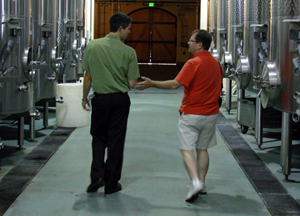
Part Two of Don Lange July 2011 Interview

Tags

,

I’ve posted two videos from my July 2011 visit to the Willamette Valley in Oregon and now posting the second part of a fun interview with Don Lange.

Don started Lange Estate Vineyards & Winery in the late 80s, so he while not a pioneer few would argue he is an iconic figure when you way Lange Winery’s accolades and name recognition.

Don was a last-minute stand-in for his son Jesse. Lange is a former songwriter and performer who seems to really enjoy life. You’ll pick up on some of that in this short clip.

As previously noted, these clips are rather raw and informal. The videos were originally shot to do a more extensive piece. That didn’t happen so I’m sharing them now. It’s really some great stuff.

Send comment or questions to: hewitthoward@gmail.com

Top Wines From Your Supermarket Shelf

Tags

, , ,

As much as I’d like friends to quiz me about a great $50 Pinot Noir, most of the inquiries are about supermarket wines.
I’ve written many times in the previous 90 columns about such wines and what I think is most palatable. I’m a fan of Mirrasou, Mondavi Private Selection, Smoking Loon, and a few others. All can be found for $10 or less at most markets.

One of the reasons I’m still writing this column is to share information and hopefully a little wine education. I see a lot of wine-related news every week. Most casual vino consumers aren’t going to be interested in the wine-geeky stuff I consume. But every now and then there is wine news that I think is not only interesting but helpful.

If you are a supermarket wine buyer, wouldn’t you like to know what others are buying and most consumers think are top brands?
A consumer research group, Symphony IRI, annually reports its Top 30 momentum wine brands. The report bases its chart on sales data, volume and dollar sales, volume share in the price range, and other measures.  More than 100 brands met the minimum sales of 100,000 cases to be considered.
In a report on winesandvines.com , the survey showed Cupcake wines repeating as the top such wine in the country. Next came Barefoot, Apothic, Liberty Creek – those previous three all owned by Gallo – then St. Michelle’s 14 Hands and Menage A Trois.
Gallo wines held down the number-eight spot with a familiar name, Fish Eye.  Bogle came in at 11th, Columbia Crest was 14th, J Lohr was 17th, Almos 18th, Mark West 19th, chateau St. Jean 20th, Woodbridge 22nd, Sutter Home 23rd, Yellow Tail 26th, Gnarly Head 27th, and Sterling 30th.
Overall, the survey reported, most of the brands had strong growth by improving quality and marketing. Prices were also down per bottle over 2010. 
If you looked at the entire list of 30 labels, what most folks might find surprising is one company owns seven of those brands. What shouldn’t be surprising is that company is the giant Gallo label.
What does all this mean? Not much if you’ve tried the wines and didn’t like them. But if most of your buying is from the supermarket, these labels are easy to find. Obviously, the brands sell well and many supermarket wine shoppers find them to be good wines.
Higher Priced Wines Re-gaining Market Share
At the other end of the spectrum premium wines are coming back. After the economic downturn of 2008, several Central Indiana retailers said they couldn’t move a bottle of wine that cost more than $20-$25. 
During the first quarter of 2012, wines at $20 or more grew in sales 24 percent over last year.
People still love their Cabernet and the bigger prices are also making a comeback. Cab sold more than any other varietal in the top price categories. When you look at those $20-plus wines, most are Cabs. Pinot Noir continues to rock wine drinkers’ worlds with a 32 percent gain over a year ago for wines above $20.

Send comment or questions to: hewitthoward@gmail.com

Languedoc Tasting Educational for More than Retailers

Tags

, , , ,

CHICAGO, IL. – Tasting Languedoc wines on the 33rd floor overlooking Lake Michigan isn’t a bad way to spend a Tuesday afternoon.

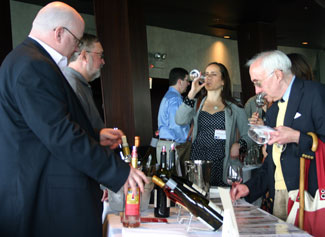
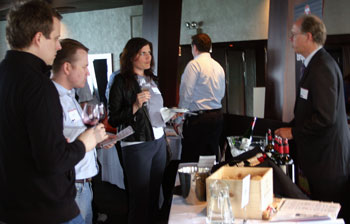
Retailers sample Languedoc wines at W. Lakeshore, Chicago

That was just what I did April 3 in downtown Windy City participating in one of three U.S. L’Aventure Languedoc tastings with U.S. distributors of Languedoc wines. The event is geared mostly for retailers and other buyers but it’s educational and interesting to hear what retailers are looking for and what importers, winemakers, and Languedoc leaders think retailers should be looking for when promoting Languedoc wines.

I’m starting to get more invitations of this nature but it’s hard for me to justify taking a day off work, the cost of parking, the drive, hotel, etc. But meeting a good friend for dinner was enough for a little ‘what the heck’ trip to Chicago.

I spent a week in the Languedoc in January learning about organic wines. The wines I tasted were made almost exclusively with traditional methods and presented by 10 different distributors.

I left again convinced of the tremendous quality for value the Languedoc offers winos.

The reds are full bodied and rich, the unusual whites are crisp and often soft on the palate. The Roses, right next door to Provence, are soft but perfect for summer sipping.

I’m not a big sparking fan and left generally unimpressed with the sparklers, but one strike is a pretty good batting average.

What most impressed me, though, was the education session put on by the Benson Marketing Group which promotes Languedoc wines. Account executive David Cohn told me his company likes to include an education component and not just a wine tasting. He’s right. I’m sometimes shocked how little retailers know about a given region or its wines. Now, no retailer can be an expert of all the world’s wine regions but a specialty tasting like this one makes sense when it includes an education component.

Two retailers joined Frederic Jeanjean, President of the Languedoc AOC, to talk not just about the wines and the region, but also how the wines should be promoted or presented to consumers.

Languedoc wines are a great value, most drinking well above that magic $12-$16 range you’ll pay.

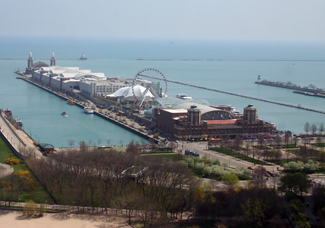
Nice view of Lake Michigan, Navy Pier from 33rd floor.

Barbara Glunz, from one of Chicago’s oldest wine shops – the House of Glunz, urged retailers to learn more. “I think people come to us because they want to learn something,” she said. “People love a wine with a story. And if they learn something they’ll want to come back to see what else you know.”

Discussion including pronouncing the French names, the always-controversial topic of French wine labeling was part of the 45-minute session.

“We don’t want to copy the other appelations,” Jeanjean said. “We want to be unique. Even though we were one of the first regions of the world to produce wine with the Romans, we are young. This is our Renaissance period.”

Here are some labels I tasted and thought were standouts:


Chateau des Karantas Languedoc – The Karantas wines from the La Clape region are affordably priced and really nicely-balanced, full-bodied wines. They are distributed by Carroll Distributors in Indiana.

Gerard Bertrand Wines – Bertrand was named European Winery of the Year by Wine Enthusiast and tasting a couple of the wines proved the accolades. I tasted my first-ever PicPoul wine at the Bertrand table and enjoyed the light and soft white.


Les Deux Rives CorbieresLex Deux Rives wines were consistently good from the white, rose through the Chateau d’Aussieres Corbieres which was the best red blend I tasted all day. This is another label widely distributed, including Indiana.

Send comment or questions to: hewitthoward@gmail.com

Chatting with Oregon Pinot Noir Icon Don Lange

Tags

,

I wrote in an earlier post that I had done several video interviews while in Oregon last summer. The intent was to create a video feature for the national online magazine, Palate Press. That idea never materialize and it’s way past time to get some of these marvelous interviews up on the blog.

I’ve stopped at Lange Estate Winery during all three of my Willamette Valley trips and even as I explore new Oregon wineries, Lange remains a favorite.

On previous trips I had met Jesse Lange who oversees most of the day-to-day operation. I had another appointment set up with him last summer but he had to cancel. I’ve got to know the folks in the tasting room and they responded they were trying to get ‘the Don’ to talk with me upon arrival.

‘The Don’ was Don Lange, Jesse’s father, and the founder of Lange Vineyards. The Lange family came along after Erath, Adelsheim and those Willamette Valley pioneers, but the Lange name remains one of the icons in the Valley and Dundee Hills.

Lange makes some of the best Pinot Noir and Pinot Gris in Oregon. The name is known across the country.

It was great fun to finally meet Don and sit down to chat. I’ve left the videos largely unedited to give the view a feel of being there listening to us chat. There is a second video with Don coming in a few days.The audio on this video is a little low. It was boosted as much as possible without causing distortion. Just crank up your audio and it should do okay.

Send comment or questions to: hewitthoward@gmail.com

Difference Between 2-Buck Chuck & $50 Pinot

(NOTE: This post and the one below are my last two wine columns. Occasionally old age seeps in and I forget to post these to this blog. All of my columns – all 90 to date – can be read at the link Grape Sense on the right hand side of this page.)

Among wine novices the differences between $6 wine and a $100 bottle remains a mystery.

One of my favorite anecdotes on that comes from a speech at a Central Indiana Kiwanis Club. I talked for about 10-15 on wine basics and then one member asked about $50 wine and why that’s better than a cheap bottle. I knew the guy was a golfer. Somehow and someway I came up with one of my best adlibs.
“I know you play golf, right,” I asked. “Well tell me, why do you use a $250 driver when Wal-Mart has drivers for $40?”
It got a laugh but also made the point. More expensive products of any type are usually more expensive based on brand, marketing, craftmanship, and better quality raw materials. The same can be said of wine. There are many factors contributing to price.
While standing in a Paso Robles vineyard in 2010 the grower explained part of his vineyard was for his higher-end Merlot. Another part of the vineyard’s grapes were sold to a bulk wine producer. The grape grower annually ‘drops fruit” or simply cuts clusters from the vines. Just like a flower or fruit in a garden, when you give the vine less produce the result is richer and better product.
But the price has to go up. Dropping fruit reduced the growers harvest to about 2-3 tons per acre. The vineyard for the bulk wineries produces up to 7 tons of grapes per acre. Prices vary by region and prestige, but it’s fair to say for a region like California’s Sonoma County the average price for one ton of wine grapes is around $2,000. Wine prices start to make some sense when you do the math.
But let’s not stop there. Chardonnay is California’s most-planted grape so it can be purchased around the $1,200 a ton mark. Cabernet or Pinot Noir grapes from the best areas can command more than $3,000 a ton. (Statistics from Sonoma Ranches.com)
Though there are many variables, here are some fun statistics: 1 ton of grapes can produce two barrels of wine. Each barrel holds 60 gallons or 25 cases equaling 300 bottles.
Grapes for better wines are handpicked, sorted, and treated like new born babies. Bulk or mass-market wine can be machine picked, machine sorted, and blended or aged in huge vats and barrels. The big-price wines are aged in small lots. I like to think of it as getting more love and attention.
Next comes marketing and reputation. You can search the cost of a bottle of wine and find a lot of different explanations. But it’s fair to assume that a single bottle of wine can cost from a few dollars to $40 or $50 to produce. France’s Revue de Vin De France reported just a couple of years ago that Dom Perignon Champagne costs about $30 a bottle to produce. But the world’s best-known bubbly retails for  nearly $200.
J. Lohr and Louis Martini make really good $15 Cabernet  and its available at Kroger. Robert Mondavi Reserve wines sell for $135-$165 a bottle. Mondavi is a wine made with better products, more craftsmanship, and a big name with a big marketing budget.
Is there a huge difference in the taste? Frankly, the differences are for more discerning palates. If poured an expensive wine, I believe even a novice will note it’s pretty good and clearly better. But how much is that worth for most wine drinkers?
Helping the average drinker find $12-$15 wines that taste like $20-$30 wines is why I write Grape Sense.

Send comment or questions to: hewitthoward@gmail.com

Napa/Sonoma Still Reign Supreme

Tags

, , , , , , , , , , , , , , , , ,

Oregon’s Willamette Valley is one of the great wine vacation destinations in the U.S. Washington’s Walla Walla region is emerging behind its rich and soft red wine blends. If wine travelers insist on California travel check out the Zins, Pinot Noir and interesting blends of Mendocino County. If you like your wines big and bold at an affordable price, try Paso Robles on the Central Coast.

But if you’re really into wine and want this country’s most unique – and expensive – wine vacation, sooner or later you have to go to Napa and Sonoma counties north of San Francisco.
Wine and wine tourism finds its roots in this country’s most famous wine valleys. I recently spent a couple days there, the first time in five years, and still find it the Mecca for wine lovers.
The area comes with a word of caution for the average wine tourist. Sonoma County lodging and restaurants are not inexpensive. And Napa Valley makes Sonoma look cheap!
Anything above a national chain motel, and there aren’t many of those, can run into the hundreds of dollars nightly. Those national chains can be found at competitive rates ranging from $100-$150 a night. The nicer inns and lodges go for $250 and up. Things won’t be quite as expensive in Sonoma but close.

There are pizzerias, bistros, and burger places in the two counties which are affordable. The real experience is to shop the local groceries, most of which have deli counters where you can pick up great sandwiches. The finer dining establishments compete with any in the world. The French Laundry, Iron Chef Masaharu Morimoto, and many others offer world-class dining.

But people go for the wine and there is no place quite like Napa. Robert Mondavi winery is the heart of this Mecca of American wine. The late icon gets and deserves so much credit for bringing American wine to the world and bringing the world to Napa Valley. His mission-designed winery is a must stop. There are two tasting rooms. The first is for most tourists and wine consumers where you can taste his entry level wines for a modest fee. The reserve tasting is $30 per person. But in this region the pours are generous and a tasting can easily be shared between two persons. Don’t be shy; the tasting room folk are comfortable with sharing.
I recently tasted through five of Mondavi’s high-end Cabernet bottles in the reserve tasting room and thoroughly enjoyed the experience and the wine. The price points ranged from $135-$165. Another highlight is Joseph Phelps winery on the other side of the valley. Phelps makes the iconic Insignia blend which is the closest thing to Bordeaux this side of France. It’s a Cabernet driven wine with other traditional blending grapes. It has consistently been one of the valleys most highly-rated wines for 20 years. It also sells at $200 a bottle.
Okay, those prices may create sticker shock for many and they should. But you can go to tastings and enjoy these wines then you start to understand price differences.
The average tasting room fees range $10-$20 for a normal tasting. If you want to taste the really good stuff at the premier label wineries, be prepared to shell out $25-$50 per person for the experience. A few of the wineries even require reservations just to taste. All wineries in the region have very nice websites which spell out fees, hours and locations.
Recommendations based on personal visits:
Napa: Mondavi, Sawyer Cellars, V. Satui, Andretti, Miner, Joseph Phelps.
Sonoma: Chateau St. Jean, B.R. Cohn, Kokomo Vineyards (and visit Hoosier native Erik Miller), Gloria Ferrer (sparkling wines).
If you’re a Pinot fan, journey into Sonoma’s Russian River Valley: Merry Edwards, Inman Family Vineyards, Gary Ferrell, Davis Bynum, Arista, and Rochioli.

Send comment or questions to: hewitthoward@gmail.com

3 Wines: Awesome, Darn Good, & a Stinker

Tags

,

For three-and-a-half years I have not written much about wines I didn’t care for after sampling or purchasing. I’ve read more and more where I’m not doing anyone in service in doing that. I’ve come to agree.

I have written about not liking a particular wine and why others might like it, and occasionally really went after a bad bottle. But it’s been very rare I write about wines in a negative tone. From now on, I think it’s necessary to do that when warranted. Sometimes it might be bottle shock, a wine going bad, or other outside factors. I’ll try to note that to the best of my ability. But sometimes the wine just doesn’t taste right, like the review you’ll read below.

Now, just because I don’t like a wine doesn’t mean you might not love it. On the other hand, occasionally I’ve tasted some stinkers I would tell readers/friends to stay away from.

With that aside, sometimes we all come across a wine that is just wonderful and beyond expectations. Sometimes we find a wine that keeps us trying new things and reminds us why we became wine enthusiasts in the first place. This first review is such a wine.

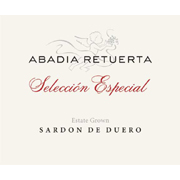
Awesome – Abadia Retuerta 2006 Seleccion Especial – I like this wine so much I don’t even know where to start. This wine (a 2005 actually) won the The International Wine Challenge Award for best red wine. This wine consistently gets 90-92 points from the major wine magazines.

Dark, rich fruit like cherries, plum, and flavors of licorice, spice, coffee, and vanilla sweep over the palate in a smooth and extremely well-balanced manner that few wines match. It has very concentrated fruit with unbelievable balance from sip to swallow.

The wine comes from what is known as Spain’s Golden Mile between Tudela de Duero and Penafiel. The Abadia Retuerta wine normally retails around $23-$24 but it can be found in the $17-$18 range. It’s a tremendous value at $24. If you find it, buy it.

Abadia Retuerta 2006 Seleccion Especial, $17-$20, Very Highly Recommended

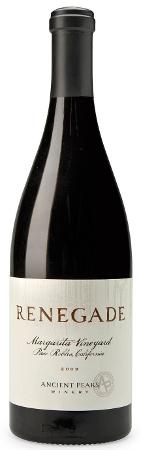
Darn Good – Ancient Peaks 2009 Renegade This 2009 was an inaugural bottling for this wine. It’s a typically big Paso Robles combo of 46 percent Syrah, 31 percent Malbec, and 23 Petit Verdot. All of the fruit comes from Margarita Vineyard in the Central Coast appelation. This vineyard is at the foot of the Santa Lucia Mountain Range, just 14 miles from the Pacific.

The wine gets 18 months in a combination of oak. It’s a big smooth wine. On the palate, I got smoky flavors like coffee, chocolate with big fruit. Not a fruit bomb as it opens up, the wine’s power dark juiciness is balanced by good acidity and well-balanced tannins. For a wine of this power and flavor, the alcohol comes in at a palatible 14.5 percent.

The winery released just over a 1,000 cases of this wine so you’re going to have to look to find it.

Wine geekiness aside, if you like big flavored red wine with good balance Ancient Peaks Renegade is a very, very good bad boy!

Ancient Peaks 2009 Renegade, SRP $23, Trade Sample, Highly Recommended

Stinker –  Alain Paret Cotes-Du-Rhone Valvigneyre 2009 White WineI was upset when I tasted this wine. It’s 100 percent Viognier, a floral grape that provides wonderful aromas and often a tad of sweetness on the palate.

First, I really like the whites of France and particularly from the Rhone Valley. The wines are usually blended but when I had a chance to pick this wine up for $10.99 from a distinguished producer I jumped on a couple of bottles.

I thought a lot about this wine. It was disorganized, a little two tart for a floral wine, and just not very pleasant. I had the wine stored for awhile so I don’t think it was bottle shock. It just was not very palatable. 

Alain Paret Cotes-Du-Rhone Valvignevre, $10.99, Not Recommended.

Send comment or questions to: hewitthoward@gmail.com
Off to Chicago Tuesday for More Languedoc Wines

Tags

Ever since my January trip to South France’s Languedoc region I’ve become a big fan of the area’s wines.

The January press trip was to the Millesime Bio, an organic wine fair in Montpellier. I learned a ton about organic wines, US and France law on organic wine, and the wonderful wines of Southern France.

So when an invitation came via e-mail a few weeks ago to attend a trade tasting of Langeudoc wines I signed up and jumped at the opportunity. There is a brief basic seminar on the wines of languedoc then an all-afternoon tasting opportunity.

I’ll be using Twitter and Facebook to do a few updates and try to get something posted Tuesday or Wednesday night a little more comprehensive.

Send comment or questions to: hewitthoward@gmail.com

An Italian, Languedoc, and NZ Wine Good Picks

Tags

, , ,

This wine review update includes a really nice Italian, dynamite Southern France red, and an affordable, dependable New Zealand Sauv Blanc.

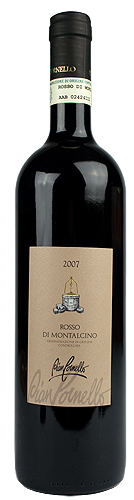
Piancornello 2009 Rosso di Montalcino – This Sangiovese based wine from Tuscany’s Montalcino region delivers for the price point.

I like Sangiovese and enjoy most Italian wines. So many of the cheaper Chianti wines are harsh, unbalanced, and overly acidic. For Italian novice wine fans, the Rosso Montalcino is essentially the table wine of the great Brunello region.

I found the wine smooth with dark cherry, berry,  and earthy characteristics. This is great red wine for pasta. This is also a wine that you can find anywhere from $14.99-$23. Robert Parker gave the Rosso 90 points.

I’d also add for those who have a hard time tracking down particular wines, look for a Rosso di Montalcino. They are affordable and in many ways better than a Chianti at the same price point.

Piancornello 2009 Rosso di Montalcino, $21.99, Recommended.

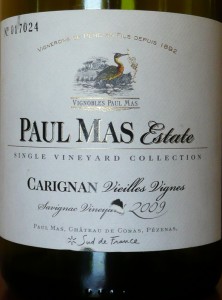
Paul Mas 2009 Carignan Vieilles Vignes – This is great wine from Southern France. I’m really falling for Languedoc wines and particularly 100 percent Carignan. The grape is a bit of a rascal. It can be fickle for growers and can be quite tanninic and acidic.

The wine has a real terroir-driven taste. You get a mouthful of dirt with this southern French grape. There is really dark fruit like plum and spice like cinnamon. This is dry red wine that  provides wine drinkers something really different.

The alcohol is in check with this wine at 13.5 percent.  The richness of this wine comes from Carignan vines that are more than 50 years old.

If you want to try something different at an affordale price point, look for some 100 percent Carignan from Southern France.

Paul Mas 2009 Carignan, $14.99, Indy’s Cork & Cracker, Highly Recommended


Fire Road 2011 Sauvignon Blanc
– This is a really nice Sauv Blanc that consistently delivers for a $12 wine. This is the wine you want for your Salmon or chicken off the grill
.
The Sauv Blanc is a little lighter bodied than many and certainly not quite as acidic. There is good acid on the finish but not what many would be looking for in a traditional Sauv Blanc.

Tasting notes I found online talked about flavors of gooseberry, which I can’t deny, but I get typical crisp lemon and grapefruit citrus.

This is a great choice for about any seafood.

Fire Road 2011 Sauvignon Blanc, $11.99 at Cork & Cracker, Recommended. Can be found as low as $9.

Send comment or questions to: hewitthoward@gmail.com
Domaine Serene Delivers Vintage to Vintage

Tags

, , ,

Domaine Serene Tasting Room

I visited Oregon’s Willamette Valley in July, 2011, and had one of the best ‘wine times’ of my life hitting up a number of prominent wineries.

I did a photo essay for Palate Press, blogged each day here about the trip, and wrote a newspaper column about the experience. Part of my wine-writing work got left in a folder for way too long. I had pitched a full video about the experience to Palate Press but they never bought into the idea. So I have some really interesting interviews with prominent winemakers and others who make Willamette a special place.

Obviously, those pieces have set too long. But the information is as fresh today as the day I first heard it. I’m going to share a number of those over the next two weeks. I had a long chat with Don Lange of Lange Vineyards, Don Hagge of Vidon, the two delightful ladies who own/make and entertain at the Republic of Jam and more.

One of our most enjoyable stops on that trip was Domaine Serene. That winery consistenly scores big points from the two leading national magazines and wine critics for its supurb Pinot Noir. The price points are a bit higher than the already significant prices of most Oregon premier Pinot. But you have to taste the wines to understand.

Talking and touring with Serene’s Willett

The entry level is “Yamhill Cuvee” at $45, though you might find it slightly lower at retail stores. What you learn when you visit vineyards is how premium producers take extraordinary care in every step of the winemaking process.

During my July visit we met Lucas Willett, Hospitality Director, who gave a great tour and fabulous tasting of the Domaine Serene wines. He also shared what was my first white Pinot Noir. Yes, you read that right.

These videos I’ll share over the next two weeks are largely unedited or raw. It puts you in the tasting room and vineyard in a way that a slick edited piece doesn’t. I decided to leave the vids as they were shot.

Below is Willett talking about the care Domaine Serene takes in making its wines and also about Serene’s very unique white Pinot Noir.

Send comment or questions to: hewitthoward@gmail.com