• About
  • Indiana Wineries
  • Michigan Wineries
  • Wisconsin Wineries

Howard W. Hewitt

~ … The "W" stands for wine!

Howard W. Hewitt

Author Archives: Howard

Summer Whites for Hot Days

30 Monday May 2016

Posted by Howard in France, Indiana, Newspaper Column 2016, Oregon, Uncategorized

≈ Leave a comment

Tags

Entre-Deux-Mers, Lange Winery, Pinot Gris, summer whites, Vignoles

One lesson from eight years of wine writing is recommending types and style of wine instead of specific bottles. Many often think of summer as a time for big Cabernets, Syrah, or Malbec with outdoor grilling.

Grape Sense LogoThe annual pitch for readers to try dry Rose’ was the previous Grape Sense column. Today the topic is summer white wines by varietal and style. A good, chilled, white wine is great with summer foods and perfect for late evenings on the patio or porch.

Let’s start with French whites. One of the greatest values of the wine world is Bordeaux white wines. The traditional white Bordeaux is a mix of Sauvignon Blanc and Sémillon and/or Muscadelle. Sémillon is used in dry and sweet wines in the south of France.

It’s seems odd that a region known for the world’s most expensive reds would offer up the most drinkable and affordable whites but that’s just part of the paradox of French Bordeaux. It’s unlikely you’ll find Bordeaux Blanc in most liquor stores. But better wines shops will have a few different labels. Really good Bordeaux Blanc is often found for $10-$18.

The wines are refreshing and often described as light and fruity. White Bordeaux pairs really well with salads, seafood-stuffed ravioli, grilled tuna or shrimp, and try it with asparagus or sushi. A personal favorite is the Bordeaux Blanc from Entre-Deux-Mers and the Saint Emilion region.

They’re light and refreshing, perfect for a hot summer day. Just look for Entre-Deux-Mers on the label.

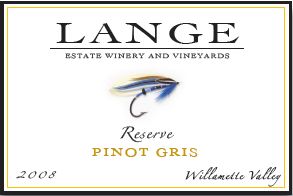
langeOregon Pinot Gris is much easier to find in the Midwest than Bordeaux Blanc. Pinot Gris is equally affordable with plenty of choices in most wine shops. The most notable characteristic of Oregon Pinot Gris is a bright and pronounced acidity. That makes the wine a good pairing with seafood. Most bottles offer bold tropical citrus flavor with balance achieved from that pronounced acidity.

Most Oregon Pinot Gris wines are in the $14-$20 range. For years Oregon winemakers had a hard time giving the stuff away. But in more recent years many wineries have upped their Pinot Gris production. Chardonnay has also been hot in the Willamette Valley. Most are made in a Burgundian style with little or no oak.

The classic Oregon Pinot Gris or the stylistic Oregon Chardonnay are great summer white wines.

Finally, a plug for Indiana. One of the most under-appreciated whites is the hybrid grape Vignoles, originally from France. Vignoles is grown and produced by many Hoosier winemakers. The wine scares some people off because it’s often categorized as a semi-dry or semi-sweet wine. When Vignoles is well made the wine has pronounced fruit with a dry finish.

On the palate Vignoles offers up hints of pineapple, melon, peach, and if you concentrate on the mid-palate and finish you might find a hint of banana. Vignoles won the Indy International Wine Competition top wine in 2012 and 2013.

Share this:

  • Click to share on X (Opens in new window) X
  • Click to share on Facebook (Opens in new window) Facebook
  • More
  • Click to share on LinkedIn (Opens in new window) LinkedIn
  • Click to email a link to a friend (Opens in new window) Email
Like Loading...

Say Summer Refreshment with a Whisper

22 Sunday May 2016

Posted by Howard in France, Newspaper Column 2016, Uncategorized

≈ Leave a comment

Tags

Oregon, Pinot Noir, Provence, Rose'

Spring is upon us and summer just a few weeks away. Just like the change of seasons, it’s time to sing the praise of dry rosé.

Grape Sense LogoAlmost every year for the 8 years of this newspaper column dry rosé has been featured a time or two in warm weather. The columns usually start with a disclaimer that these pinks are not sweet but rather dry, satisfying, and delicious wines.

Rosé is one of the greatest porch-sipping wines of summer. But good dry rosé also is a great food wine and is spectacular with seafood.

The wine is diverse in that it’s made around the world and made with many different grapes. Breaking it down in the simplest of terms, red wine gets its color when the juice is left in contact with the purple skins. Rosé gets its signature pink color from greatly less time mingling with its own skin.

RoseloresThere are so many to choose from but I strongly recommend two in particular. First, are the Rosé wines from Pinot Noir. Many of the great Oregon Pinot Noir labels are now making a Rosé. More and more California wineries are adding a pink wine to their lineup as well.

Instead of a laundry lists of recommended wines, I’ll offer up just two.  The first is Martin Ray Rosé of Pinot Noir. The Sonoma Russian River Valley wine is one of the best examples you’ll find of the Pinot version. It’s very reasonably priced at $15-$16 and can be found in better wine shops.

The other recommendation is Chateau d’ Esclans “Whispering Angel” Rosé from Provence, France. Provence, in the south of France, is often considered home of the holy grail – the world’s best Rosé wines. Most of those wines are made of various blends of Grenache, Cinsaut, Syrah, Mourvèdre, and a local grape, Tibouren.

The first release of Whispering Angel was in 2007 with approximately 150,000 bottles. Rosé sales and consumption in the U.S. continue to have remarkable growth year after year. The 2016 production of Whispering Angel, alone, has exploded to more than 4.5 million bottles.

Good, drinkable Provence rosé can be found at $12-$18. But Whispering Angel, at about $20 and several others under $30, really show off the best of Provence. Another great Provence producer is Domaine d’Ott.


Share this:

  • Click to share on X (Opens in new window) X
  • Click to share on Facebook (Opens in new window) Facebook
  • More
  • Click to share on LinkedIn (Opens in new window) LinkedIn
  • Click to email a link to a friend (Opens in new window) Email
Like Loading...

Deano Living the Winemaking Dream

07 Saturday May 2016

Posted by Howard in California, Indiana, Napa/Sonoma, Newspaper Column 2016

≈ Leave a comment

Tags

Dean Wilson, Deano, Lake County, Lodi, Scribble Scribble

Wilson, Dean

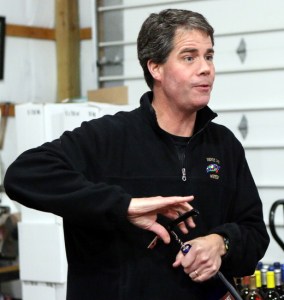
Dean “Deano” Wilson at a recent tasting at Mass Ave. Wine, Indy

Any wine geek living around Indianapolis the past 15 years knows Dean “Deano” Wilson. Deano had a couple of retail wine operations, a restaurant, and served as one of Indy’s “bon vivants” when it came to all matters wine.

His robust sense of humor and passion turned a lot of people into oenophiles. His story continues today in California pursuing a winemaking dream. Deano, wife Vicki and kids, picked up and moved to wine country nearly three years ago.

Wilson had industry connections and started working for winemaking icon Joel Peterson at Ravenswood.

Grape Sense LogoAfter two more stops, he started his own label – “Scribble, Scribble” – and debuted his whites last year and reds recently in hometown Indianapolis.

Wilson poured his Zinfandel, Petite Sirah, and Red Blend during several April stops. The wines were full bodied, a tad lighter in alcohol than normally expected and had a palate-friendly silkiness. The wines are distributed in Indiana, Tennessee and California.

Scribble, Scribble wine got its name from Wilson’s young son. The boy came home from school with some marks on a paper and explained it was Scribble, Scribble wines. Wilson added the phrase, ‘every scribble tells a story.” Indeed the wines are named for his children and mother.

Wilson feels lucky, with a bit of karma, since his initial departure to the west coast. “I’m from Indy and the first place I looked to make wine was Mare Island near Vallejo. Mare Island is an old naval base. The USS Indianapolis took out its last time from there. I’m from Indianapolis so it just felt right.”

Deano wants to permanently locate his family near that area at the heart of California wine country. To finish living the dream, he expects to grow his winery from the 700 cases of the latest vintage to 5,000 cases by 2020.

“Vicki is a chemistry teacher,” he said. “Our dream is by 2020 she gets to retire. Then she goes work a crush with a winery like Ravenswood and learns the wine analysis part of making wine. She comes back and we start our winery in the hills of Cloverdale in northern Sonoma County.”

His current and future location is a perfect spot for buying grapes. Deano bought Muscat Canelli white grapes from Lake County, north of Napa, and his Zin and Petite Sirah from Lodi west of San Francisco.

The location would give him the opportunity to buy grapes an easy distance away from Sonoma, Napa, Lake county and Lodi. The location would even make sourcing grapes from the California Central Coast a possibility.

A couple of steps in the winemaking process helped him achieve a wine style pleasing to customers wanting full flavor, a bit lighter alcohol, and a silky mouthfeel. First he picks grapes earlier than many to get more acidity. He uses oak aging to create balance and mouth feel. He co-ferments his Zin and Petite Sirah for his red blend. Fermenting the wines together “melds flavors and gives you deeper flavors,” Wilson explained.

This Indy wine icon hasn’t forgotten his Hoosier roots. He’s just living the dream from the coast. “If this is work, clock me in,” he cackled. “I don’t feel like I’m working and I don’t ever want to clock out.”

Share this:

  • Click to share on X (Opens in new window) X
  • Click to share on Facebook (Opens in new window) Facebook
  • More
  • Click to share on LinkedIn (Opens in new window) LinkedIn
  • Click to email a link to a friend (Opens in new window) Email
Like Loading...

Huber Sons To Continue Tradition

07 Saturday May 2016

Posted by Howard in Indiana, Newspaper Column 2016, Uncategorized

≈ Leave a comment

Tags

Blake Huber, Christian Huber, Dana Huber, Huber Distillery, Huber Winery & Orchards, Ted Huber

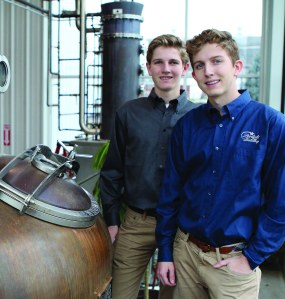
Christian and Blake Huber made career plans not long after learning to walk. If that seems silly, it makes perfect sense in a nearly 175-year- old family business.

The Huber family has farmed property near Starlight, In., atop the hills overlooking Louisville and the Ohio River valley, since 1843. The youngsters’ plans assure the Huber name and tradition will continue for a seventh generation as Huber’s Orchard, Winery, and Vineyards.

Grape Sense Logo“I was in kindergarten,” 20-year- old Christian said, stifling a laugh. “We had one of those ‘what do you want to do when you grow up?’ things. I wrote down winemaker and my teacher thought, ‘who is this guy?’ His family alcoholics or something?’ “

Turning over a growing business with 130 full-time employees and 700 acres in agricultural production was never a given. Blake said his parents never pressured him or his brother to consider the family winery as a career.

The young mens’ first steps are underway. Christian attends Niagra University in its Viticulture/Oenology program at Ontario, Canada. He is in the second semester of a two-year program. He spent parts of last year at IUPUI studying marketing and supply side economics. Blake is a senior at Providence High School.

Blake, Christian Huber

Blake and Christian Huber

Christian has considered California’s UC Davis, the country’s most prominent winemaking program, but cannot enroll until he turns 21. Blake is narrowing his college choices and trying to decide between winemaking or chemistry.

The proud parents couldn’t be more certain that when retirement comes, and Ted assures anyone listening he’s not ever retiring, the boys will carry on the legacy.

“They both have natural ability,” Ted said. “We really officially can’t taste wine with them because they’re under 21. But both boys have an unique ability to be phenomenal blenders.”

Dana said her sons are passionate and have a strong desire to learn. “Neither is going to quit until the job is done,” she said. “They’re both competitive and that will serve them well. They’re community leaders and they’ve shown that on their high school sports teams.”

Ted is just 50 years old. His concern for the sons is turning over a business experiencing rapid growth. “Turning over a business experience small growth is fairly easy,” he said. “But 20 percent-plus is pretty substantial number to keep up. You’re growing a business and buildings have to be built, new vineyards are rotating in and out, and new vines have to be planted. Taking over and running a company while it’s growing is a much bigger concern than when I took over.”

The sons aren’t shy talking about the future and admit to more than a few late nights talking about putting their stamp on the family business.

“It will be about expanding our distilled products and our line of wines,” Blake said. “We want to have a viable whiskey on the market. We’ve talked of getting a new tasting room, creating a new atmosphere but keeping the (original) barn.

“My dad has the product quality at a high level and hopefully Christian and I can keep up the legacy dad and grandpa started.”

As the next generation prepares to take over, the Starlight Distillery business is booming. Huber purchased 100 acres of farmland near the winery to grow corn for the distillery. Efforts in the distillery have recently focused on whiskey. The distillery is bottling just a small portion of the finished product now while the remainder goes into barrels for aging.

The distillery has ramped up to 130 percent of capacity, Ted offered, with more construction planned for later this year. As a matter of fact, in 4-6 years the total distillery production should match the current wine output of 50,000 cases annually.

The seventh generation of Huber farmers is ready to continue a Southern Indiana tradition.

Share this:

  • Click to share on X (Opens in new window) X
  • Click to share on Facebook (Opens in new window) Facebook
  • More
  • Click to share on LinkedIn (Opens in new window) LinkedIn
  • Click to email a link to a friend (Opens in new window) Email
Like Loading...

Oliver’s Pinot a Statement Wine

27 Sunday Mar 2016

Posted by Howard in California, Indiana, Newspaper Column 2016, Uncategorized

≈ 1 Comment

Tags

Bien Nacdio, Bloomington, French Camp, Oliver Winery, Paso Robles, Santa Maria Valley

Editor’s Note: This piece initially appeared in Madison Magazine, published quarterly in Anderson, ,In. It was recently sent out in a shorter version as my usual newspaper  column. It appears here in its full length as written for the magazine.

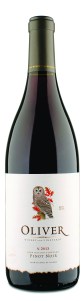
Oliver Winery in Bloomington may be known as one of the country’s biggest producers of sweet wines. But a recent Pinot Noir project provides proof that winemaking skill is not limited to the United States’ west coast.

Grape Sense LogoA mere 300 cases of a $45 Pinot Noir is just a smidgen of the Bloomington winery’s annual production. Oliver produced approximately 320,000 cases of wine in 2015. But for Bill Oliver and winemaker Dennis Dunham the Pinot project has shown what they can do with world-class fruit.

“We have the broadest range of business in our fan base,” Oliver explained. “Our bread and butter is sweeter wines. Those wines keep the lights on and that’s the reality of the world we live in. This project is about making wine for that part of our customer base who appreciates Pinot. It’s also an ability factor, it kind of shines a light on everything else we do. And, we like to drink it.”

That Pinot Noir is made of grapes from the much-respected Bien Nacido Vineyard in the Santa Maria Valley of California’s Central Coast. While the Oliver $45 price point might raise eyebrows in Indiana, a Bien Nacido wine in California consistently brings a much higher price.

Bill O Tasting

Oliver chatting, tasting Chambourcin in the tasting room.

How special is Bien Nacido? Price point explains much when it comes to wine grapes. Generally, good fruit can be purchased from the better California vineyards for $1,200-$2,000 a ton. At the other end of the spectrum is Napa Valley Cabernet Sauvignon which commands a king’s ransom of $6,000-$10,000 a ton. The extreme is the famous To Kalon vineyard, of Robert Mondavi fame, which commands in the neighborhood of $20,000 a ton and a required minimum of $100 price per bottle.

Oliver admitted he’d never paid more $1,600 a ton prior to 2013. The five tons of Bien Nacido Pinot Noir grapes cost the winery $4,500 a ton. Oliver has acquired five tons a year for the past three years. The first Pinot, a 2013 vintage, was released this past summer. The 2014 will be released during spring 2016.

Now to understand the wine math, it takes a ton of grapes to produce about 70 cases of wine.

Bien Nacido fruit is highly desired by the best California Pinot producers. During a 2014 visit most wineries with a Bien Nacido Pinot were charging $60 and higher to much higher per bottle.

Oliver has had a long standing relationship with the Miller family which owns a large Paso Robles vineyard, French Camp. The Millers purchased Bien Nacido in 1969 with the idea it would be great for a number of agricultural products including grapes.
Oliver3MM“We’ve bought fruit from them for probably 10 years,” Oliver said. “We’ve gotten to know them well. It’s been a fun and collaborative effort.”

Oliver has bought many of the standard California varietals from the Millers but became aware they owned the rock star vineyard as well. “They’re very protective of it,” he said. “They’re very concerned that every winery that buys fruit from Bien Nacido creates wine they can be proud of. They have a brand so selling their fruit is a big deal to them.”

Oliver and Dunham have visited the Millers in California and the vineyard owners have returned the visits. “They had been here and visited and over time as our relationship matured I think they became confident that we were the kind of winemakers they wanted making wine from Bien Nacido. They granted us the privilege to buy their grapes.”

Many Indiana wineries buy California fruit. Getting the grapes to Indiana requires significant cost as well. The freshly picked fruit is packed into cardboard boxes with dry ice and arrives in two days. “It takes a lot of coordination,” Oliver winemaker Dunham said. “I talk to them about when they’re going to pick. If they’re picking at night (when temperatures are cool), we have a truck there the next morning. It’s amazing if you look at the grapes, other than being in a cardboard box you wouldn’t know that the fruit didn’t come from our vineyard.”

Oliver2MMTerroir, that over-used wine word, is what makes the Bien Nacido fruit so special. “When I was in Paso Robles at French Camp visiting it was 92 degrees,” Dunham said. “When I got back to the guest house at Bien Nacido it was 62 degrees. Bien Nacido is like just over the hill, not very far at all but it’s a magical place.”

Pinot Noir, a thin-skinned grape, likes day time heat and cool nights.

Oliver admitted to some trepidation about taking on the challenge. “Pinot is a wine that has a reputation as being challenging to make so we wanted to be thoughtful about it,” he said. “On a per gallon basis a lot more resources went into this than any other wine we’ve ever made.”

Oliver, who was primary winemaker in his early years, and Dunham have learned more about making Pinot each year. During a late October tasting at the winery, Oliver and Dunham sipped the 2013, the soon-to-be released 2014, and the new 2015 vintage in a vertical tasting.

The 2013 is a lean and austere Pinot. The distinctive Pinot fruit does comes through with balance. The unreleased 2014 is even better with more extracted fruit – or in less wine-geeky terms – more pure Pinot flavor. The 2015 was moving to new French Oak barrels at the time of the visit.

“One of the things in learning to make Pinot Noir is you can over-extract the grapes and get pepper and stuff,” Dunham said. “We started light on the first one and now we’re at the point we think we have changed our winemaking just a little bit to extract a little bit more.”

In some circles such an expensive exercise can be called a ‘vanity project.” In all probability, neither Oliver nor Dunham would argue.

“Sometimes you are there in the vineyard and it’s a magical place and being there the wine just tastes better,” Dunham said. “One of the things about Bien Nacido is it’s just a great place to grow Pinot Noir. But it’s hard not to be in that area and not love anything in your glass. But being here at our winery and having Pinot Noir in your glass of this quality … it’s really, really good fruit and great wine.”

Oliver said buying the top quality fruit and producing a great Pinot is good for business. “We’re at a pretty high confidence level with everything we’re making,” he said. “Those people in California don’t have anything on us in winemaking.”

The 2013 Oliver Bien Nacido Pinot Noir is available only at the Bloomington winery.
Share this:

  • Click to share on X (Opens in new window) X
  • Click to share on Facebook (Opens in new window) Facebook
  • More
  • Click to share on LinkedIn (Opens in new window) LinkedIn
  • Click to email a link to a friend (Opens in new window) Email
Like Loading...

Chardonnay’s Multiple Faces

01 Tuesday Mar 2016

Posted by Howard in California, France, Newspaper Column 2016, Uncategorized

≈ Leave a comment

Tags

Bernard Billaud, Cahblis, Chardonnay

Mention Chardonnay and images of little old ladies sipping the yellow-ish wine at Tuesday card club comes to mind. Or the world’s most planted white grape may conjure up mental images of the wine-country Bachelorette party.

Grape Sense LogoNo grape is more loved nor hated than Chardonnay. For many years, often still prevalent, is an entire group of wine drinkers identifying themselves as ABC consumers – Anything But Chardonnay!

Chardonnay is even more dominating than many would guess. If consumers think of wine and California, they generally think of the king of grapes Cabernet Sauvignon. But guess what, Chardonnay is the most planted grape in California with Cabernet second.

Chardonnay is popular, in part, because it offers an array of flavors. Depending on style, the palate might discover lemon, pear, apple, pineapple, peach, citrus, honeysuckle, minerality, almond, and the list goes on and on. If the Chardonnay is oaked then expect vanilla, butter, butterscotch, and caramelization.

BB

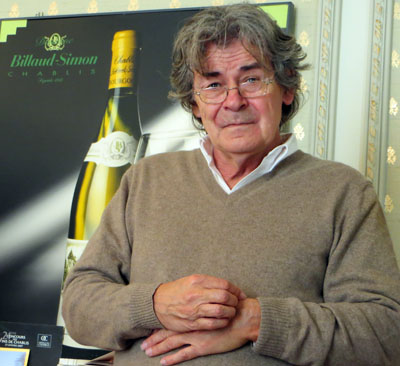
Bernard Billaud of Billaud-Simon

Winemakers around the world grow and produce Chardonnay in a multitude of styles to appeal to consumers or to represent the area – think terroir – where the wine grapes are grown.

So for a bit of education let’s compare the two extremes – California’s iconic oaked chardonnay versus the mostly-unoaked Chablis of Burgundy, France.

While the trends, even in California, is somewhat away from the big, buttery, and oaky Chards, there is still a market for those classic wines. What has happened in recent years is a mixture of oak and stainless steel to create a somewhat softer version of the taste you know.

In addition to oak aging, Chardonnay often undergoes malolactic fermentation. But let’s not make this chemistry or complicated. Malolactic fermentation means using a different type of yeast to create a softer tasting wine than one which is more acidic. Those creamy, round soft Chardonnays from Napa most likely underwent malolactic fermentation.

Traditional oaked chard pairs wonderfully with chicken, soft cheeses, herbed fish, pork, and turkey.

In the small village of Chablis, in northern Burgundy, chardonnay is Chablis. Chardonnay is all about minerality and acidity – no butter and creamy sips for the traditionalists.

Chablis

Chablis Vineyards

The Chardonnay grapes of Chablis come from a relatively small area. The wines are aged in stainless steel or decades old cement vats. Some of the wine is oaked but it’s usually neutral oak that does not impart the strong vanilla and woodsy taste. And often Chablis is a blend of the traditional and oak aging methodology.

There are wine writers and Chablis old-timers who will vehemently proclaim Chablis as the greatest white wine in the world. One of my most memorable wine experiences was centered on this discussion during a 2012 fall visit. Wine icon Bernard Billaud was meeting with a small group of wine press folks and being pushed on the younger winemakers uses of some oak.

The older statesman of Chablis became a bit aggravated and said, “If you’re not talking about acidity and minerality,” and then he growled, “you’re just making Chardonnay.”

Chablis, or unoaked Chardonnay, is a better match with shell fish and sharp cheeses. The best sipper is debate centered on stylistic preferences.

To suggest California and Chablis are the two primary styles of Chard isn’t too much of a stretch but there are many wines made in styles at all points between the two.

There are interesting Chards from California’s Central Coast, Oregon, South America and New Zealand.

It’s loved. It’s hated. There are many types of Chardonnay to try and one to match your palate.

Share this:

  • Click to share on X (Opens in new window) X
  • Click to share on Facebook (Opens in new window) Facebook
  • More
  • Click to share on LinkedIn (Opens in new window) LinkedIn
  • Click to email a link to a friend (Opens in new window) Email
Like Loading...

Taste Buds Determine Your Preferences

13 Saturday Feb 2016

Posted by Howard in Indiana, Newspaper Column 2016, Uncategorized

≈ Leave a comment

Tags

Indiana wine, Jim Pfeiffer, Traminette, Turtle Run Winery

CORYDON, IN. – If you know what you like you should drink it. Don’t let others tell you what to like and don’t let the wine snobs shame you for drinking wines – especially sweet or fruity wines – that you like.

Grape Sense LogoWhat seems like simple wine advice is really much of the theory behind Tim Hanni’s approach to wine. Hanni is a bit of a maverick in the wine world. His theory is a bit too involved for this space but his research shows people have from 500 to 11,000 taste buds. The receptors on your taste buds determine what you will enjoy. No major wine publications, a humble wine columnist, nor a fancy restaurant’s sommelier can change that.

Hanni has no bigger fan than Indiana’s Jim Pfeiffer, owner and winemaker of Turtle Run Winery in southern Indiana. Pfeiffer has been a Hanni devotee for a long while and has been applying his theories and, to some extent his marketing, to the winemaking process. His latest approach is a non-vintage Traminette combining wine from the 2013, 2014, and 2015 vintage into one bottle.

Pfeiffer, Jim-001

Pfeiffer pouring wines at his winery

“What fascinates me about the grape is its age-ability,” Pfeiffer said. “I’ve not seen a grape ever in my life that you can put it in the bottle, age it ten years then crack open a bottle and go ‘holy cow this is so good.’ It just develops and you don’t see it turning south ever.”

Without going into the entire winemaking process he combines Indiana’s signature wine vintages in tanks, inhibit the yeast and monitor the sulfur to keep the wine from ‘going south’ or going back into fermentation.

The idea started when he tasted back through his Traminette vintages to 2000 and found the wines surprisingly good. So his newest dry Traminette concoction is 50 percent 2015 Traminette with 25 percent each of 2014 and 2013. The end result is a white wine with the richness of an aged wine and the fresh fruit appeal of the latest vintage.

Nearly half of Indiana’s 77 wineries produce a Traminette, most are on the sweeter side. But Pfeiffer has made dry versions for a number of years. “The first thing about Traminette it’s a love-hate reaction with customers. They love it or loathe it.  One of things we’ve really latched on to is how humans range in different taste bud count and how those taste bud counts correlates to likes and dislikes.

Pfeiffer explains sweet wine drinkers like lower alcohol. So he produces a sweeter Traminette which he can’t keep in stock. As you move down to people with fewer taste buds, those folks like a little bit of sweetness and love good balance. Those wine drinkers like Pfeiffer’s annual production of his standard Traminette. The sweet and lower sugar Traminettes are the most common at Indiana wineries.

But for the folks with fewer taste buds who prefer drier wines, Pfeiffer has experimented and made dry Traminette commercially viable for several years. His soon-to-be released non-vintage Traminette delivers on the promise with just 12 percent alcohol. It’s a dry white with the familiar Traminette nose and palate but it offers a richer mouthfeel and more complexity than other versions. On the nose there is a whiff of the familiar flowers but no bouquet shoved up your nose like most Traminette.

The wine is quite dry and a bit more tart than other Traminettes. But any fan of dry white wines will find it an interesting change from most Hoosier wineries take on the state’s signature wine.

It takes a mad scientist, Picasso, or a maverick to break the mold. Pfeiffer would agree the fun in winemaking is trying something different.

Share this:

  • Click to share on X (Opens in new window) X
  • Click to share on Facebook (Opens in new window) Facebook
  • More
  • Click to share on LinkedIn (Opens in new window) LinkedIn
  • Click to email a link to a friend (Opens in new window) Email
Like Loading...

Online Wine Sites Have Great Buys

07 Sunday Feb 2016

Posted by Howard in Newspaper Column 2016, Uncategorized, Wine Education/News/Updates

≈ 4 Comments

Tags

2016 Burgundy Wine Trip, Last Bottle Wines, wine flash sites, WTSO

It’s a great time of year to buy wine.

If you’ve not yet purchased wine online you’re missing out on some of the best deals in the wine world. Online flash sites like Wines Till Sold Out, Last Bottle Wines, Invino, Cinderella Wine, and Underground Cellar offer a unique opportunity for the wine buyer who wants to explore, drink better wine, and maintain a modest budget.

Grape Sense LogoAs a wine journalist I probably have more wine in my home than most. A good guess is that more than half of that wine has been purchased online.

Most of these online retailers offer good to great wines at a pretty significant price cut. It’s not unusual to find wines marked down 30 to 70 percent. How do they do it? It’s pretty simple supply and demand. Sometimes wineries just need some cash flow – even the best wineries. So they’ll sell wines to sites like the ones mentioned above at a reduced rate.

Last-Bottle-Logo-300x103In the fall, and particularly close to the holidays, many wineries will start clearing previous vintages and let go of their wines to the discount sellers.

I’ve bought wine online for several years now but have never seen buys like the past two months. I’ve recently purchased $40 Oregon Pinot Noir for $16 a bottle. A few weeks back I snagged some Margaux region $50 Bordeaux for $25. Margaux is one of the premier growing sites for Bordeaux wines.

last bottleWith most online sites shipping is free with a minimum purchase. If there is a catch, it’s that one. But most of the time the minimums are 3-4 bottles.
Online wine purchases might be the best way to improve the quality of wine you’re enjoying for the best possible price.

You can find all of the sites mentioned above, and others, with a simple Google search. My personal favorites are Last Bottle Wines and WTSO. I have bought wine from all of those listed.

2016 Wine Trip – I’m taking a group to Burgundy, France this summer on my second Grape Sense wine trip – June 11-19. We’ll spend five nights in Beaune, the heart of Burgundy, and three free days in Paris. Want to know more, check it out on my blog or write me at my email below. Registration deadline is end of February. The trip is nearly sold out but 2-4 spots remain.


Share this:

  • Click to share on X (Opens in new window) X
  • Click to share on Facebook (Opens in new window) Facebook
  • More
  • Click to share on LinkedIn (Opens in new window) LinkedIn
  • Click to email a link to a friend (Opens in new window) Email
Like Loading...

Oliver’s Bubblecraft a Big Hit

15 Friday Jan 2016

Posted by Howard in Indiana, Newspaper Column 2015

≈ Leave a comment

Tags

Bill Oliver, Oliver Bubblecraft, Oliver Soft Red, Oliver Soft White, Oliver Winery, Sparkling Wine

You’ve seen the bottles in your local grocery and liquor stores. They’re not just on the shelves but in most locations there is a case or two displayed on the floor.

Grape Sense LogoBubblecraft wines come the ubiquitous Oliver Winery in Bloomington, IN. Though Oliver is making an expanding array of vineyard designate wines and fine wines with California grapes, the winery’s calling card has long been Oliver Soft Red and White wines.

Bill Oliver and his winemaking team put a twist on the Concord and Niagara grapes to release a bubbly taste “we all grew up with.” Those are the words of Oliver who oversees one of the nation’s biggest wineries not located on the west coast.

Bubblecraft came from experimentation, a piece of equipment purchased to bottle cider, and a competitive expansion in the sweet alcoholic beverage market.

“We tried small batches of a spritzy wine,” Oliver said. “It was a fun project. It’s a subtle variation on Soft White and Soft Red. It’s not quite the full blown bubbles of sparkling wine and we just really loved it. It transformed the wines.”

Oliver

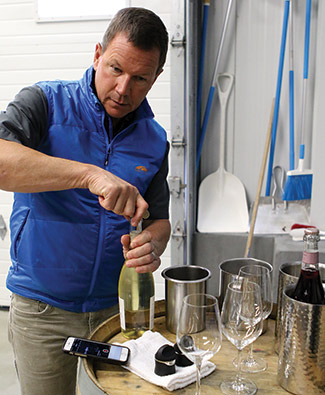
Bill Oliver opening a taste of Bubblecraft

Oliver had invested in new equipment for bottling cider that had a digital valve instead of a manual operation. It’s used to fill “spritzy things,” which is Oliver’s term for carbon dioxide. “Dealing with CO2 is challenging because it’s going to create foaming,” he explained. “Then if you introduce sugar, it makes it that much harder. We bought it for our ciders but wondered what else we could do with it.”

The experimentation with his two most popular wines paid off. “The result was an eye opener,” he said. “Our staff, distributors, and folks in the retail community were all like ‘Wow, this is really interesting.’ “

The wine was released late in 2015. Oliver said sales were expected to hit 10,000 cases. He hopes to sell 25,000 cases in year two.

A few years ago Oliver talked with me about the encroachment of sweet wines and sweet spirits challenging his market dominance. “It’s worse now,” he said. “It’s more than just the sweet wine market. It’s the flavored malts, vodka, and fake ciders. It’s just this whole all-in on the sweet wine consumer. We’re getting it from the ready-to-drink small containers (off the shelf). It’s an assault on our core customers so we’re answering with things like this. And, it’s working.”

The taste of Bubblecraft will feel familiar. But the carbon dioxide works to minimize the sometimes cloying sweetness of the two grapes.

Oliver, who has his eye on more new products and expansion, said the introduction of Bubblecraft can bump his revenue seven to eight percent.

If you like the Midwest’s sweet Concord and Niagara grapes the Bubblecraft may pleasantly surprise you. It will deliver the same familiar taste but with a really interesting twist.

Share this:

  • Click to share on X (Opens in new window) X
  • Click to share on Facebook (Opens in new window) Facebook
  • More
  • Click to share on LinkedIn (Opens in new window) LinkedIn
  • Click to email a link to a friend (Opens in new window) Email
Like Loading...

Wine Stats Almost Always Interesting

10 Sunday Jan 2016

Posted by Howard in Newspaper Column 2016, Uncategorized, Wine Education/News/Updates

≈ Leave a comment

Tags

Gallo, wine drinking, wine statistics

A New Year’s wine column usually focuses on the best of the previous year or predictions about the coming year. One scribe’s musings have minimal impact but hopefully can be educational. I’ve been there and done that with Grape Sense.

Instead of random ruminations let’s look at some facts. The Gallo company, yes Ernest and Julio’s namesake behemoth, conducts extensive research annually on wine drinkers and their behaviors. It makes for interesting reading.

Grape Sense LogoThe big wine news can be summarized as younger people are drinking more and more wine. Dry rose is still going through explosive growth. Wine drinkers are gathering recommendations from a wider number of resources than ever before.

The Gallo report said: “The top 3 factors that encourage wine drinkers to try a new wine include a friend or family recommendation (95%), bartender or sommelier recommendation (86%), and store employee recommendation (82%).”

There are age differences in how a consumer selects wine and perhaps they’re not all that surprising. Our younger friends, or millennials, are four times more likely to buy a wine based solely on the label. Baby Boomers, on the other hand, are looking for information. Boomers want to know where the wine comes from and love shelf talkers – those little notes by each wine describing the wine’s taste.

The average wine drinker sticks to what they know, mostly something I’ve argued against for years. But the average wine buyer sticks to about 3-4 brands they’ve tried and liked. The average price point for those folks is under $10 a bottle.

437479-Royalty-Free-RF-Clip-Art-Illustration-Of-A-Cartoon-Male-Wine-TasterHow do wine buyers see themselves? This was one of the more interesting categories. Those surveyed where given several choices. The top descriptor was Wine Adventurer at 35 percent, wine traditionalist at 20 percent while 25 percent described themselves as a wine novice. In smaller numbers, consumers selected brand loyalist with wine imposter and wine snob coming in at three percent each.

For years wine has become friendlier. If you like it, it’s a good wine. Don’t be intimidated by wine terms or other wine enthusiasts.

So what are winos afraid of, besides an empty bottle? Mispronouncing a wine’s name is the biggest fear at a whopping 42 percent. Another 27 percent feared talking about wine with someone else. Close behind was the fear of a waiter asking the consumer to taste before pouring and being judged by your wine choice.

Grape Sense has been focusing Rose’ for a number of years now. Young people no longer have to be sold. Millennials are almost twice more likely to buy dry pink than boomers. Rose’ tends to be seasonal though it holds up to many winter foods. Rose season starts in April, often when the new French vintage arrives, and peaks in late summer. Rose’ sales drop dramatically before Halloween.

There are more and more options today for convenience. Decent boxed wine is showing up at liquor stores and groceries. Consumers believe that boxed wine is “very convenient” while more than half of all consumers surveyed said they would have no issue drinking boxed wine as their ‘go to” wine source.

So what does all of it mean. It means that we end where we started with consumer trends and desires. Drink what you like and don’t worry about other opinions. Don’t be afraid to ask questions about wine and don’t let the so-called experts or snobs intimidate you.

The final pitch is, as always, try something new. Try a new wine, a new label, or a new country and you might get a reward bigger than expected.

Cheers to 2016


Share this:

  • Click to share on X (Opens in new window) X
  • Click to share on Facebook (Opens in new window) Facebook
  • More
  • Click to share on LinkedIn (Opens in new window) LinkedIn
  • Click to email a link to a friend (Opens in new window) Email
Like Loading...
← Older posts
Newer posts →

Recent Posts

  • The other White Burgundy – Aligote!
  • Some wine gifting advice
  • Real Indiana Chardonnay?

Categories

Enter your email address to follow this blog and receive notifications of new posts by email.

Join 2,063 other subscribers

Photography

Friend Me On …

Archives

My Summer With Lymphoma: Lymphoma - My Third Battle 2024

Scan: ‘No Evidence of Disease Progression’

That’s a nice way to say it. Yesterday, Mar 27, I had a PET scan (nuclear medicine) to look for cancer after my 60-day CAR-T cancer treatment. The headine here was the second sentence in the technical and detailed report. I really didn’t need to read anymore. I am cancer free and now can wear […]

Fighting Disappointment, Wrist Pain

Most of the past week or so has been dealing with the disappointment. I ended my 60 days of restrictions from cell therapy cancer treatment. But I learned a severely broken wrist can even out do cancer. I fell Sunday Feb. 19 in an icy parking lot. I had surgery the following Wednesday then Thursday, […]

Blog at WordPress.com.

  • Subscribe Subscribed
    • Howard W. Hewitt
    • Join 87 other subscribers
    • Already have a WordPress.com account? Log in now.
    • Howard W. Hewitt
    • Subscribe Subscribed
    • Sign up
    • Log in
    • Report this content
    • View site in Reader
    • Manage subscriptions
    • Collapse this bar
 

Loading Comments...
 

    %d