
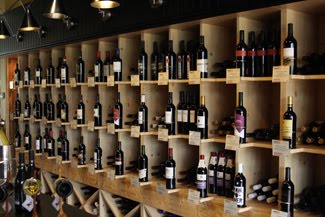
Vino 100 A Different Kind of Wine Store


There are liquor stores, supermarkets and wine shops for you to pick up your favorite bottle of fermented grape juice. But there is also a relatively new concept in wine shops that is growing and getting noticed.

Vino 100 is one of those shops. There are none currently in Indiana but there are around 50 nationwide.

My employment takes me through Columbus, Ohio, several times each fall and past a Vino 100 in Westerville which is a northern affluent suburb of Columbus. It’s just off I-71 so its an easy stop.

Liz Avera, the store owner, even recognizes us now when we stop 2-3 times each fall. Vino 100 takes some of the guessing out of shopping for wine. Every bottle has a wine barometer – a tag that measures the fruit to the dryness and the wine’s body from light to full flavored. For the most part, that system seems to work well. I shot a tight picture of one, shown here in the blog, but its probably a little hard to read. You get the idea!
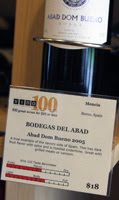
Vino 100, in part, means 100 great wines under $25. They have a few upper-end wines in the store but the vast majority are value wines.

The store is attractive and it’s a franchise. So the look and the wines they carry are pretty consistent from what I find surfing the web.

You will find wines you’ve seen in wine shops and several not found elsewhere. There is power in group purchasing.

Vino 100 is not alone. There is also Wine Styles, which I haven’t visited but hope to do so soon. There is one on Indy’s northside. And, there are others.

Any concept that makes wine buying easy for those who like wine but don’t want to study grapes, is a great idea.

Check out Liz’s store here. Or, Vino 100’s corportate site, by clicking here.

Send comment or questions to: hewitthoward@gmail.com

A Very Smooth Spanish Albarino


I’ve spent the summer with Albarinos, all of which cost under $15. So recently I picked up a $15 bottle – Martin Codax 2007 Albarino from the Rias Baixsas region of Spain.

This wine ranks near the top of all the Spanish and Portuguese Albarinos I’ve tried this summer. The juice is a nice light yellow, aromatic wine that hits you with some lemon at first sip. It has light minerality and a very smooth texture through the finish.

While there is not much going on in the mid-palate with the Martin Codax, I think most wine drinkers will love the finish. It’s not too acidic and goes down as smooth as it arrives.

Wine Enthusiast gave this wine 90 points. I’ve had some with bigger fruit the past few months. But this was very well made white wine.

This region is just above Portugal where that country makes its great albarino wines. If all of these postings haven’t gotten you to try albarino just yet, there are still some warm evenings left with grilled fish and a nice chilled albarino from Spain or Portugal. Chill them a bit longer and give Martin Codax a try!

Send comment or questions to: hewitthoward@gmail.com
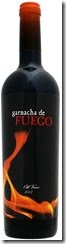
Garnacha de Fuego Old Vine Super Value


Grenache or Garnacha is usually great wine at great prices. I bought the Garnacha de Fuego for $8 at Grapevine Cottage in Zionsville.

This Spanish wine has a real smooth or silky texture in the mouth with mild acidity but pronounced minerality. For newcomers, this particular wine isn’t right on most Garnacha but I liked it a lot.

It’s usually a fruity wine with mild tannins. The Fuego may be a little lighter but its an easy drinking Tuesday night bottle of wine. Try it with milder seasoned dishes and you’re going to like it alot.

Send comment or questions to: hewitthoward@gmail.com

My First Experience With Uva di Troia

During a recent stop at one of my favorite Indianapolis wine shops, the proprietor asked me if I had tried “uva di Troia.” Of course, I answered: “Huh?”

I have to admit I had not only never tasted the grape but had never heard of it.

It’s grown in the Italian region of Puglia, near the Italian coast. I really liked the Santa Lucia Vigna del Melogram Uva di Troia a lot.

I found it a fresher taste on the palate than most Italian wines. It certainly was a very dry wine, as most Italian grapes, but the tannins were soft and it had a nice long finish.

There is a bit of a spice to the taste and a really nice balance. This would be good with red meat, mild pasta, and it was dynamite with chocolate.

I paid $14.99 for this bottle at Cork& Cracker in Indy. Santa Lucia practices organic farming.

This was one of the better inexpensive Italian wines I’ve tasted in a long time.

Send comment or questions to: hewitthoward@gmail.com
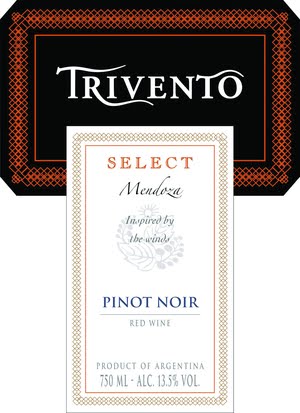
Maybe Pinot Noir Shouldn’t Be Made Everywhere

I get adventurous on my trips to wine shops and advise others to do the same. You’re going to have some misses for sure, but you’re also going to get to experience some exciting grapes/wines you’d never enjoy without an adventursome spirit.

A week ago I bought a Pinot Noir from Italy. I haven’t opened that yet. After tonight, I’m not so sure. This afternoon I bought a Pinot from Argentina. It was Trivento Select 2008 Pinot Noir. And it was from the famed Mendoza region so well known for its Malbec wines.

I tried it alone, with some cheese, good bread, and then chocolate. It had the texture and light feel of a Pinot but I couldn’t start to identify the taste characteristics.

My call on any wine is does it taste like the grape. Does it taste like Pinot Noir? I didn’t think this one tasted like Pinot at all.

I might add it was palatable, it wasn’t bad. I guess the winemaker made the wine he/she wanted to make. It just didn’t taste like Pinot Noir.

So the moral of this story is be adventurous, the reward will more often than not out-weigh the risk!

Send comment or questions to: hewitthoward@gmail.com
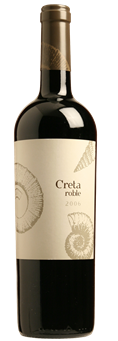
A Nice, Smooth Spanish Tempranillo


Trempranillo and Malbec usually top my list of value wines new wine drinkers should try. If you’re tired of lame Merlot, cheap and tannic Cabernet, and bad Chianti, then you should try some Malbec from Argentina and Spanish Tempranillo.

I went though a phase about a year ago where I drank lots and lots of Tempranillo. I sort of wore myself out with it. I recently picked up a couple bottles and last night opened Creta Roble 2006.

Tempranillo is often blended with other grapes to make great Spanish offerings but I like it by itself. This wine is 100 percent Tempranillo aged in a combination of American and French oak.

The taste is really smooth on the palate – easy to drink. There is a hint of earthiness while being fresh and juicy with a little spice.

When you see Spanish Rioja wines the chances are there is Tempranillo in the bottle. But also you should try it by itself for a real taste of Spain. This wine is produced from 70-year-old vineyards. Old vines like that almost always produce rich wines. The vineyards are in the Ribera Del Duero region of Spain.

It has moderately high alcohol at 14.5 percent and is an Eric Soloman selection. I paid $12.99 for it at Cork and Cracker in Indianapolis.

This is one of better Spanish wines for the price point that I’ve had in a long while.

Send comment or questions to: hewitthoward@gmail.com

My First Post on Palate Press Up Today

The wine blogging thing has been fun. A few months back I was contacted by fellow Indiana wine blogger David Honig to ask if I’d be interested in contributing to a new national online wine magazine – Palate Press.

Of course, I said yes!

The online magazine was launched about two weeks ago and is getting tremendous hits. They have rounded up some of the top wine bloggers in the nation as contributors. I’m not sure how I got invited but was happy to participate.

The magazine’s editor is W.R. Tish, the editor of Wine Enthusiast from 1988 to 1998.

I was asked to do something on Portugal’s emerging table wine values. If you read my blog regularly, you’ve noticed all the Portuguese wines over the past month.

Well the piece is up today! I worked for nearly four years at the Indianapolis Star, which at the time had circulation exceeding 400,000 on Sundays. Palate Press hit 3,000 and 4,000 hits in its first week. Still, there is something exciting about contributing to a national effort with such great contributors.

You can go directly to my story here. But check out Palate Press and all the great stories regularly.

Send comment or questions to: hewitthoward@gmail.com

Yikes – My First ‘Stinker" of a Vinho Verde White

I have spent the summer exploring and enjoying a lot of Albarino based white wines. I’ve had wonderful examples from Spain and Portugal.

Tonight I opened a Adega Coop Ponte Barca white wine. I had their Rose’ earlier this year and liked it a lot.

Tonight I opened a $9.49 bottle of their white that was a stinker – literally and figuratively. I opened the wine and took a sniff and it had that “cat pee” characteristic that some use in a favorable way with Sauvignon Blanc. I never liked that description. And, I don’t know what cat pee is supposed to smell like though I think it must be close to what was coming from this bottle.

The wine also seemed a bit cloudy and I worried perhaps the bottle was bad. It had a flat, unpleasant palate – maybe even a bit bitter. I couldn’t keep drinking it and perhaps it was just a bad bottle. But, I love Albarino and have written about a lot of great ones.

I bought this in Indiana, if you see the label I’d recommend you keep looking!

Send comment or questions to: hewitthoward@gmail.com

The Ethical Dilemma of Wine Samples

Write a wine column and get free wine! Wow, sounds like a great gig!

But it’s not that simple. And at the risk of a “holier-than-thou” remark or two, it’s even more difficult after spending years in the newspaper business where we talked regularly about ethics.

I recently reviewed bottles of Clif Winery Climber red and white that were sent to me for just that purpose – write about them. If that’s not clear enough – I didn’t pay for the two bottles of wine. That was the first samples I was offered or accepted through about 10 months of writing. The bottles have been in the rack a couple months.

This summer I had the chance to ask a couple of veteran wine writers/bloggers how they handled samples and I found their answers consistent with my thoughts. The offers are starting to become more frequent now, I imagine partly because of my participation in Palate Press.

The vets said they indeed accepted samples with the condition they might or might not write about the wine and there is no guaranteeof a positive review or mention.

Now, with four mouths to feed – newspaper column, this blog, Twitter, Palate Press – I can use all the material I can get!

But seriously, I found the answers “palatable” if you’ll pardon the pun. I will live by the above “conditions.” And I’ll note in my writing if a wine was a “sample” or tasted at some event.

There is a great deal of honesty, crediblity, and comfort in a direct policy.

Send comment or questions to: hewitthoward@gmail.com

The Climber White OK; Climber Red Rocks!

Two posts back I wrote about the Clif Family Farm and Winery Climber 2008 White wine. It was mostly Sauvignon Blanc and a pretty good glass of wine.

I opened the 2006 Climber red tonight and “wow” is about all I can say. The white was ok. It was a little better than ok, but nothing special. It was a little different with a creamy texture thanks to a blend that included Muscat and Riesling.

But the red was a bigger and more powerful wine than I ever expected for $17. And, my litmus test, it’s a wine you would expect to find at a higher price point.

Much like the white, the Clif Climber Red is an interesting mix of grapes. The Climber 2006 is a blend of 32 percent Zinfandel, 28 percent Syrah, 25 percent Cabernet Sauvignon, 11 percent Merlot and 4 percent Petite Syrah.

At first snarky glance, I thought the kitchen sink was missing. But then I put my nose in the glass and got the dark fruit and a big nose of oak and thought this was going to be an interesting wine. It has the spice of Syrah and the peppery finish of a Zinfandel. The Merlot and Petite Syrah add to the smoothness.

Sarah Gott is the Clif Bar folks’ winemaker. She is known for her time at Joseph Phelps, the uber-high-end Napa maker of Cabernet and their signature Insignia Cab blend.

She knows what she’s doing. This is a bit of a fruit bomb but I’d just call it a mouthful of big fruit-forward wine. It’s delicious.

The Napa Valley Register called this a bang for the buck wine. I couldn’t agree more!Both wines were sent to me for review as a sample.

I might buy the Climber White but I’d definitely buy the Climber Red. If you see it any where, pick up a bottle and give it a try.

Bottom line: An amazingly big wine for $17!

Send comment or questions to: hewitthoward@gmail.com