Transcontinental Travel & Press Trips

PARIS, France – When 2012 began it was hard to image Languedoc, Bordeaux, and Chablis would be added to my wine travel resume.

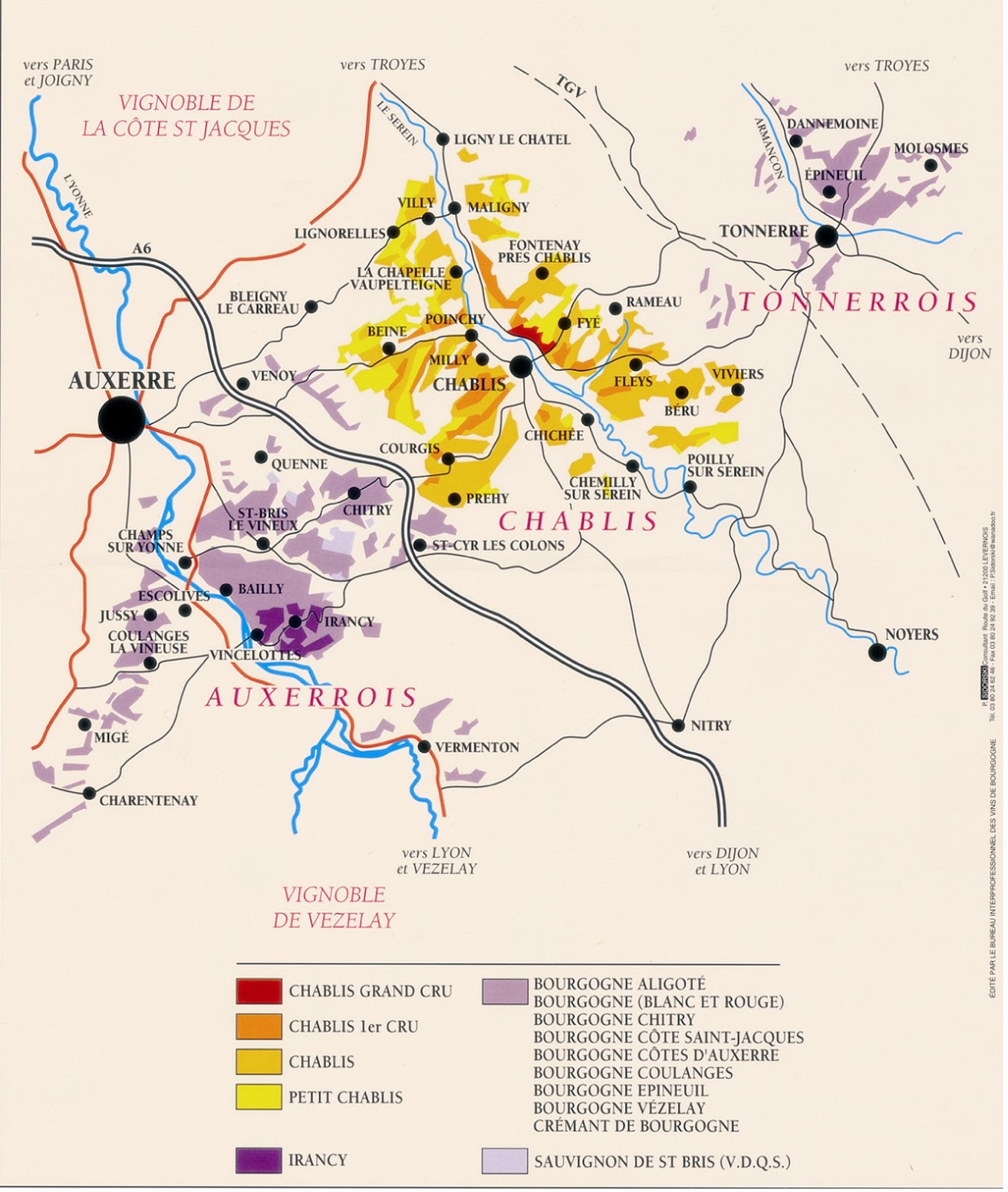
Yet, I just arrived at Auxerre, near Chablis, France.
I attended the Millesime Bio in Montpellier, in Southern France, in January thanks largely to networking and wine friends. A New York marketing firm representing Bordeaux winemakers found me for the July trip to Bordeaux’s Fete le Vin. This trip is a similar story with a NY firm representing Chablis issuing the invitation.
I was actually invited on a late-September trip to Provence, which I would have loved, but had to turn it down for an important work conflict. The contact then shared plans for an early October presser into regions of the Languedoc I had not visited in January – and I declined that one because of the bill-paying job. But when they mentioned Chablis at the end of the month, I knew I could make the trip.
The trip was unnecessarily arduous – Indy to Atlanta with an unexpected stop in New York. We flew up the eastern coast off the shores of North American and out of the Atlantic only to divert back to JFK airport to check an “electrical problem. That took an hour and half-plus before we again headed to Paris. I arrived six hours after my scheduled arrival and 15 hours on a Delta 747. And no one cares about other people’s flight woes, but if you’re booking a flight anytime soon I will note that on four Delta flights to Europe this year I’ve had three substantial flight issues.

All you need on a plane, a laptop and glass of French Merlot
My savior today was Noemie of Sopexo’s Paris office. The young French woman, who spent part of a year interning in New York City, was assigned to get me on my way to Auxerre. Even that proved eventful. Finding one’s way through Charles DeGaulle Airport is a challenge. But I’ve made it, so let the wine geekiness begin. It kicks off tonight with a welcoming dinner hosted by Jean Francois Bordet, President of the Chablis Commission of the Burgundy Wine Board our host.
Press trips are an oddity that have become very popular in recent years. I believe in full disclosure and that’s really the topic of the post. The sponsoring organization pays all costs. Obviously, flying four journalists from the USA to Paris, taxi rides, dinners, overnight stays, etc, isn’t an inexpensive proposition.
And for the record, if not obvious, they take very good care of us and treat us well! (That might actually be an understatement.)
I didn’t know what to make of these wine press trips in 2010 when I was invited to participate on a trip to Paso Robles, California. As a longtime traditional print journalist, I was taken aback by accepting a trip and perks which would have been unthinkable in the newspaper business. So I consulted with a few wine-writing friends who gave me the lowdown..
Essentially the advice was to go. They cautioned me to avoid any quid pro quo – or, ‘Yes, I’ll write all about your region and your wines if you take me on this free trip.’ And most smart New York marketing companies know how that works. Some do push a little harder than others on what one ‘might write.’ Instead, I’ve learned the best answer is a simple truth. I make no promises. But with a widely distributed newspaper column, this blog, an every-other-week column in Indianapolis’ NUVOweekly, quarterly feature for Madison Magazine, based in Anderson, IN., and as a founding contributing editor for Palate Press – The National Online Wine Magazine, I have a lot of mouths to feed.
So what do the wine regions get out of it? Couldn’t they just go buy an ad in Wine Spectatoror one of the major US wine publications? Well, they could but they wouldn’t be able to tell stories or match the cost efficiency.
I will post something this weekend about the other U.S. wine journalists on the trip – Roger Morris, Lisa Hall, and Michael Apstein. But we all represent different areas of the country with different audiences. I offer up to 300,000 homes because of my print work – and that doesn’t include the hits my column gets on the newspaper sites that post it after print publication. I have the national/international audience through Palate Press – if I find a “story” I like and one the editors of PP will accept.
So you do the math and a press trip is far less expensive for regional wine associations than traditional advertising venues.
Furthermore, I would argue, for the most part you are also winning over brand ambassadors. On the trips I’ve joined, most of the writers were making their first visit to the region. That first-ever trip to Paso Robles continues to show up in my wine writing more than two years after I visited the area. I know about Paso and its Rhone grapes, rich Cabernet and Syrah.
As one might imagine I catch a lot of good natured teasing where I work. “Off on another free wine junket, huh?” Well, yes I am. Frankly, most wine writers – including yours truly– make nothing on our wine writing efforts. I have a full time job in marketing and communication that pays the bills. The few pieces I am paid for over the course of a year might cover a car payment but not the monthly mortgage.
Please follow along. I learn things each time around. I didn’t buy an AT&T data plan on the two previous visits to France this year but did for this trip. That means I’ll be able to Tweet and do Facebook posts throughout the weekend.
The most exciting thing though is learning about a wine region new to me – in this case one of the most prestigious and terroir-driven regions in the world. We have a great itinerary.

Send comment or questions to: hewitthoward@gmail.com
Back to France: Off to Chablis Thursday

Tags

,

If I’m not a full-fledged Francophile by Christmas it’s not for a lack of opportunity. I’ll be leaving Thursday for my third France wine press trip of 2012.

I’ll join three other U.S. wine journalists as guests of the Burgundy Wine Board at the Chablis Fete des Vins, or wine festival. This is a quick trip. We arrive Friday morning, spend time at the festival and in the vineyards and wineries Saturday and Sunday and its then a quick return home Monday.

But hey, it’s France; and, it’s Chablis!

I’m going to try to blog each day and do more frequent updates on Facebook and Twitter. You can follow me through the links in the right column. On previous trips I didn’t activate a data plan for my iPhone but it’s only $30 so this time I’m going to give it a try.

Jean-Francois Bordet of Domaine Seguinot Bordet

We’re going to be staying in the nearby city of Auxxere, a town of about 40,000 people not far from Chablis. After a get-acquainted dinner Friday night, we have a very full Saturday agenda. But it seems quite an honor that we will be dining with Jean-Francois Bordet, the President of the Chablis Commission of the Burgundy Wine Board.

We’ll start in the vineyards and then taste the award winners of the 2012  Chablis Wine Awards.

Saturday afternoon will be an afternoon of tasting and discovery with more than 50 presenters of Chablis’ four appelations. They are certainly treating the journalists well on this trip. On Saturday evening we will be guests of the Confrerie des Piliers Chablisiens – “a wine society that honors those who by activity, writing, or way of doing things have served the cause of Burgundy and more especially Chablis.”

These societies are common in the great wine producing regions of France. It’s a real honor to be able to attend.

The Piliers Chablisiens parade gets us started on Sunday with visits after lunch to Domaine Billaud-Simon with Bernard Billaud and then a tasting at La Chablisienne.

We’ll be transported back to Paris Sunday evening to catch our Monday flights home.

This should be a really memorable trip. I’m not sure any region is best known for its expression of terrior through just one grape – Chardonnay – like Chablis. Follow along here and on my social media sites.

Send comment or questions to: hewitthoward@gmail.com

Michael Ruhlman: Wine Adds Flavor to Your Dishes

Tags

Ruhlman during a visit to Wabash College

So much fuss is made over pairing wine and food that the home cook may not think of wine as an asset in flavoring their dishes.

Michael Ruhlman, one of American’s most prolific and authoritative food authors, said wine can be used as a great marinade to enhance foods. Ruhlman, known for his 18 books and appearances on the Food Network and with Anthony Bourdain on the Travel Channel, made a recent brief visit to Indiana.

The Cleveland native said one of the most important rules is an old one. “Always use a wine that you would feel comfortable drinking,” he said. “But not a Chateau Margaux (very expensive French wine). You don’t want to throw that in a pot of stew; use a drinkable, affordable wine.”
“I like to add it in the beginning when the alcohol tends to burn off faster. You can add it at the end but it definitely flavors it different. I always add it first at the first de-glazing or adding of the liquid ingredients.”
Ruhlman has written books with some of the country’s top chefs. He also has learned from them while writing. His big career break came when he had the opportunity to help Thomas Keller, chef at The French Laundryin Napa, write The French Laundry Cookbook. The iconic wine country restaurant has long been considered one of the nation’s best.
“I learned this from Thomas Keller,” Ruhlman said. “People often like to put wines in marinades but the alcohol in marinades will actually de-nature the exterior of the protein and prevent any flavors from entering the meat. You’re not really helping the meat; in fact, you’re helping the outside become slightly mushy by marinating in wine.
“What I learned from Keller is that if you’re going to use wine, and it’s a great thing to marinate with, cook off the alcohol first then add the aromatics. Add the onions, carrots, and thyme or whatever you want. Throw in the pepper and some salt so that it steeps and cooks then flame it and make sure you can’t get any flame. Once the alcohol is cooked off then you have this really tasty fluid to marinate your meat.”

Ruhlman said he’d even eat boneless, skinless chicken breast if it was properly marinated. “And let’s face it, chicken breast is the skim milk of the protein world that America relies on. If home cooks would learn to marinate it properly they’d have something really tasty.”

As a celebrity chef often recognized for his appearances as a judge on Food Network’s “Iron Chef“, Ruhlman also gets asked about wine and food pairing.
“I tell people to use their common sense and pay attention,” he said.  “Does it go well with the food? Does the red wine go with the fish or does it overpower the fish? How does a white wine contribute to the flavor? Does it have the right acidity for the dish?
“We educate ourselves by paying attention to what we eat and drink. There are no hard and fast rules. I try to tell people not to be intimated by wine. There’s so much to learn and there are experts out there to varying degrees. Don’t ever feel cowed by the experts and rely on your own taste.”
Send comment or questions to: hewitthoward@gmail.com

A Little Wine News: Good and Bad!

Tags

,

First the good news:

I recently announced that a shorter version of my newspaper column Grape Sense would soon start appearing in Indianapolis’ weekly news and entertainment paper, NUVO.

My first piece ran today and is up on their website. The editors very much want a local and Indianapolis focus. Since the column has never overlapped much of the Indianapolis market previously, they were fine with me re-purposing a couple of columns I suggested.

The first one running was my story about River City Winery winning the Indy International Wine Competition’s top honor. Here is the link to the NUVO site and my column.

The column, and an occasional feature, will run at least twice a month. It’s great to have Grape Sense in the Indianapolis market. NUVO is a free distribution paper of more than 40,000 copies.

And now the bad:

Vino 100, Columbus, OH., is closing its doors. The Vino 100 concept is a national franchise the plays heavily on flavor profiles and a consistent look from store to store.

Like any good shop, the Columbus store was driven by its owner Liz Avera. Liz is knowledgable and friendly. She had built a good customer base. The store was located in the affluent Westerville suburb of Columbus.

I don’t know what went wrong with my friend’s store or perhaps it was just a matter of careers as much as business.

But this seemingly successful store illustrates a point I’ve made over and over. Support your near-by wine shops. You don’t need to buy wine at big-box stores for $1 a bottle less. The small wine shops will educate you, inform you and make you a smarter wine consumer.

It’s a sad day when any small shop closes, even if so far away. But don’t think the Vino 100 story is unique. There are small shops in Indiana struggling to keep their doors open. Go buy some wine!

 Send comment or questions to: hewitthoward@gmail.com
Great Friday Night Dining and Wine in St. Louis

Tags

, ,

SAINT LOUIS – Many of my wine writing friends and wine drinking friends tell me to write more about food and my hits will increase. I know they’re right. I do try to write about food and dining when I travel personally or on business.

I’ve had business reasons to come to this city on a few occasions but never an overnight. So when a group of us had to hit the Gateway to the West overnight we made plans. We were in the city for College business Saturday afternoon.

We had lots of recommendations for an Italian restaurant on the city’s iconic “Hill” district and settled on LoRusso‘s. It proved to be a great choice!

Our table was ready upon arrival which always gets me off on the right foot. We had two experienced wine drinkers, two young wine drinkers, and two current students so four wine drinkers.

We started with great bruschetta and the iconic toasted ravioli. Several of the guys had the standard dinner salad while I opted for the evenings salad special which was a thick slice of toasted bread, gorgonzola cheese, and then smothered with Roma tomatos with a drizzle of olive oil and fantastic balsamic vinegar.

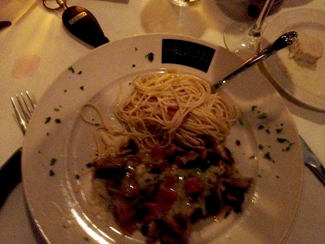
The highlight at LoRusso’s was the entrees, as it should be at any great restaurant. One of the guys had wonderful/spicy Cioppino. A couple had pasta/seafood combinations and two of us had beef tenderloin dishes. I had marinated then breaded tenderloin medallions which were charbroiled and served in lemon wine sauce. It was topped with prosciutto and mushrooms. The steak was perfectly cooked to a a nice medium rare and the flavor combinations were simply off the charts. It was one of the best dishes I’ve had in any Italian restaurant. It included several side choices; I had simple pasta in olive oil.

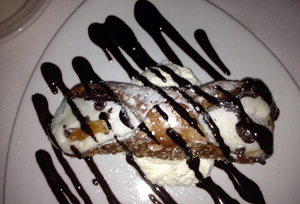
When asked, no one wanted dessert. Then when the waitress brought around the always-tempting dessert tray to show off the goodies – six desserts were on their way. A couple of the guys had blood orange gelato, one had this marvelous chocolate iced white chocolate/devils food cake with crazy raspberry sauce. I had the cannoli, the only low point of the meal. There was nothing wrong with the traditional Italian dessert, I’ve just had better in any number of Indianapolis Italian restaurants.

And that brings us to the wine. LoRusso’s wine list was top notch. They had wines from all the major wine regions of the world and great selection of Italian reds. The list included $200 Brunello down to $30 Valpolicella offerings. I didn’t  want to pay $70 for a Valpollicella so asked for a little assistance. The hostess, and one of the owners, recommended a couple of wines.

Since we had two novice wine drinkers I wanted something a little lighter. The owner suggested a Langhe Nebbiolo, which I was surprised to see on the list for a reasonable $38. The Bricco  Enrichetta 2010 wine was fruity, not nearly as dry as much Nebbiolo and perfect for our appetizers and salads. I thought it was nice and the younger guys loved it.

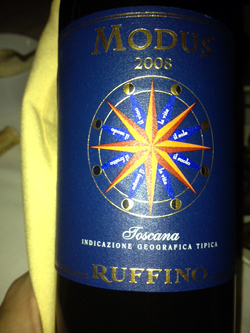
Interesting enough, everyone loved the bigger wine much more. The recommended Ruffino Modus 2008 blend of 50 percent Sangiovese, 25 percent Cab, and 25 percent Merlot was a great bottle. It sold in the restaurant for $48. (More on the price below.) It was a perfect pairing for those of us with the steak dishes but the other guys liked it as well.

If you’re in St. Louis, it’s hard to go wrong with Italian anywhere on the hill. But I can personally vouch for LoRusso’s as one of the best Italian restaurants I’ve ever enjoyed outside of Italy.

Since we had the young guys it was appropriate to visit Delmar Avenue, an entertainment area at the heart of a number of college campuses. It has bars, shops, live music, and all the spirited atmosphere you’d expect in a college town. We walked the sidewalks and read the embedded stars, like the Hollywood Walk of Fame, honoring notable St. Louis legends.

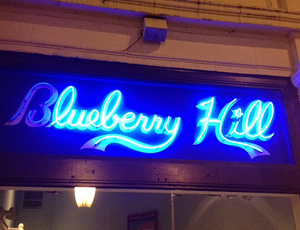
A visit to the area is not complete without a stop by the Blueberry Hill. Once a month legendary rock icon Chuck Berry still performs there. But it’s a tough ticket. Berry will pick up his guitar Wednesday night and play the Blueberry for his 86th birthday celebration! That’s amazing!

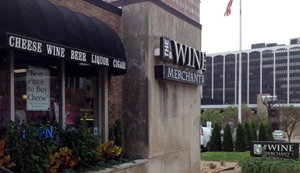
Saturday mornings for me are often a little wine shopping. After an internet search and some reviews, we settled on visiting the nearby Wine Merchant on Hanley Ave. It also proved to be a great choice. They’re known for their Burgundy supply and it wasn’t hard to see why. I was incredibly impressed by the staff knowledge and ability to match the right wine to just what the customer wanted. They also had a nice selection of cheese from around the world. It’s a great shop. I signed up for their email newsletter for their deals and Burgundy offerings.

Oh, that $48 Ruffino Modus Super Tuscan we had at dinner retails at about $23 at Wine Merchant. That’s a typical restaurant markup and only one I’m willing to pay when enjoying a great restaurant. It was worth the $48 at dinner, but a very good value for a more reasonable $23.

Send comment or questions to: hewitthoward@gmail.com

A Pinch of Salt (Oops, Oak) Can Make a Darn Fine Wine

Tags

, , ,

Peters and Miller in the vineyard behind Kokomo Winery
No wine tasting or even a subscription to Wine Spectator can teach wine enthusiasts more than a few hours visit to the vineyard. The ultimate experience is to tour a vineyard and then spend time with the winemaker.
Through four years of writing about wine it’s an opportunity I’ve been afforded on a number of occasions.
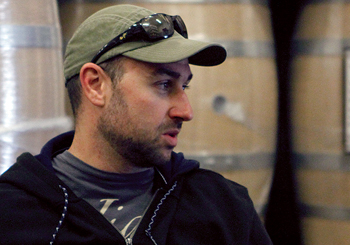
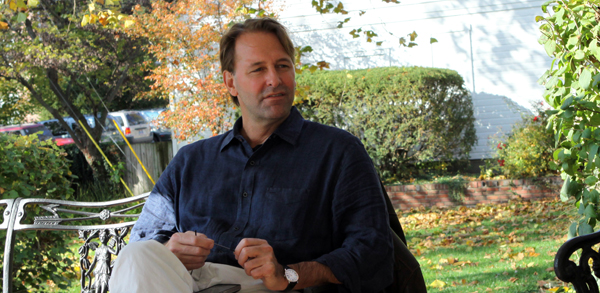
Kokomo Vineyard’s Erik Miller was a gracious host earlier this year and put a few things in perspective with his own winemaking thoughts.
After touring a barrel-making plant in Windsor, Calif, Erik talked about his vineyards and the winemaking process. The conversation started where the morning began and that was with oak barrel aging.
“My philsophy on oak is that we use oak like you’d use salt at a meal,” the Kokomo, IN native said. “You want some salt on your meal so it has that seasoning. It would be bland with out it to some degree but you don’t want to taste the salt.”
But wine is more than just the oak its aged in. Great wine comes from the vineyard. “It’s the terrior – the earth, soild, sun exposure, the bench (land),” Miller said. “That has to be first and foremost in the wine and then that oak is more than a storage vessel. The oak adds some tannin, some flavor and some mouth feel.
“We have to know how to use that and not overpower the delicacy or sense of place. Here I am making 12 different varieties of Zin alone and we use five different vineyards. If I put the same oak on all five vineyards I’d have the same Zin. That common thread would give me a house flavor. I never want a house flavor because those vineyards are very different.”
For vineyard manager Randy Peters the success of Miller’s Kokomo Winery gives him input on what he does with the land and vines.
“Now that we have many more small wineries I can see the end product,” Peters said. “My father and grandfather sold to bigger wineries. There were not a lot of small wineries in their time. All the grapes went into a blend with all the other growers. All the Zin went in a 10,000 gallon tank somewhere.
“Now with smaller wineries like Kokomo, it shows us the things we do in the vineyard throughout the year translates into the wine as a finished product. It makes us feel better spending money and doing work to make a better quality product. We can see it in the finished product by having vineyard designate wines.”
Peters isn’t a grower who sells the grapes and disappears to next year. He is a partner with Miller and regularly tastes the wines of all the wineries who buy his fruit. “That’s an important part of the process, especially if they’re going to put a vineyard designate on it. Then it has to meet my quality standards as well,” Peters said.
Peters and Miller agree that when a wine is a vineyard designate bottling its more than Kokomo Winery.”It’s Paulene’s Vineyard on that bottle, or Peter’s Vineyard,” Miller said. “If there was something lacking that Randy doesn’t think met his standards that’s going to hurt his brand of the vineyard. When you give up the fruit all control is not lost here because we’re in partnership with the vineyards because that name is going on the bottle as well.”
The Dry Creek Valley Kokomo Winery is modest but the wines go far beyond the limited releases seen in the midwest. Miller and Peters team for several wines which often don’t make it beyond the winery or California.
Howard’s Picks:
The Kokomo Cab is really pretty easy to find in wine shops and better liquor stores and a great wine for the price point. But for a real treat try some of the winery’s higher end wines. The Kokomo 2009 Timber Creek Zinfandel (vineyard designate) is tremendous wine. The wine had beautiful black pepper and nice acidity and a well balanced feel on the palate for wine of more than 15 percent alcohol. Wine Spectator gave this wine 90 points.
Howard W. Hewitt, Crawfordsville, IN., writes every other week about wine for 20 midwestern newspapers in Indiana, Illinois, and Michigan.

Send comment or questions to: hewitthoward@gmail.com

Grape Sense Picks Up Indy’s Nuvo Weekly

Tags

One of my goals since I started wine writing was to grow distribution to 20 newspapers. I achieved that just a few weeks ago, picking up the Huntington, In., newspaper and a free distribution entertainment newspaper in Michigan – Off the Water.

My second goal was to gain exposure in Indianapolis. I achieved that one today.

I will begin writing a twice-a-month piece on wine for NUVO, Indy’s Alternative Voice, beginning Oct. 19. I will custom write the columns for NUVO with a focus on Indiana, Indianapolis, and local issues. I will also do occasional features on wine.

Adding NUVO‘s 40,000-plus free distribution in metropolitan Indianapolis brings my total reach to nearly 300,000 homes monthly.

A big thanks to Entertainment Editor Scott Shoger for his welcoming to NUVO.

Send comment or questions to: hewitthoward@gmail.com
Two Easy-to-Find. Big-Flavored Red Wines

Tags

,

Don’t just walk past those brands you see everywhere, because some are really worth your hard-earned dollars.

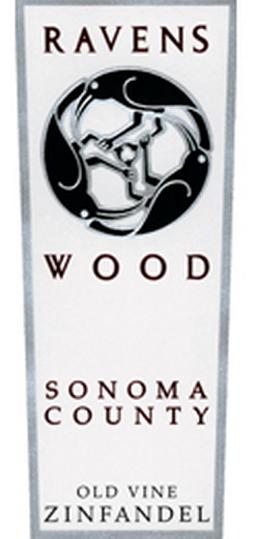
Ravenswood Zinfandel has seemingly been around forever. You can seemingly find it in groceries, liquor stores, and most wine shops. Ravenswood has a nice line of value wines and and even better line of vineyard designate and higher priced bottles.

Ravenswood 2009 Sonoma County Old Vine Zinfandel – This is a step up from Ravenswood basic entry level Zin and it’s dynamite wine for the money.

It’s rich, smoky, big fruit and nicely balanced red wine. You’ll get the dark fruit, maybe chocolate, and other rich flavors from this wine. It is like most California Zins in that it will hit you with 14.9 percent alcohol. But the fruit does a nice job holding up on the front of the palate. This $15.99 bottle doesn’t quite have the peppery finish I love of slightly higher priced Zins, but it will be a great pairing with your BBQ or pulled pork.

Ravenswood 2009 Sonoma County Old Vine Zinfandel, $15.99 SRP, trade sample, Recommended.

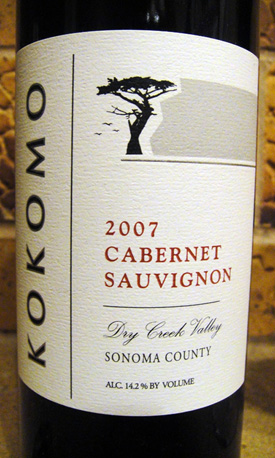
Kokomo Winery 2007 Cabernet Dry Creek Valley, Sonoma – Indiana native Erik Miller has made a name for himself in Sonoma’s Dry Creek Valley with Cab, Zin, and even his ever-improving white wines.

His 3007 is a nice Cabernet that you will find priced a bit all over the ballpark. I found it ranging from $31 to into the $40s on a net search; but I picked it up on one of the flash internets sites for just under $20 a bottle.

The wine is a big fruity, spicy Cabernet that may not be complex as some but very satisfying. I enjoyed the Cab with a ribeye off the grill and found myself quickly ‘quaffing’ down the Cabernet.

It does have a nice long finish and one you could decant and serve to most wine fans. Serve it with a well-peppered steak and its sure to be a hit.

I liked this wine a lot for what I paid for it and think it’s still a good buy at just over $31.

Kokomo Winery 2007 Cabernet Dry Creek Valley, Sonoma, $32 avg price on net, Highly Recommended as value buy for California Cab.

Send comment or questions to: hewitthoward@gmail.com

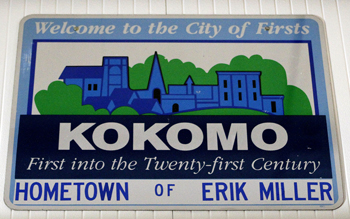
Kokomo Native Makes City Name Successful Brand

Tags

, , ,

Growing up in Kokomo, In., and earning a management degree at Purdue University seems an unlikely path to a successful boutique winery in California’s Sonoma Valley.

But Erik Miller has achieved the unlikely career path with the success of Kokomo Wineries, named after his Central Indiana hometown. It’s a story of two Purdue roommates and a fourth generation Sonoma grape grower combining their passion.

“I had a buddy who moved out to Sonoma County when we were at Purdue,” Miller said. “I came out and visited him and just fell in love with the place. It was really weird for a guy from Indiana to come to San Francisco and all you have is public transportation. Then I saw Santa Rosa and thought it would be big enough to support a career and still small enough for me to fit in and be comfortable.”
Erik Miller

Erik Miller

He accepted an offer to do harvest work for a California winery. “That’s how I became passionate about wine,” he said. “I worked with grapes in the outside and watched the winemaker working. I put all my effort then toward that career – being in the wine industry.”

Miller’s love for Kokomo made naming the winery easy. Working with his college roommate Josh Bartels and grape grower Randy Peters gave him a team to direct the winery’s success. He also thinks being a Hoosier has its advantages.
“I think there is one thing we have in the Midwest and it’s this stereotype that we’re hard workers,” Miller said in the modest winery offices. “That has been a connection with me and Randy and some of the other farmers out here that we’re down to earth, salt of the earth kind of people.”
Peters, on the other hand, is a fourth generation farmer. His family produced fruit and wine grapes for decades. “We didn’t have much money growing up,” Peters said. “We were growing fruit and wine grapes but working on a low margin. My dad had a second job.”
Peters credited Miller’s hard work and integrity for their ‘handshake contract’ and shared success. “The honesty and integrity of Midwestern people is true,” he said. “Growing up here I’ve always had a passion for raising the fruit but now I can see the end result.”
Growing up Peters would watch the family harvest be sold off to very large producers and dumped into 10,000 gallon tanks with fruit from all over the region. Now his grapes to go vineyard designate wines that represent his work as well as the winery.

Miller makes wines widely available in the Midwest. His Cabernet Sauvignon is a big fruity but well-balanced wine that can be found in many wine shops.

“Maybe people will try the wine because the name is comforting too them,” Miller said. “We don’t spend extra money on the showboat things, the tasting room and winery but we will not take shortcuts on the equipment it takes to process grapes. We use the best oak we can buy, and make sure we’re sourcing the best possible grapes.”
Miller may have Midwestern industrial roots growing up in Kokomo but his wines have been lauded by the biggest competition in the world, The San Francisco Chronicle’s annual wine contest.
Note: In four years I’ve not done a two-part column. But if you want to learn a lot about wine, talk to a winemaker. Next time Miller will talk about some of his wine-making philosophy.

Send comment or questions to: hewitthoward@gmail.com

Three Rose’ Wines Worthy of Consideration

Tags

Have you spent a summer looking through Rose’ colored glasses? If not, it’s never too late.

Sales are really exploding in this country for Rose’ wines – that happy middle between whites and reds. The beautiful dry Rose’ wines will please almost any palate.

Here are three worthy of your consideration.

Chaeau La Tour De Beraud 2011 Rose – The Costieres De Nimes region of Southern France produces many nice Rose’ wines. This was one of the most enjoyable I tasted this summer. This Rose was 50 percent Grenache, 30 percent Mourvedre, and 20 percent Syrah.

A simple primer on the grapes is that Grenache will give it great fruit flavor, the Mouvredre will add a little color and the Syrah adds body and mouth feel to the wine.

The wine had delightful fruit and balance. Rose’ done right is always very drinkable wine and this one was one of the best. It was in limited supply when I bought it several weeks ago in Indiana. If you find the wine, buy it.

Chateau La Tour De Beraud 2011 Rose, $11-$14, Very Highly Recommended.

Borsao 2011 Rose’ – One of my first really great Rose’ wines was a Spanish Garnacha-based wine. During my last trip to the wine shop, I realized I hadn’t had one this year! So I picked up a very affordable Borsao 2011 Rose.

Before any wine geekiness – the Borsao Rose’ can be found for $7-$12. At that price, you should buy a case.

The Garnacha (same as French Grenache) makes beautiful and fruity wines – especially Rose. The wine had nice balance but pretty mild acidity, perhaps too mild for some tastes. But it kills the drinkability test.

The differences between a Spanish Garnacha Rose’ and a blend from Southern France will be slight for many but worth the exploration.

Borsao 2011 Rose’, $7-$12, Recommended

Cuvee des Messes Basses Ventoux 2011 Rose’ – A Grenache blend Rose that is easily the lightest of the three reviewed here. Now, that does not mean it’s flavorless. But the fruit is mild, its soft on the palate and the acidity is barely detected.

Many wine writers/critics would hate this wine for all of those reasons. I like it for all those reasons. I like big bold wines, light bodies wines and wines which fall everywhere in between.

It’s delightful, non-complicated wine that’s easy to drink. Isn’t that what most of us are looking for on most trips to the wine shop?

Cuvee des Messes Basses Ventoux 2011 Rose’, I couldn’t find what I paid for it but under $15, Recommended.


Send comment or questions to: hewitthoward@gmail.com