
Back to Back Odd Tastings Challenge Any Palate

The Indy International Wine Competition is the biggest outside California. It’s been around awhile too! For the second year, I was a “guest judge” Thursday morning and found the second time around a bit easier.

No question it’s a real challenge for the judges to taste wines over three days and maintain some sensory perception on the palate. I stayed about two hours and during that time my panel tasted eight Nortons, nine Rose, 10 Sangiovese, and nine Port wines.

As you might expect, some were very good – and some were not.

The makeup of each panel fascinates me. The Purdue folks who run the show put together a very balanced group. I was taking part as a media person so I participated in discussion and rated each wine, but my vote didn’t count.

For the average wine drinker, I’ll offer this before proceeding. Last year I really struggled evaluating the wines because I had never had to spit before. It took me nearly an hour of an hour and a half of tasting to have any idea what I was doing. This year I found it easier. I struggled with some wines but largely had some handle on the taste and characteristic of each glass poured.

I was really happy that on most wines I was pretty consistent with the rest of the panel. Now, the fun is always when one person hated what everyone else loved or vice-versa. That has happened to me both years.

But back to our judges panel. I was seated at a table with Michael Palmer, President of The Venture Wine Group (a wine distributor), his family owns Madison Vineyards in Southern Indiana. Marco LiCalzi, an Italian native, is an assistant Professor and Enology Program Leader at the Univeristy of Missouri. Mark Fisher has a great job at the Dayton Daily News as its wine columnist. The leader at our table was Donna Adams, owner with husband Dan of Winzerwald Winery in Bristow, Indiana.

This was the 19th year for the competition with wines from 40 states and 14 different countries. As way of explanation, the judges receive wine in numbered glasses without ever seeing the bottles or knowing where the wines were made.

We started by tasting Norton which is grown around the Midwest. I found most of them a bit astringent reminding me somewhat of Indiana’s Chambourcin. (That will probably get me in trouble with somebody!)

Next came the Rose wines which I really love. There were some unique ones, including one made of Petit Verdot and another from Chardonnay. The judges couldn’t agree on a couple of those wines which makes for fun discussion. I really learn in such situations as the group debated a particular wine’s merits.
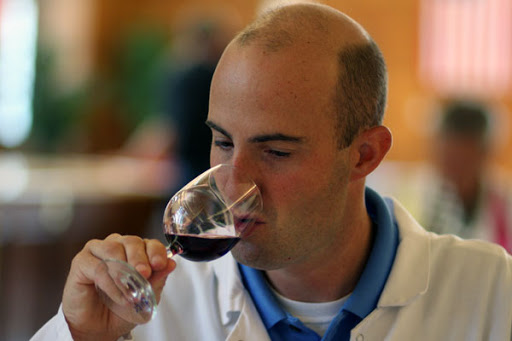
We moved next to Sangiovese, which I always enjoy. It probably represented the best quality across the board of any of the flights of the morning. The panel awarded several gold medals and one rare Double Gold. Right before the group broke for lunch we had Port, something I really don’t enjoy. I’ve tasted very few.

I found the category the most difficult. I’m just not used to wines with such high residucal sugar, up to 17 percent in this category. I liked a couple and the rest of the panel struggled finding consensus. There was a Chardonel Port and a Niagra Port that has to be pretty rare.

The judges were very welcoming and lots of fun. We had a great time with the Niagra Port. Mike Palmer insisted it wasn’t as bad as the rest of the panel leading Adams to ask for a re-pour. The panel thought the wine had gone bad. The second pour had a strong and recognizable nose of the sweet Niagra grape and moved from not scoring to a Bronze medal.

These competitions are controversial in some circles. The judging and consistency is debated, and fairly so. But I remember Wine Marketing Specialist Jeanette Merritt of Purdue University telling me last year Gold Medals equal dollars for midwestern wineries.

Donna Adams speaks to that in the video I put together at the top.

It is a great learning experience – but if you ever have the chance to participate in something like this, perfect your spitting skills before going the first time. That skill will also serve you well in the great wine regions of the world if you’re going tasting.

I felt like I fit in this year. Last year, I was just lost.

I’ll post the results from the competition here as soon as released.

In photos: Upper right: Fisher, right, and LiCalzi. Lower left, Palmer takes another taste.

Send comment or questions to: hewitthoward@gmail.com

Back Thursday for Second Try at Wine Judging

Last year I had a really great time as a first-time “guest judge” for the Indianapolis International Wine Competition. It’s one of the nation’s biggest outside California.

I was invited last year to experience what judges at these competitions go through and it was a real eye opener. One year later I’m returning, but I’ve yet to figure out how they taste so many wines in one day.

I tasted more than 50 in about an hour and a half, spitting all the while, and felt my palate was shot. You can read a newspaper column I wrote about the experience here.

The competition draws more than 3,000 wines from across the country. It has been held for years at the Indianapolis Fairgrounds but this year was moved to the Purdue University Campus.

Purdue employees provide much of the staffing for the big event.

So I’m going up Thursday morning and giving it another try. It’s a real challenge to blind taste 8-12 specific wines and judge them strictly for quality and not against each other. Oh, I do get to vote with the judges’ panel – but my vote doesn’t count!

I probably won’t spend the entire day but I’m excited. I’ll be writing something and posting photos Thursday night.

Depending on WiFi and time, I’ll update with Twitter posts throughout the day: @howardhewitt

Should be great fun!

Send comment or questions to: hewitthoward@gmail.com

A Primer on Cotes du Rhone Wines

This is my latest newspaper column – it’s a bit of a primer on Cotes du Rhone wines for newbies. All of my nearly 50 columns are posted on Grape Sense, linked in the right column.

If you like affordable and richly flavored wine you have to embrace the French.
Wine drinkers who want great fruit, a bit of earthiness, and smooth drinking juice, should try wines from the Cotes du’ Rhone region.

The wines pair great with food, have a spicy and almost juicy fruit characteristic on the palate, and the better ones give you a taste of what the French call “terrior” – the earth or environment. These wines will give you a beautiful bouquet on the nose that will bring you back again and again.

The Cotes du Rhone region sits in the very southeastern corner of France above Provence and below Beaujolais and Burgundy. The area is broken down into about 20 appellations or regions.

If you’re relatively new to wine or French wine, you know there is something different going on with the French. Well, in this case, we’re just talking about the wine.

Very few French producers put the name of the grape on the bottle. The French labeling laws are extensive and confusing for the non-French. The wines are labeled by the region where they are grown. The varied and rich French soil, which has grown grapes for decades, produces very different wines from micro climate to micro climate.

Don’t expect to see that change any time soon. Italy is the same.

So for great and inexpensive French wines keep your approach simple. Cotes du Rhone means it comes from the region. It might be a blend of grapes from different vineyards. Cotes du Rhone Villages wine comes from a specific region and is usually a little higher in price and quality. There are many great Cotes du Rhone wines under $15 and really great ones aren’t unusual at $12.

The top of the line wines are the big, bold and earthy Chateauneuf-du-Pape or “New Castle of the Pope.” You can read up on the 1300’s and Pope Clement V’s residency in Avignon in your spare time.

But the Chateauneuf-du-Pape wines are generally the area’s best. They are pricey starting at $35-$40

So let’s stick to the Cotes du Rhone. The area produces mostly reds but also some white and rose’. Grenache is the dominant grape. The wine is often blended to include Syrah, Cinsault, Carignane, or Mourvedre.

I’ve liked the Grenache-Syrah blends best. They deliver big dark fruit flavor from the Grenache with a hint of spice and earthiness from the Syrah.

Many of the producers are very small by Bordeaux, and especially California, standards. But in 2008/2009, the region produced nearly 400 million bottles. It is the second largest French wine-producing region in land mass and production.

Cotes du Rhone has become my fall back wine. When I don’t know what I want to drink I grab one. If I want to give a gift of wine I can do so with the confidence the label may bewilder the lucky recipient but they’ll like the wine.

Don’t be afraid to ask questions at your favorite retail shops. Cotes du Rhone wines are easy to find.

Howard’s Picks:
Domaine Lafage Grenache Noir
– This juice is incredible. I looked back at my blog tasting notes and wrote “rich feel in the mouth, and very smooth finish.” I’ve had it several times since that first bottle. It is a great introduction to the region, especially at $11.99.

Patrick Lesec’s Bouquet – I’ve plugged this wine several times but it’s for a reason. It was my 2009 ‘wine of the year’ in my newspaper column and online blog. It’s bigger in taste than the Domaine Lafage with more herbal notes and a bigger flavor. It has more of the earthiness and pairs great with food. It is dynamite wine for $12.99.

Send comment or questions to: hewitthoward@gmail.com

Montebuena Will Knock Your Socks Off for $9

I really get excited every time I open a top-producer Oregon Pinot Noir. I get equally excited, like I did a week ago, opening something new like my first Amarone from Italy.

I get just as excited when I find a really good wine under $10 – and that one doesn’t happen as often as the prior two examples.

But $9 wine represents what most Americans are buying and looking for in wine shops. Last night I opened Montebuena 2009 Rioja. It’s 100 percent Tempranillo with nice fruit, nice balance, not a ton of finish, but about as good a bottle of $9 wine as you’re going to find any where.

Getting good European wine under $10 is always a challenge and this is one you should seek out.

And I’m not the only one who liked it, if that matters. Robert Parker gave this great value juice 90 points!

Was it as good as Creta Roble at $12, no it wasn’t. But it wasn’t far off.

I bought this bottle at Zionsville’s great wine shop – Grape Vine Cottage for $8.99.

Send comment or questions to: hewitthoward@gmail.com

A Chat with Oak Hill Winery’s Rick Moulton

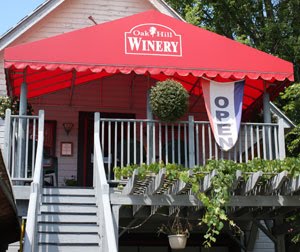
Whenever I am out traveling and have the time, I like to look for a nearby winery I’ve never visited. I was just north of Kokomo, In., Thursday and used the new Indiana Winery iPhone application to find Oak Hill Winery in Converse.

I made a call about a half hour before getting there and was delighted to learn owner/winemaker Rick Moulton was around and would be happy to visit.

Oak Hill is one of Indiana’s smaller operations making about 1,000 cases of a wine each year. They have a cute little tasting room on the second floor of a cottage right on Ind. 18 in Converse.

Their wines are a great introduction to wine for the novice. Rick uses all natural methods. For those who are used to Indiana’s sweet wines, you’ll get a real kick out of tasting Rick’s dry versions of the same grapes.

I tasted a handful of wines which I found to be well made but certainly on the much lighter side.

Rick and wife Betty Jo host numerous events and also lead bus tours throughout the year. They load up a travel coach and make an overnight trip to a handful of Indiana wineries. I thought that was a great idea!

There is a link to his website above. You won’t find oak Hill at Indiana’s wine festivals, they’re just not big enough for that. But if you are traveling north on U.S. 31 for any reason, Converse is just 15 minutes east on Highway 18.

Below is a short video interview I did with Rick about Oak Hill Winery.

Send comment or questions to: hewitthoward@gmail.com
Some Things Are Just Worth the Wait

I’d heard of Amarone. I listened to many wine writers praise the Italian wine.

But I’ll admit I didn’t know much about it. A couple of months back there was one on http://www.cinderellawine.com offered at $34 so a bought a couple bottles.

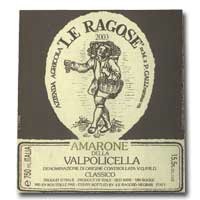
Recently, I’ve asked myself why have all this great and interesting wine if you don’t pop one open when least expected. So I made some pasta tonight and grabbed the 2003 Amarone della Valpolicella. You’ve seen Valpolicella on wine shop shelves probably at very reasonable prices. Think of Amarone as Valpolicella on steriods – in all honesty, I think I stole that line.

I had to look it up (honesty always the best policy) but it’s a blend of Corvina, Rondinella, and Molinara. It’s big, it’s rich, and just great alone or with a nice bold pasta like I made tonight.

It’s aromatic. The finish is very smooth – too refined for some palates, I suspect. It’s a wine I would definitely buy again if I can find some at a reasonable price.

It needed serious decanting. When I first opened the bottle it was disorganized and a little strange. But after a couple of hours it was big and rich and very enjoyable.

This wine at $34 is beyond the price point I normally write about but one worth trying for a special occasions.

It’s easier to understand the praise now that I’ve tried the wine.

Send comment or questions to: hewitthoward@gmail.com
Octavin System Getting A Lot of Press

I have written a couple of times about Octavin boxed wines in recent months. And now I’m seeing it turn up more in the wine press.

The company has sent several samples and I’ve been very pleased with how the wine holds up over time. The wines have been mostly really great “house wines.” They’re not going to knock you out of the Lazy Boy but for just over $20 for what would be four bottles – it’s pretty decent wine.

I’m currently tasting the Boho Zinfandel which I just opened recently. Then earlier this week I got the Big House white delivered which I’m anxious to try. So more to come.

But I stumbled across this wine.com video today talking about the Ocatvin system and thought I’d share.

Send comment or questions to: hewitthoward@gmail.com

Search for Prices On Grape Sense

With more than 300 blog posts, closing in on 50 newspaper columns, and more than a few bottles of wine, I never cease to be somewhat amazed at the people who want my attention.

I do get sample wine and have written about my personal/ethics policy on how I handle that. I’ve had several companies who wanted to add links to my site. The advertising that occasionally appears on my blog is actually directed through Palate Press – the Online Wine Magazine.

I’ve tried a couple of these gadgets before but usually removed them just as quick. But I got an e-mail today that I thought would be really useful for anyone reading Grape Sense – A Glass Half Full.

It’s permanently located (for now, at least) on the lower right side of the blog.

Wine-searcher.com gives you a chance to look up prices and where the wine is available. Right now it’s showing locations outside Indiana, where I am based. But it should readjust soon to my local IP address. Give it a try. It’s a fun tool. Please leave a comment if you have one about it!

Send comment or questions to: hewitthoward@gmail.com

Dancing Coyote’s Albarino a Very Pleasant Surprise


I’m back to ‘critter wine’ tonight and one I can heartily recommend if you can find it.

Dancing Coyote Winery does several non-traditional white grapes for California including Chenin Blanc, Grunter Veltliner, Verdelho, and the one I opened today – Albarino.

Anyone who has read this blog knows I’m a fan of Spain and Portugal’s clean and crisp Albarino. So I didn’t know what to expect when I finally got around to opening this one today.

It is very, very hot and humid in Indiana today. As a matter of fact as I write this entry at 4:45, it’s 92 degrees with a heat index over 100! I wanted something light and crisp after some yard work and a shower.

I opened the Dancing Coyote Albarino and it’s perfect for a hot day!

This is a clean and crisp wine with a pronounced tartness I really like. It has an aromatic nose and gives you a mouthful of citrus and honey, then some tartness and acidity. And at 13 percent alcohol it’s not going to be too heavy for a warm day.

Dancing Coyote is located in Clarksburg, CA., and it produced just 1,500 cases of this unoaked wine. I’ve tasted a lot of Albarino in the past year, all from Europe, and this one holds up as a refreshing alternative to any of the Spanish and Portuguese versions I’ve tasted.

Dancing Coyote is distributed in 16 states. In the Midwest, you’ll find it in some Ohio shops. It’s a great bargain at $9-$10. (I tasted this wine as a trade sample!)

I get excited to taste these interesting and non-traditional wines. Well, at least non-traditional geographically.

I’m not the only one who liked the critter wine either. Wine Enthusiast gave Coyote’s Albarino a solid 87 and Best Buy categorization.

Send comment or questions to: hewitthoward@gmail.com
Cork is Fighting Back – It’s the Green Alternative


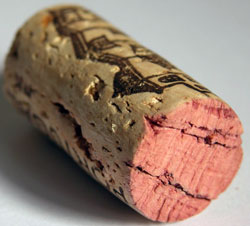
For a number of years now the cork versus ABC – formally known as “Anything But Chardonnay” and now as “Anything But Cork” – battle has raged.

Go to any retail store now days, and many wineries, and you’ll find most white wines below $20 with a screw cap. We’ve all wrestled with the synthetic closures, some too tight and some too loose.

The Cork industry isn’t going to take it lying down any more. I saw this story on Decanter.com’s news alerts this morning.

Check out the “I Love Natural Cork” website.

Send comment or questions to: hewitthoward@gmail.com