Argentina’s Bonarda Making a Comeback

My latest newspaper column as it appeared in 11 Indiana newspapers. I post all of the columns on this blog and separately on Grape Sense.

Argentina means Malbec, right? For many people that is the logical and most accurate perception. But long before Malbec became the rage, Bonarda was the grape of choice in that South American country.

I’ve written many times about Malbec as a great introduction to new varietals and also written about Malbec as one of Argentina’s best-known exports. But it might surprise many to know there is nearly the same amount of Bonarda planted in Argentina as Malbec.

Bonarda has been a staple in Argentina’s wine industry for years, used mostly in blending and for table wines. It is believed the grape came originally from Northern Italy’s Piedmont region. One school of thought was that Bonarda was California’s Charbono but that theory has been dismissed.

There is another faction that believes the grape comes from Savoie, France. But whether it genetically got its start in Italy or France, it’s definitely known as Argentine today.

The wines are easy to drink, fruity and very inexpensive. They have a bright and fresh texture with just enough acidity and even a little pepper. In most cases you’ll get really rich flavor along the lines of raspberries and other dark fruit from this deep purple juice.

The wine is easy to drink and good with grilled meat and red sauces.
A little research shows the grape is frequently described as the “workhorse” grape. It demands heat and sunshine, provides big yields, and is usually less expensive than Malbec.

It’s all over the internet that many of Argentina’s winemakers are taking a second look. Malbec has really taken the world by storm over the last decade. Could Bonarda be next?

I first discovered Bonarda at a wine bar in San Francisco in 2006 and have searched for great ones since. It seems in recent months more Bonarda is turning up in Central Indiana wine shops.

It’s pretty easy to find a Malbec/Bonarda blend. There will even be a little Syrah thrown into some bottlings. It’s tougher to find the 100 percent Bonardas but worth the effort.

I like the wine’s richness, acidity, and it has a certain earthy or smoky characteristic that many wine drinkers will find enjoyable.

Besides my pick-of-the-week below, here are a few names of reliable Bonarda producers: Familia Zuccardi, Altos, Alamos, Argento, Caligiore, Sur de los Andes.

Howard’s Pick:
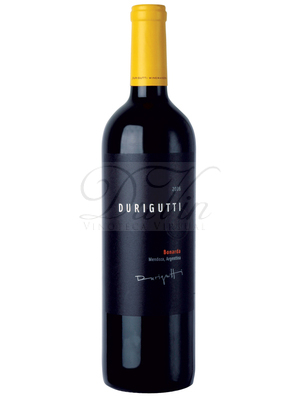
Durigutti 2007 Bonarda
– This is one of the best Bonardas I’ve found since that first one in San Francisco. It has a big, earthy nose of dark fruit. I picked up a little plum and it has an astringency I like in red wine. Although I paid $14 for this at an Indiana shop, the wine is widely advertised for as low as $10-$11.

Send comment or questions to: hewitthoward@gmail.com

Now It’s Time to Drink Some Michigan Wine

It dawned on me this evening I spent four days in Michigan visiting the state’s wineries and consumed only a single glass of wine – every thing else was the 1-ounce pour at 11 wineries. That one glass was a really rich Leelanau Cellars Rose with Tony Lentych at Leelanau Cellars.

It’s time to start drinking some of the treasure I brought back. Almost like a disclaimer, but a really positive one, Michigan wines are done in a lighter style. I think the wines are incredibly food friendly.

Tonight I opened a 2007 Peninsula Cellars Dry Riesling ($14.99). Peninsula Cellars is one of the most honored wineries in the state. They have won big at various wine competitions, particularly Michigan’s state wine judging, and were even recognized in Time Magazine.

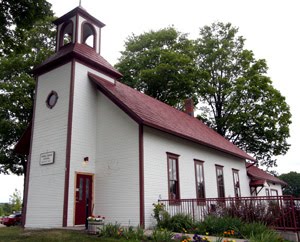
The charming old schoolhouse makes for a unique setting. The Riesling is really outstanding. I used to drink a lot of Riesling, primarily German, as I was really getting into wine. The Michigan Rieslings are bringing me back to the grape.

The state’s Riesling is definitely a lighter style with a hint of minerality instead of clubbing the plate with stone flavor like some Riesling wines can do. The Peninsula Cellars Dry Riesling has nice fruit – think of a really juicy, slightly over-ripe apple. It’s a rich wine that nearly reaches the level of creamy. There is a hint of acidity that’s perfect for this drinkable white wine.

I had the wine with a light pasta dish – onion, fresh lemon, cracked pepper, a splash of the wine, and shrimp over thin spaghetti.

I tasted many good to really great Riesling wines in Michigan. Much has been written about New York and Washington state Rieslings, which I have not tasted, but it’s hard to imagine any substantially better.

I need to transcribe some interviews with some of Michigan’s terrific wine people I visited and write my piece for Palate Press. The four men I interviewed had a lot to say. But they all talked about quality, the wine’s lighter style, and how Michigan wines can stand up to any region.

Obviously, I’ve become a believer.

Send comment or questions to: hewitthoward@gmail.com

The Beauty of Traverse Bay Area

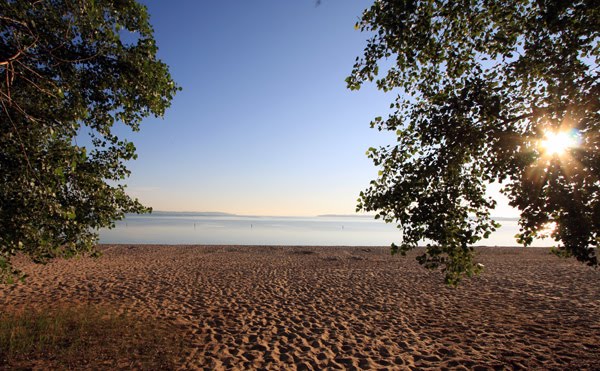
Northern Michigan is beautiful. I had never traveled north of Grand Rapids so I was taken by the gorgeous area around Grand Traverse Bay. I don’t put up “pretty” pictures all that often but this one caught my eye the moment I saw it and then snapped it.

This was East Grand Traverse Bay at about 8 a.m., July 14. By the way CLICK ON THE PHOTO and you’ll see a slightly larger version!

Send comment or questions to: hewitthoward@gmail.com

Friday was Final Day of Michigan Wine Tour

After two days of work and wine tasting I was ready to head home. But I really wanted to visit a few more of Michigan’s southwest wineries. There certainly are some differences, subtle and not, between the northern peninsula area and just above the Indiana state line.

I had asked Doug Welsch at Fenn Valley Vineyards for his suggestions. He made several and I was able to hit three of those spots.

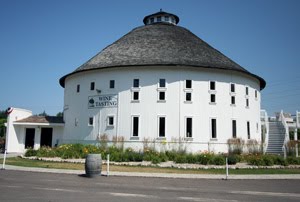
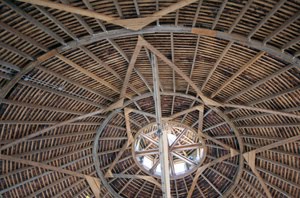
By far the most interesting from a visual, if not wine, perspective is Round Barn Winery. Rick Moersch is the owner and winemaker for one of the more unique tasting rooms you’ll ever visit.

The round barn was purchased in Rochester, Indiana, which is known for its annual Fulton County Round Barn Festival. The tasting room person told me they hired an Amish team of carpenter to dismantle and then reconstruct the barn at the current Baroda Township location.

They’ve done quite a bit of work inside to create two tasting areas opposite each other inside the barn. But the outside and interior roof structure looked as it probably did decades ago when it was initially built.
Oh, the wine wasn’t bad either! Actually, since I was on my last day, I did a full tasting at Round Barn. At previous stops I’d usually limit myself to 3-4 wines. I counted 28 wines on the tasting menu and tasted seven. Round Barn also makes vodka from grapes and has a beer brewery.

The RB Gewurztraminer was the best of the trip. It also happens to be the Round Barn’s biggest seller. I found a nice light floral scent and taste along with a strong presence of a honey-like texture. At $15.99, it was a really a beautiful wine. Some Gewurz and Traminette are so over the top they’re nearly undrinkable, but this was great wine.

I also liked their Cabernet Sauvignon. I didn’t taste many on the trip because I was just skeptical. It’s grown more in the southwest, which is obviously a little warmer area. The RB Cab Sauv was a serviceable big red wine. It was a little over-oaked, but otherwise a good wine. Off the Reserve list, it sells for $22.

I did walk up to the beer tasting room, though I’m not a big beer drinker. The summer wheat was dynamite!

One of the more interesting stops of the trip was Domaine Berrien that’s a small operation producing about 4,000 cases a year. Winemaker Wally Maurer grows 100 percent of his own grapes and is highly influenced by French varietals.
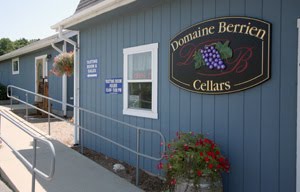

There were 14 wines on their tasting list. The tasting room guy helping me said they were known for their reds, which would make them one of few in Michigan. White wines tend to dominate most tasting lists.

They did have two whites that really caught my eye though, a Viognier and Marsanne. There can’t be many growing these French white grapes. The tasting room folks said Domaine Berrien was the only winery of 70-plus in the state doing 100 percent bottlings of those two.

The Viognier ($18.50) was great. It had hints of peach, a light, fresh appeal on the palate, and it was very dry. The Marsanne ($15.50) was beautiful. It is blended with 20 percent Roussanne (another one you’re not going to find in many spots). The wine had a certain rustic, natural characteristic I couldn’t quite put my finger on. It was even drier than the Viognier. I bought a bottle of the Marssanne. I can imagine it great with seafood – crab, crab cakes, or scallops.

I tasted four reds and loved two. The 2006 Cabernet Franc ($15.50) and 2007 Pinot Noir ($15.50) were both good but not memorable. The 2007 Lemberger was a fun discovery. The grape is German by history and a bit of a Syrah in a rustic style without the huge fruit bomb you often get in Syrah. It has won some medals and I could see why. It had a unique palate taste – something like your morning toast. No, I’m not kidding.

The other winner was the 2006 Crown of Cabernet ($19.50), which is a Bordeaux style blend of Cab, Cab Franc, Merlot, Petit Verdot, and Malbec. The more I tasted it the more I liked it. It was very reminiscent of most French wines I’ve tasted. It’s a tossup between this wine and Fenn Valley’s Cab Franc for the best red (outside of Pinot) that I tasted on the trip.
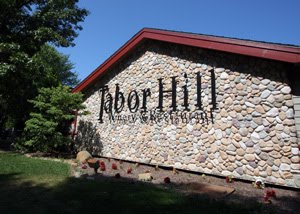
My third stop was at Tabor Hill Winery and that’s very well known around the state and even outside Michigan’s borders. I tasted a nice floral and dry Traminette ($13.95), a ‘07 Pinot Noir ($21.95) that was nice, a Cab Franc Rose ($14.95) that had no finish, and their Lake Michigan Shore Riesling ($17.50) which was their best wine.

I am always slow to be critical and try to choose my words carefully because every palate in any tasting room is different. Tabor Hill has very well made wines. But I found them to be a little too light across the board. Some people are just going to love them. Overall, I found myself becoming a big convert during the trip to lighter wines; these just took it a step beyond my tastes.

Again, I interviewed four great Michigan wine people and will be doing a story for Palate Press in the not-too-distant future. I want to write something of an overview and some other pieces for the blog, and plan a newspaper column on Michigan wine trips.

When it was all said and done I visited 11 Michigan wineries. I missed several I’d like to have visited. I can say the quality was superior. The state has the chance to really shake some people up when and if they get word beyond their own borders.

I was expecting great Riesling and found it. I expected no more than poor to average Pinot Noir and was blown away by just how good the Pinot was, particularly in the north. I had no to low expectations of the Cab Franc, which is grown in abundance, and generally found them way above average. Cab Franc is often thought of as just a blending grape but Michigan’s were really nice and affordable food wines.

I have lots of notes on all the wineries and for most part have only used a tiny fraction of that material so far. I’m looking to put up a single page listing details on each winery and a few notes on what I tasted. I hope to complete that soon.

Overall, it was a great trip and I can’t wait to go back. More on Michigan wine in future posts. Thanks to all for the comments here and on Facebook about my Michigan Wine Tour.

Send comment or questions to: hewitthoward@gmail.com
2 Lads, a Schoolhouse, and One Sharp Young Man

As I traveled Leelanau County, and the west side of Grand Traverse Bay, many of the winemakers and tasting room folks I chatted with insisted I had to go out on the Old Mission Peninsula which divides the Bay and features some outstanding wineries.

So after a business commitment Thursday morning, I headed to Peninsula Cellars. The peninsula has very little if any commercial development beyond the wineries and a few cherry and apricot stands dotting Highway 37. The peninsula is only three miles wide at its widest with a few stretches where you can see the Bay on each side. It’s really a beautiful area.

Again, I’ll be using most of the material from this week’s trip for a story on Palate Press about Michigan wine, a column or two and plenty leftovers for Grape Sense.

Peninsula Cellars may not be Michigan’s biggest winery by any stretch but it has grabbed some national attention for its white wines. They are known for their Rieslings which I found light, with good fruit and very moderate acidity. The two I tasted had nice pear flavors and really good balance – very drinkable. Now the description may seem redundant, I’ve used it the past few days. But the remarkable thing I’ve found is the consistently good white wines. It’s the consistency that has been most remarkable. (Are Indiana wineries paying attention?)

They have a dry and semi-dry Riesling for $14.99 each. I also liked their very dry Pinot Blanc ($17.99).

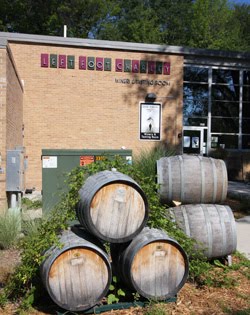
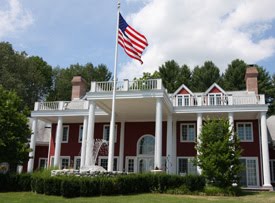
One of the most unique things about Peninsula Cellars is the tasting room’s location in an old one-room school house (See top right). They are smart enough to have kept the interior historically accurate (at left) and to have a little fun with the setting.

I just had to try their “Homework,” which has a great label showing a stack of school books. The wine was described as a sweet Pinot Noir Rose’ ($12.99). But I didn’t find it sweet it all. It was very fruity and would be a great fun summer wine. Oh, they also have “Detention” and “Old School” white and red wines. They call them “fruity not snooty.”

I had debated driving all the way out to the end of the peninsula to visit the newest winery, 2 Lads – but I’m sure glad that I did.

The first thing noticed is the incredible view of the eastern bay from the tasting room on a hilltop. The second thing is the ultra modern, urban looking winery. It’s all tied together by a very clever marketing person who has labeling which rivals anything you’ll see any where in the wine industry.

I tasted a beautiful Riesling, a nice Cabernet Franc, and the best Rose’ of my trip. They make their Rose’ from Cabernet Franc. I’ve written before I’ve had Rose from a whole host of different grapes but never this one.

This Rose’ rivaled, if not surpassed, many I’ve enjoyed from France and Spain made from Grenache. It just sounds yucky, Cab Franc Rose, but it was a wonderfully smooth and fruity wine with a hint of acidity. Notes are in the car, but I believe I paid about $18 for a bottle.

These two serious winemakers are going to be heard from in coming years. They only produced 4,000 cases this year with 2009 being a tough year weather-wise for grape production in Northern Michigan. It’s just their second vintage on the shelves. But they’ve clearly made a huge investment and they’re making some great wine.

Take a look at this short video to get an idea of what I’ve described above.

Today’s final stop was one of Michigan’s big wine operations – Chateau Grand Traverse. They are up around the 100,000 case mark and clearly one of the industry leaders in Michigan.

The wine list is extensive and interesting. I tasted good Riesling and an interesting dry Pinot Grigio.

But there was another standout wine and fun moment for me. First, they grow Gamay – the Beaujolais grape. You can’t call it Gamay in this country so they call it Gamay Noir. They have a regular bottle ($12) and a reserve ($19). I liked the reserve a lot. It was not as earthy as the French versions but very nicely made wine with true Gamay flavor with good acidity and tannins on the finish.

The second moment was a 23-year-old college student, I wish I’d asked his name, who had remarkable wine knowledge. He was rattling off residual sugar in various wines, other facts and details. He is taking the tests this year to become an accredited sommelier.

When tasting the Gamay Reserve this dark-headed fellow noted it was more like a Beaujolais Grand Cru – when I asked specifically which one he thought it most reflected he smirked and said he didn’t know, but correctly added there are 10.

Okay, I was impressed.

Friday is my last day on the road. I am going to make a stop or two in southwestern Michigan where the whole trip began then head home. I’m sure my dog misses me!

Postscript: Nothing to do with wine, but coming back through Traverse Bay I had lunch and apple pie at the original Grand Traverse Pie Company. Those readers in the Midwest, at least, will understand!

Send comment or questions to: hewitthoward@gmail.com
First Taste of Michigan Wine Impressive!

Wednesday’s Visits – I won’t use the word stunned or even surprised, but the quality of Michigan wines has caught me off guard.

I visited four different wineries, Traverse City up into the Leelanau area and tasted my way to Omena where I spent the night.

Along the way I tasted the best Riesling I’ve ever enjoyed, with Germany’s J.J. Prum being a possible exception. I’ve never been a big Cab Franc fan, but this cool growing climate, produces a lighter Cab Franc with a beautiful finish. I tasted 4-5 yesterday that were simply great.

The secret of Michigan wine, and particularly Northern Michigan, isn’t going to last long once people get a taste.

I’m going to be doing a story for Palate Press on Michigan wine, more blog entries and a newspaper column or two in the near future. So this is sort of an overview of the stops. I’m also trying to figure out a way to put up a series of entries about each winery, what they make, and notes on the ones I’ve tasted. I have linked each winery here so you can check them out.

I started at Left Foot Charley, an interesting operation in The Village on Traverse City’s west side. The Village is a series of very large old buildings that previously was a 3,000 patient mental health facility. The winery has a very modern and urban appearance once inside.

I tasted two memorable wines there, a very dry Pinot Blanc that has been honored time and again in numerous competitions. And a reserve Riesling that was simply the best American-made Riesling I’ve ever tasted. Most Michigan wine is very reasonably priced. That Riesling was $35 and that’s going to be a challenge when you can pick up the iconic German versions in the same price range.

My fist scheduled stop was at Shady Lane Cellars just off the Grand Traverse Bay coast to visit with winemaker Adam Satchwell. Adam is one of the area’s stars and its easy to see why. He worked as a winemaker under several California labels includes Steele Wines. He speaks passionately about Michigan’s cool climate potential for great wines.

Adam makes a strong point these aren’t big in-your-face wines, but nuanced and better for food pairing.

His Pinot Noir reminded me of Oregon Pinot. They’re lighter in style, elegant if you will, but still very interesting with strong fruit characteristics. I hate the cliché but many would consider them Burgundian.

Satchwell thinks Michigan is hitting its stride in quality. Not everyone up here thinks pushing the wine to other states is necessary. But Adam is a guy who wants the world to know they’re making world-class Riesling and Pinot Noir.

After tasting his wine, and two more stops after that, I couldn’t argue.

Black Star Farms is a unique operation driven by a business model that makes tons of sense. Don Coe, a former top executive for Hiram Walker, started the agritourism winery, inn, restaurant, creamery, and stables as a destination stop. It is stunning from Highway 22 which runs along the coast line – that’s assuming you can look to the left instead of the right and beautiful Grand Traverse Bay.

Don is a state agriculture commissioner and frequent spokesperson for Michigan wines. His real passion though is growing his business and watching others grow their wineries. He has interesting insights into agriculture, the business side of wine and tourism, and the quality of Michigan wine.

His wines were very consistent across the board from light Chardonnays to another stunning and elegant Pinot Noir. His winemaker, Lee Lutes, has even been playing with a wine he found in South Africa – a blend of Pinot Noir and Chardonnay. Sounds odd, I know. I tasted it and found it a little flat. But, it’s going to be interesting to see where he goes with it.

The diversity of his operation makes it an exciting place to visit. One wall of the tasting room is all glass and you can watch the cheese operation – Leelanau Cheese. The cheese made in French and Swiss styles was wonderful.

His operation is also largely self sustaining. They grow fruit, tons of cherries and many of the other commodities used in the operation.

Coe has one of the most impressive destination wineries you’ll ever come across in the U.S. It’s impressive!

The final stop of the day had a tie-in to work for me. I had a great time with Leelanau Cellars’ General Manager Tony Lentych. His winery will produce nearly 140,000 cases of wine this year making it Michigan’s biggest.

The business model is very different. Leelanau Cellars has a lower price point than many but it has very serious wine.

Tony manages the operation and talked about the company’s explosive growth and the opportunities for Michigan wineries to get their products into the surrounding states of Illinois, Indiana, and Ohio.

I have a lot more coming on all of these places. NOTE: I didn’t have internet access Wednesday night so this blog got up late Thursday. I hope to have an overview up later tonight on today’

Send comment or questions to: hewitthoward@gmail.com

Visiting An Iconic Figure in Michigan Wines


Doug Welsch immediately seems like the kind of guy who would never call himself an icon or pioneer but there are few who would argue he has been a key force in Michigan wines.

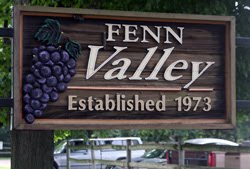
Welsch’s Fenn Valley Vineyards is one of the oldest wineries in Michigan. The winery sits just southeast of Grand Rapids near Fennville (pop. 1500).

Doug started the winery with his father and has watched the operation grow until today. He produces about 40,000 case of wine annually, half of which is done for other growers and labels. Of his 20,000 Fenn Valley cases , about 95 percent is sold from the spacious tasting room.

Welsch is a self-taught winemaker and leader in southwest Michigan’s circle of wineries. He talked comfortably about how he and the other winemakers get together to taste each other’s wines several times a year. Sometimes other topics, like marketing, come up but its mostly about the wine.

Doug has strong opinions about the industry and how agriculture is the basis for all they do. He admits he could sell even more wine if he had the right grapes to do it.

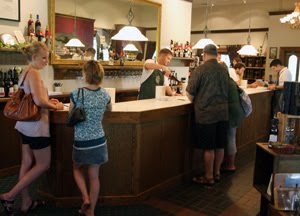
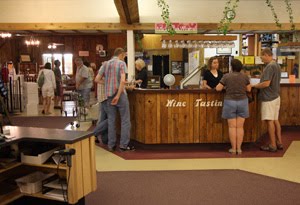
Indeed, on a Tuesday morning before noon there were about a dozen people in the tasting room already.

The wine list is extensive and you can go to the Fenn Valley website for lots of detail. The biggest sellers are the Riesling, Traminette, a white blend called Lakeshore Demi-Sec, and Select Harvest Vignoles.

He also makes a tasty dry Riesling that sells for just $12. The biggest selling red is a Chambourcin blend called Capriccio, also $12.

The knock-it-out of the park wine for me was a 2008 Cabernet Franc ($22). A very nicely balanced Cab Franc with a fantastic finish with just enough tannins for some ‘wow’ factor.

One of the unique things about Fenn Valley Vineyards is that it’s probably the largest tasting room in the world! Doug had his entire property designated as a tasting room. That allows him to take guests out among the grapes to talk about the vineyards and simultaneously taste his wines. What a great idea.

Take a look at this video and he’ll explain why he uses his vineyards as part tasting room:

I’m visiting several winemakers and wineries this week for a feature on Palate Press and a newspaper column or two. I hope to be posting tomorrow night on three more wine visits.

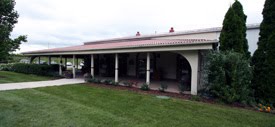
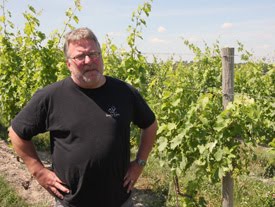
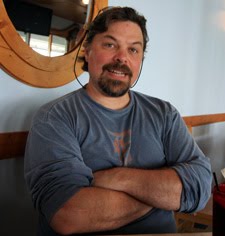
In photos: Top right, the entrance to the winery and tasting room. At center left, Doug talks about his years in the wine industry. Lower right, the big tasting room was starting to fill up early.

Send comment or questions to: hewitthoward@gmail.com

Michigan Wine Adventure Begins Tuesday

Michigan wine is getting noticed for its quality, tourism impact, and growing number of wineries.

I had pondered making a two-day trip into Michigan to see a few wineries then was able to combine that with some stops for work so I’ll be in the state through much of Friday.

I kick things off tomorrow with a wine and business stop. Tuesday morning I will visit one of the real iconic figures in Michigan wine – Doug Welsch at Fenn Valley Vineyards. For Indiana readers, think of Bill Oliver at Oliver Wines in Bloomington.

Welsch’s family has been in the winery business since the 1970s. So he has seen the changes in Michigan from a handful of small family farm wineries to today’s booming 70-plus winery industry.

Doug does some unique things at his winery and has a lot of opinions about the Michigan wine business.

I will post each day about my stops and will be crafting a story for Palate Press, a newspaper column for my 11 Indiana newspapers, and more material for this blog.

Things kick into high gear Wednesday. After a night in Traverse City, I’ll be stopping at Shady Lane Cellars, Black Star Farms, and Leelanau Cellars all along the Grand Traverse Bay in the most upper northwest part of the state.

Thursday will feature visits to the Old Mission Peninsula and a couple of winery stops there. I’ll make my way back down state later Thursday and hope to pick up a few more Michigan wineries then and on my way back to Indiana Friday later morning and afternoon.

I have really been impressed with what I’ve read while researching Michigan wines. I have some interviews lined up with some really key people in the Michigan wine industry.

Come back Tuesday-Friday nights for an update!

Send comment or questions to: hewitthoward@gmail.com

You Really Have to Try Today’s Boxed Wines

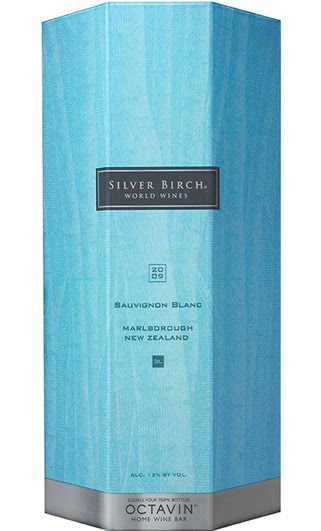
It’s a Sunday so at mid-afternoon during a day of largely housework, I wanted a little sip of wine on break. So I went to my refrigerator and poured the last of the Silver Birch Sauvignon Blanc into a glass and enjoyed it.

The catch here is that I “opened” the Silver Birch a good 5-6 weeks ago! This is the third in a series of boxed wines from Octavin Home Wine Bar. First came a Chardonnay, then Big House Red, followed by this container of Sauv Blanc.

Frankly, the Sauv Blanc was impressive considering you’re getting four bottles of wine at the cost of about two. The wine comes from Marlborough, New Zealand and has nice crisp acidity and just the right amount of citrus. Frankly, this was wine I’d buy by the bottle.

I haven’t loved all of these by any means. But this Sauv Blanc was darn good wine. And, I’ll admit I’ve become a fan of the Octavin system – note there are other boxed wine systems out there.

I’ve been slow to come around to the concept but it’s really great to go the box and get a single glass of wine or just a few sips.

About a week ago the Boho Zinfandel arrived and I’ll write about that one in the coming weeks.

All of these have been “trade samples.” I’ve written about this before, but it has been awhile. I occasionally receive wine to sample. My policy is like most other wine bloggers/writers – there is no guarantee I’ll like it or write about it, but I do accept the free samples. And there have been some I didn’t like nor write about.

Frankly, I could find nothing not to like about the Silver Birch.

Send comment or questions to: hewitthoward@gmail.com

A Lovely Tempranillo – NOT from Spain!

When you think of Spain’s wines the first one to come to mind is the noble Tempranillo grape!

If you think about Oregon’s wines, it has to be Pinot Noir off the top of your head!

But, when you mix the two what do you get? Lange Estate Winery and Vineyard’s Tempranillo.

When I visited Lange in 2009 I was purchasing a case of wine and threw in a bottle of the Tempranillo to round out the case. I tasted it in the tasting room and thought it was “okay.” I’ve tasted enough through recent years to know when I really like them.

I opened the 2007 Tempranillo last night to walk down to my neighbors for dinner. They serving a roasted pork loin and it sounded like a good match. I snuck a sip when I opened it and was frankly unimpressed – but wait!

As the wine opened up it really lived up to the Lange name. I got some chocolate, spice, and those earthy tones I love from Oregon Pinot Noir and France’s Cotes du Rhone wines.

Two wine drinking friends at the dinner were singing Lange’s praise before dessert was served. It was a little lighter than some Tempranillo you’ll have from Spain but Lange’s masterful touch which results in balanced wines makes it worth the price.

Lange buys these grapes from Umpqua Valley in Southern Oregon. It sees a combination of American and French oak. The alcohol is 14 percent on the ’07. The other thing I like, which is so true with Lange and other Oregon wineries, is this is a small batch wine.

It isn’t inexpensive is the catch, especially for a Tempranillo. The ’08 is listed at $35 on the Lange website. Frankly, I don’t remember what I paid but I recall full retail being just over $30 when I bought this one.

Send comment or questions to: hewitthoward@gmail.com