Tags
How does President Trump’s 25 percent tariffs impact the average consumer? We saw it up close Wednesday at the small wine shop where I work part time in retirement.
We’re big fans of Beaujolais wines and sell quite a bit of the gamay-grape wines to our customer base. We’re constantly looking for new and exciting Beaujolais Cru. Yesterday the La Pierre Morgon Cuvee’ arrived for a tasting event.
Most Cru level Beaujolais cost around $20-$25 with the very best maybe hitting $30-$40. This wine can be found online for about $40. But when the wine arrived yesterday the per bottle cost including the tariff, plus our standard markup, drove the price to more than $60.
Frankly, that’s going to be a tough sell. Sure, we sell many wines costing more than $60. But no one expects to pay $60 for Beaujolais.
While not earth-shattering headline news, it’s a real world impact of how a tariff can drive prices in your household.
Maybe you’re not a wine drinker or buy only value wine and see this as much adieu about nothing. But the National Foundation for American Policy (NFAP) estimates the 25 percent tariffs will cost each American household approximately $2000 next year. And recently the President has threatened to increase the tax to 100 percent.
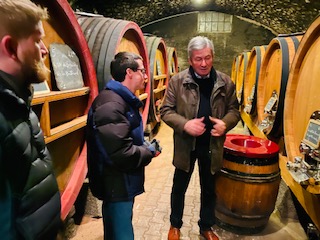
Laurent Drouhin, of the famed Burgundy house, said Tuesday his family is very leary of the tariffs and any increase to 100 percent. Drouhin has exported wines to the US for decades and have not followed popular trends of shifting their sales to China.
“If the 100 percent tariff goes into effect that’s going to big a big thing,” he said. “Maybe we have to pick up the phone.” The reference was to selling wine to China.
So the tariffs aren’t something effecting someone else. Eventually it will effect all of us.
Regardless of politics, the tariffs will impact all of us. Using tariffs to negotiate trade deals is like using a hammer to open a bottle of wine – pretty hard to swallow.

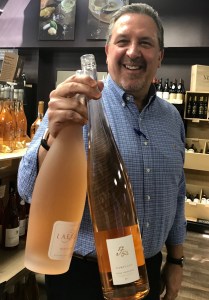
 Rose’ is beyond hot in the wine sales market – it’s a rocket ship. From mid-2016 to mid-2017, Rose sales in the U.S. increased by 53 percent in volume according to BeverageDaily.com and Nielsen sales data. Rose’ represents less than two percent of all US wine sales but the growth is unprecedented in any category.
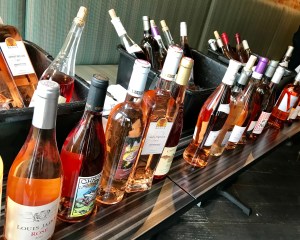 More than 160 Provence wineries are exporting the salmon-colored wines to the US. For more than a dozen years exports of French Rose’ have grown every years at double digit rates.
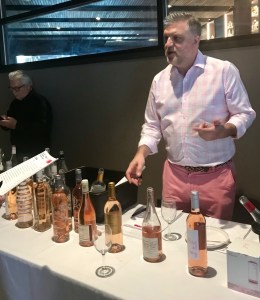
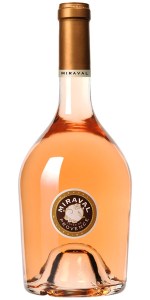
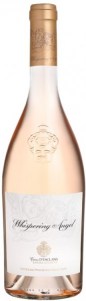 Howard’s Rose’ Picks: The Whispering Angel and Miraval are very good representations of Provence Rose’ but there are so many out there to choose from. I recently attended a distributor’s Rose’ tasting of more than 100 wines. Obviously, I could only taste a few but here are my picks and a couple of other recommendations.
 Cloud Chaser, FR. – lighter than many of the others but nice freshness; St. Andrieu, FR, – a nice choice if you prefer a bit more mouth feel; Esedune Cab Franc,- a bit above average but Cab Franc Rose’ continues to improve and take market share ; Canto Perdrix Tavel, FR. Tavel is often too big for my Rose’ palate but this one is more understated; Susan Balbo Malbec/Pinot, AR, – tasted this Argentinian winemaking rock star’s Rose’ several years ago and was underwhelmed. The 2017 version is quite enjoyable: Willakenzie Pinot Noir, OR. – nice, well-balanced Rose’ … one of many from Oregon.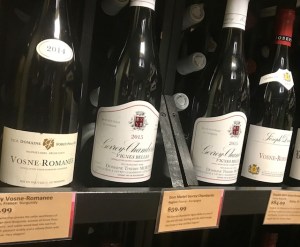
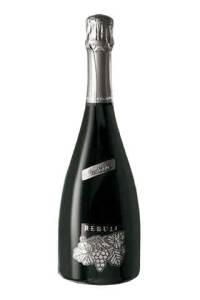 Here is an easy tip to make sure you’re buying quality Italian bubbles. Look for the region
 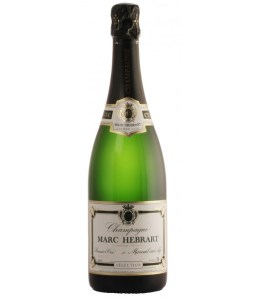 Of course, no discussion of bubbles can exclude Champagne. French bubbles remain the benchmark all sparkling wine producers seek to reproduce. The classic Chardonnay and Pinot Noir bubble blends set the world standard. Many producers near Reims, France, about 80 miles north of Paris, have been making Champagne for hundreds of years.
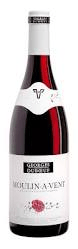 he wines I tasted at the Bluebeard dinner were good to outstanding. These wines are also not difficult to find. Many wine shops carry at least some Beaujolais. We tasted Duboeuf wines with our dinner.
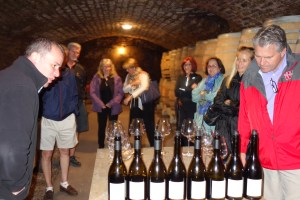
 Normally the focus is on value wine. But on occasion a look at other prominent wine regions helps with perspective. Additionally, I just returned from leading a wine tour group in Burgundy – my first-ever visit as well.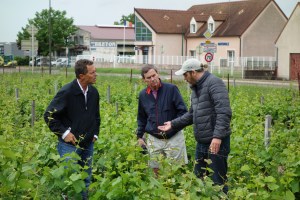
 Howard W. Hewitt