Butler Making Great Rose, Chambourcin

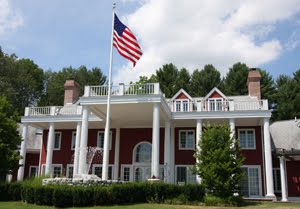
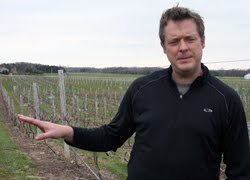
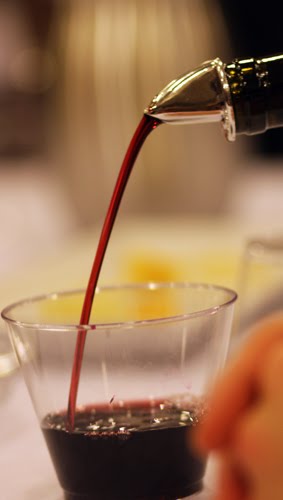
I posted a photo similar to this one (shot with my iPhone) to Facebook over the weekend. I made my first-ever visit to Butler Vineyards near Bloomington, In. Friday evening.

I loved the similar shot I took with a camera … and being in the vineyards so soon after budbreak … that I had to put the photo up here as well.

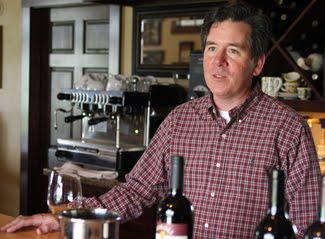
Jim Butler worked at the well-known Oliver Winery for six years before opening his own winery in 1983. I had a nice visit and will have a future newspaper column about Butler.

They do make really great Indiana wine and would be high on my recommendation list. The winery sits out in the country surrounded by vineyard a few miles north of Bloomington. Butler has a downtown Bloomington tasting room and three years ago opened a tasting room in northwestern Indiana’s Chesterton.

Butler has a big claim to fame from the 2009 Indy International Wine Competition. Their dry Chambourcin Rose won best Rose from thousands of wines submitted from 10 different countries. No Indiana winery had ever won one of the best-of-category awards before or since.

The 2008 award-winning vintage is all gone but the 2009 is pretty good wine. Butler also does some fun dessert wines. The dry Chambourcin may have been one of the best-balanced versions I’ve tasted.

Send comment or questions to: hewitthoward@gmail.com

Michigan Story on Black Star Farms Website

I do a few wine pieces that don’t always find their way to this blog – not much, but a few.

I was asked several months ago to do a piece on Michigan wine for Black Star Farms. I visited their very impressive operation near Sutton’s Bay, Mi. last summer.

Coryn Briggs, marketing guru for Black Star, wrote me a few months back about making one of 12 guest column submissions for 2011. I took a piece I actually wrote for Madison Magazine, an upscale quarterly publication in Anderson, and re-wrote it for the Black Star winery website blog.

They added my piece to their blog today. Here is a link to the story on their site.

Send comment or questions to: hewitthoward@gmail.com

Day Two’s Star: LedgeStone/Parallel 44’s Frontenac

GREEN BAY, Wi. Area – An early Saturday morning car trip to Northeast Wisconsin was rewarded with a taste of some fascinating wines made with cold climate grapes.

From Madison, the trip to the region just south of Green Bay is about two-and-a-half hours. I started the day at LedgeStone Vineyards in Greenleaf.

Tim Abel has strong opinions that Wisconsin’s wine future is the native cold weather grapes like LaCrescent, Frontenac, Marquette, Frontenac Gris, Edelweiss, La Crosse, St. Pepin, and Swenson Red. These cold-weather grapes were the work of University of Minnesota’s Horticultural Research Center’s Elmer Swenson.

I had heard about Frontenac before my two-day Wisconsin visit but had never tasted the wine. I’ll unabashedly admit I became a fan after tasting the grape in several different styles during my Saturday wine stops.

Abel has a modest operation with limited vineyards, but he’s growing all cold climate grapes. He buys some fruit and even uses his tasting room as a bit of a retail outlet for wines of the world.

My first-ever sip of Frontenac was Tim’s 2008 Frontenac Reserve, grown in the LedgeStone Vineyard. The bone-dry red wine has really nice acid and a tart black cherry flavor I’ve not had in any red wine before.

LedgeStone also offers a Rose of Frontenac that had a little more pronounced fruit and even bigger tartness. I loved it.

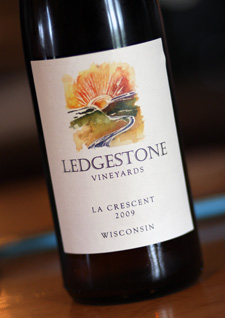
My first taste of LaCrescent, a white varietal, was equally impressive. The wine had lemon and apricot flavors, a long finish, and big acidity. But the wine was well balanced.

LedgeStone has a little higher price point than the other three visits. Tim’s Reserve is $28 at full retail while the LaCrescent is $22.

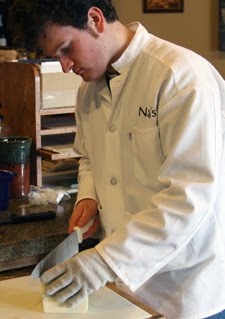
A stop an awesome cheese shop not far from Greenleaf split my two winery visits. I bought some artisan Wisconsin cheese at Nala’s Fromagerie. Great stuff!

See photos from my Saturday stops here.

Then it was off to visit Steve Johnson and Maria Milano at Parallel 44. The winery is a handful of miles off the Lake Michigan coast near Kewaunee. It is a Tuscan-themed winery that sets down a county road with a 10-acre vineyard out back.

The two are former lawyers taking their case to the consumer wine court with the cold varietal grapes. Steve was more outspoken than any of the other three winemakers about getting these unique wines outside the state. He sees the state’s future resting on the unique varietals and growth outside of Wisconsin.

Parallel 44’s Glacier White was a nice grapefruit flavored, crisp white wine made from Swenson and LaCrosse grapes. It was quite dry with pronounced acidity, but still balanced for $18. The winery’s $13 Tundra White is a combination of Frontenac Gris and La Crescent that was semi-sweet with some peach and honey hints. It’s easy to see new wine consumers scooping this one up.

And being so close to Green Bay, Steve and Maria had to have fun with the region’s cultural history. Yes, they have a wine called “Frozen Tundra!” The iconic moniker most associated with the Green Bay Packer’s Lambeau Field becomes a Frontenac Rose at the winery. The wine is a big seller with sweet cherry and a nice tartness.

I tasted a few other wines and did some extensive interviews. I’ll be doing an over-all story about Wisconsin wine for Palate Press in the coming weeks. I’ll also have a newspaper column or two about this visit and more for the blog.

Here’s a little shout out to Becky Rochester at the Wisconsin Grape Marketing Coordinator for the Wisconsin Grape Grower’s Association. She helped arrange my visits and shared a lot of helpful information. Also, I will post a big photo album from both day’s visit Sunday or Monday – so check back!

Send comment or questions to: hewitthoward@gmail.com

Frenchman’s Wollersheim Wines Set Bar for Wisconsin

Note: Please note a couple of corrections on statistics regarding Wollersheim. I double checked those with Philippe Coquard Monday morning.

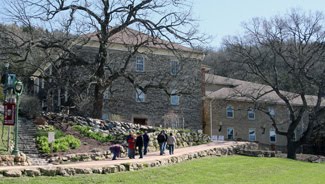
MADISON, Wi. – Wollersheim Winery is a must visit for any wine fan in the Midwest. I had done my homework before visiting the Wisconsin icon and had seen photos, but I wasn’t prepared for the size of the operation and estate.
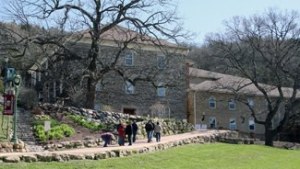
The first vineyards were planted on the site in the mid-1800s. Bob Wollersheim took over the property in the 1970. The state’s biggest winery is now run by Beaujolais native Philippe Coquard, who married Wollersheim’s daughter.

I spent nearly two hours with Philippe Friday morning touring the winery, the buildings from the 1800s, and tasting his wines. The gregarious and opinionated Frenchman was extraordinarily generous with his time and knowledge.

See a photo album from the Wollersheim visit here.

Wollersheim produces 52 percent of all the wine produced in Wisconsin. He does have distribution into Northern Illinois and more recently Chicago. One of many interesting points about Coquard’s winery is a single wine caused the explosive growth.
Philippe’s signature Prairie Fume, a Seyval grape wine, has won a list of awards the envy of any winemaker in any state. Prairie Fume has an interesting contrast of orange and grapefruit on the palate. It has a unique richness you don’t normally find in that wine at other Midwest wineries where Seyval is grown.

Wollersheim’s business is dominated by one wine. When he first started making the Fume he bottled about 500 cases. Today the Prairie Fume makes up 32,000 of his 94,000 production. You read that right!

“Our business has grown because of the Prairie Fume,” Coquard said. “Without Prairie Fume, we wouldn’t have anything.”

He also makes beautiful wines from the often-funky Marechal Foch grape. Except Philippe’s Foch has no funk – and that’s a good thing. He is making some great port and a very nice, also award-wining, Rose.

My second stop of the day was a nice drive to Mount Horeb, Wi. The town of 7,000 is known for its Norwegian heritage and charming downtown. But watch out, there are Norwegian trolls everywhere!

A quick aside, I had lunch in a small diner called Schubert’s that has a 100-year history in Mount Horeb. They served freshly breaded, deep-fried cod with Swedish rye bread. I wanted the pie – it was beautiful – I resisted.

Back to the wine. Alywn Fitzgerald’s Fisher King Winery is about to become bonded and take off in a downtown Mt. Horeb location. It will be an urban winery in a small, tourist-heavy little town. It’s interesting because his small effort follows much bigger ones in cities like Portland, Or.

See photos from my Mount Horeb visit here.
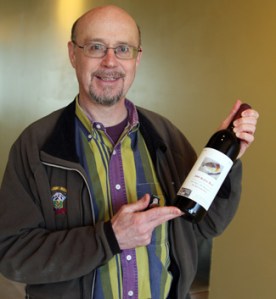
Fitzgerald served up a glass of 60 percent Millot (mill-oh) and 40 percent Marquette that he had made at home. It was remarkable in that I’d never tasted the grapes and couldn’t really compare it to any other flavors. The wine was balanced, with smooth fruit and a rich feel on the palate. It was initially quite acidic, but really opened up with just a little time.

The two stops today show Midwestern states can grow different grapes and make very nice wines consumers are going to enjoy.

I learned in just one day Wisconsin is different than Indiana or Michigan, which I visited last summer. The industry here isn’t as mature. Wisconsin hs more than 50 wineries, but like most Midwestern states the growth has occurred over the last decade.

Lots more to come on these two visits in the future. I’ll be doing a piece for Palate Press on Wisconsin wine and will have plenty of material for a newspaper column or two and certainly the blog.

Tomorrow morning it’s up early and off to northeast Wisconsin for stops at LedgeStone Vineyards and Parallel 66 out near Lake Michigan.

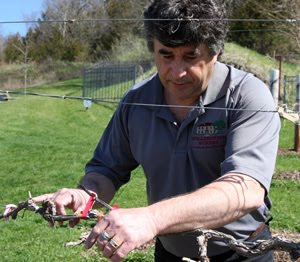
In photos, top to bottom: The Wollersheim historic and new buildings. Coquard talking about the bud break in his vineyard. Alywn Fitzgerald with his unique Millot/Marquette blend.
Send comment or questions to: hewitthoward@gmail.com
Heading to Wisconsin to Check Out State’s Wine

Watch out Cheeseheads – I’m ready to rock some Leon Millot, St. Coix, and Frontenac.

Obscure 70s rock bands – or are those really grapes? I’m about to find out.

I’m headed Thursday to Madison, Wisconsin for a quick two-day visit to Wisconsin wine country. I’ve gotten more excited by the day about the visit as I researched this interesting area.

My two stops Friday feature one of the state’s oldest wineries and one of the newest. Wollersheim Winery has such a great story as an institution and an even better story with its current winemaker Philippe Coquard. Philippe grew up in the Beaujolais region of France.

I’ll drive down to the picturesque village of Mount Horeb in the afternoon and visit with Alwyn Fitzgerald of Fisher King Winery. He is constructing an urban winery right downtown. It’s a big trend across the country and I’m anxious to see the Wisconsin version, which is now under construction.

Because my wine wackiness knows no boundries, I’ll get up Saturday morning early and drive about two hour up to near Green Bay. My first stop of the day will be at LedgeStone Vineyards in Greenleaf, Wi.

The second stop will be out near the coast of Lake Michigan and a visit to Parallel 44 – yes, on the same parallel as Bordeaux and Tuscany. But being near Green Bay, wouldn’t you just guess that they DO HAVE a wine called “Frozen Tundra!”

Bring on the Leon Millot, St. Croix, and Frontenac – I’ve never tasted the three but can’t wait. I’ll be tweeting throughout both days as signal permits at: @howardhewitt

I’ll probably check in on Facebook. I plan to have a blog post up each night if at all possible about the visits. Hopefully, those post will be with lots of photos.

Of course, the interviews and material will be shared in coming weeks on Palate Press, my newspaper column and here!

Frozen Tundra!!!! I can’t wait to try it!

Send comment or questions to: hewitthoward@gmail.com
Wine Event For College Seniors Great Fun

Sharing your passion with others is a big part of the fun for me with this whole wine thing. I led a session for 20 Wabash College seniors Wednesday night on basic wine education, protocol, etc.

The guys paid $10 each for a session organized by Career Services. We talked alot about the basics of wine, wine in restaurants, how to taste and evaluate wines for your palate, wine/food pairings, and took lots of good questions.

The wines I poured for them were Ortman 2009 Chardonnay, Sauvion 2008 Vouvray, Cloudline 2008 Pinot Noir, Ortman 2008 Cuvee Eddy, Spellbound 2008 Petite Sirah, and B.R. Cohn 2008 Cabernet Sauvignon.

It’s always interesting for me at the end of any group tasting to learn the group’s favorites. There was no clear cut winner Wednesday night but a good number of guys suprised me by picking the Vouvray. The biggest winner was probably the Ortman Cuvee Eddy, which is a Syrah, Grenache, Mouvredre, Petite Sirah blend.

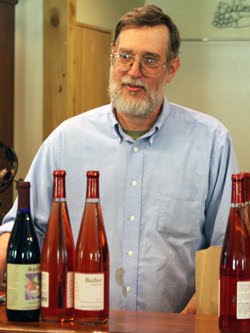
A freshman photographer on the college newspaper, which I advise, shot photos for me. Check out Ian Bamgardner’s great photos here.

Send comment or questions to: hewitthoward@gmail.com

Can a Single Bottle of Wine Change Your Life?

American wine icon Robert Mondavi wrote in his autobiography that wine is passion.

“It’s family and friends,” the California wine legend wrote. “It’s warmth of heart and generosity of spirit. Wine is art. It’s culture. It’s the essence of civilization and the art of living.

“Even more importantly, it’s wine, food and the arts. Incorporating those three enhances the quality of life.”

One might expect such pronouncements from the man who was a key figure in making Napa Valley a major player on the world wine stage. But Mondavi lived his ideas and talked throughout his long life about wine as an important lifestyle issue. His voice simply echoed the words of others.

“In Europe we thought of wine as something as healthy and normal as food and also a great giver of happiness and wellbeing and delight,” Ernest Hemingway once wrote. “Drinking wine was not a snobbism nor a sign of sophistication nor a cult; it was as natural as eating and to me as necessary.”

For some people, columnist included, wine can be transformational. Once wine drinkers move beyond the normal or the givens of Cabernet and Chardonnay and open their palate to the world, they are often transformed in the way they look at culture, agriculture, food and drink.

While this all might seem a bit gooey or tad too philosophical for a wine column, a single bottle of wine changed my perspective and many others writing about wine and marketing wine have similar tales.

Most wine drinkers start with grocery wine. A certain age group will remember Fetzer, Inglenook, Gallo, and many others as the staple of American wine. In some ways it’s not too different today. The brand names have changed but it’s now the grapes – Cab,Chardonnay, Merlot, and maybe Pinot Grigio or Riesling. For some people it was Riunite Lambrusco with pasta.

The constant message of Grape Sense has been to branch out, try something new, ask your wine or liquor store service people to recommend something different.

A single bottle of Spanish Tempranillo, in many ways, turned me into a wine writer and wine enthusiast. That happened about five or six years ago. Sharing the story always seemed a bit self-indulgent but I’ve heard it too many times from others.

I asked a wine shop owner to recommend something different. “Have you tried Spanish wines,” he asked. “Tempranillo?”

If I couldn’t pronounce it, I was pretty sure I had never tried it.

A single bottle of Montecillo Crianza red wine from Spain made me go ‘wow.” I don’t remember much of the detail other than it was rich, smooth, and delicious. And it was cheap. It’s available today at a range of about $9.99 to $12.99.

Spanish wines are great values because they are aged in oak and/or the bottle before being released. There are hundreds of great Spanish wines under $15. Tempranillo is the key grape for many Spanish wines. Tempranillo often combines the taste of dark berries, plum, vanilla, and herbs for a full-bodied wine. It is a great match for beef, pork, even a steak off the grill.

A bottle of the 2007 Montecillo Crianza, the latest release, arrived to my office recently. It was a media trade sample – yes, I get wine sent to me frequently for tasting. It brought back a lot of memories. I had never quite realized until that day, then reflecting on stories heard from others, that the Montecillo was my transformational wine.

After tasting that wine a few years ago I wanted to try other wines. After tasting it just a few days ago, I had to share the story. Find your transformational wine by asking for something different.

Testa Vineyard Great Wine, Even Better Story

When you hit the road and visit a good number of wineries in just a day or two palate fatigue can be an issue. In other words, some wines aren’t as good back home as you remembered them – or vice versa.

I toured Mendocino County in California for a couple of days in January with a group of wine journalists and we kept a pretty hectic pace and tasted a lot of wine.


One of the most charming stops was at Testa Vineyards. Here is a link to the blog entry I wrote that day after visiting Jeriko Vineyard, Testa, and Frey winery.

The photo above is essentially Testa’s tasting room. It’s a great old working barn where we enjoyed Testa’s Black and White wine and had a crazy good lunch. Maria, the wine maker, is in the white blouse and black vest. Her husband sits to her right while I’m seated to her left.

I brought back two bottles of her Black wine. Black is how her ancestors described their red wine. The current Black blend is 89 percent Cabernet, 8 percent Carignane, and 3 percent Petit Verdot.

I opened the wine up Thursday night, it was just as good if not better than I remembered. It’s unique in that it’s big and bold as you would expect with the Cab and Petit Verdot. Perhaps its the Carignane that gives the wine a big shot of fruit. You get a hint of vanilla on the nose from the oak but beautiful balance throughout.

It’s just beautiful wine. It sells for $20 but its nearly impossible to find outside of California. But Maria, husband, and teenage sons intend on growing the little winery started by her ancestors. I have little doubt after meeting them that one day Black could be on a shelf near you.

In the meantime, remember our consistent advice – try new things and seek out those small wine producers for some of the best juice you’ll ever drink!

Send comment or questions to: hewitthoward@gmail.com

Great Weekend Indy Event, More on Calendar

I like writing occasionaly about great restaurants, food events, and festivals. Indiana, while perhaps not known as a cultural hotbed has more such fun events than many might expect.

Over the weekend the first-ever Indiana Artisan Marketplace was held at the state fairgrounds on Indianapolis’ northside. The Indiana Artisan group is a juried group featuring traditional artists but also food and beverage artisans. You can check it out on the link above.

I had a great time Sunday with a friend. We had persimmon-based cookies, several great Indiana wines, fabulous chocolates, homemade noodles, Tell City prezels, fudge, soup mixes and more. And oh, the art was pretty cool too.

I took a few photos you can see here.

I got to thinking after Sunday’s event that quite a few of these great shows are coming soon. So if you’re a Hoosier, or going to be in Indiana – check these out.

Story Inn Indiana Wine Fair, April 30 – The historic Story Inn annually draws more than 20 Indiana wineries to pour their wines for this one day fest. If you haven’t been to Story, it’s worth the trip. It is quite an interesting drive into southern Brown County. I’ve attended this event a couple of times and really enjoy it. A note of caution though, on my last visit two years ago the size of the crowd was a bit overwhelming.

Broad Ripple Art Fair, May 21-22 – This is the first big outdoor art festival of the season in Central Indiana and a good one. It regularly features more than 200 artists along with plenty of food and music. The Broad Ripple Art Fair is sort of the kickoff to summer!

Vintage Indiana Wine Fest, June 4 – It’s hard to believe this year will be the 12th Vintage Indiana fest in downtown Indy. I went to the first or second one ever held! I’ve had a work conflict the past few years which keeps me from attending. I’m hoping to get down before the festival closes out this year. There are approximately 25 Indiana wineries participating this year. It’s a great chance to get a good taste of Indiana and appreciate the differences of the state’s best vintners.

Talbot Street Art Fair, June 11-12 – Of the three big art fairs – Broad Ripple, Talbot Street, and Broad Ripple – this one if probably my favorite. Talbot Street runs north/south between 16th and 21st, as far as the art fair is concerned. It’s just a bit more eclectic than all the others. Besides, it sits in an old, resotred residential neighborhood. And if you like people watching, nothing is better than a good art fest!

Penrod Arts Fair, Sept. 10 – In the words of the late sportscaster Keith Jackson ‘this is the granddaddy of them all.” First and foremost, the festival is held on the grounds of the Indianapolis Museum of Art. And they seem to be one of the luckiest festivals I’ve ever attended. In 4-5 visits over the past few years, they always seem to have the most incredible luck for beautiful weather. Penrod is also the biggest show with more than 300 artists. I’m told it’s also the toughest show to buy booth space. Folks attending Penrod seem to buy art!

Send comment or questions to: hewitthoward@gmail.com

Red Wine & White Fish! Astonishing!

Red wine and red meat, as well as white wine and fish, has served as the holy grail of wine/food pairings for decades. Well, it’s not your mama’s kitchen anymore!

The best advice anyone can offer on wine and food pairing is simply to drink what you like. But as wine aficionados get more into wine, it becomes inevitable the not-so-precise science of wine and food pairing becomes more interesting, challenging, and exciting.

“I’ve always been a big proponent of pairing rich seafood with light bodied reds (besides Pinot Noir) like our Mourvedre, Grenache and even Rhone blends,” said Terry Brady, Clautiere Vineyards, Paso Robles, CA.

“We produced the Mourvedre for several years as part of our blends,” Brady explained. “We saw the potential to do a single variety from the Mourvedre and began to make it in 2004. Stylistically, we wanted a food compatible wine, not a big fruit bomb – we picked our grapes at maturity and ripeness, but not overripe. Our Mourvedre often has the lowest alcohol of all of our wines, coming in at the low 13 percent levels.

“We like to say we make French style wine with California grapes. It became one of my personal favorites due to its distinct structure, smooth tannins and great earthy flavors. It pairs well with many different foods and I’ve enjoyed it with salmon as well as beef, lamb and spicy pastas. “

Brady poured his wine for a group of visiting wine journalists at a Paso Robles’ Italian restaurant in October. The Mourvedre was paired with a Chilean Sea Bass in lobster sauce. It was a gorgeous pairing and my first time for “fish and red wine.”

While you might not find Clautiere wines easily in the Midwest, there are plenty of the Rhone wines available in better wine shops and liquor stores with a nice wine selection.

Brady got into the wine business after building a Santa Monica restaurant. So he knows a thing or two about pairing wine and food.

“In researching a place to plant a tree nursery, we talked to a Realtor in Santa Margarita about some land and we were told there wasn’t sufficient ground water to grow there and we should look in Paso Robles – ‘where they grow vineyards!” It was an existing vineyard of about 33 acres that had been planted in 1989 with Syrah, Mourvedre and Cabernet – amazing enough, the owner had planted some very advanced and unique Rhone varietals for that time. Other wineries were making wine from this vineyard and so we were able to taste the wines produced and we realized that this was a special piece of land for growing these varieties. “

Personal experience suggests trying a Mourvedre or Grenache, especially a wine with a lower alcohol level, with lighter foods. If that scares you, go with the tried and true combination of salmon on the grill with a nice bottle of Pinot Noir. But don’t be afraid to try new things. The Clautiere Winery and tasting room is all about fun. Brady’s medium-bodied Paso Robles wines, like others from the region, really pair beautifully with food.

The food-friendly Paso Robles wines are often as rich in flavor as any from California. They are usually about half the price. Brady’s Rhone blends are $25. You can find great Mourvedre and Grenache under $15 in many locations.

Send comment or questions to: hewitthoward@gmail.com