Willamette Valley, Day 2: The Gorge & Mountain

No matter how much you love wine, visiting wine country, and touring the vineyard you probably wouldn’t go to Napa or Sonoma and not visit San Francisco’s famous sites.

If you go to Mendocino most would go out to the Pacific and explore the charming coastal towns.

And as much as I love wine, enjoy wineries, and love learning more about winemaking, I wouldn’t think of coming all the way out to the Oregon and miss the Columbia River Gorge and Mt. Hood.

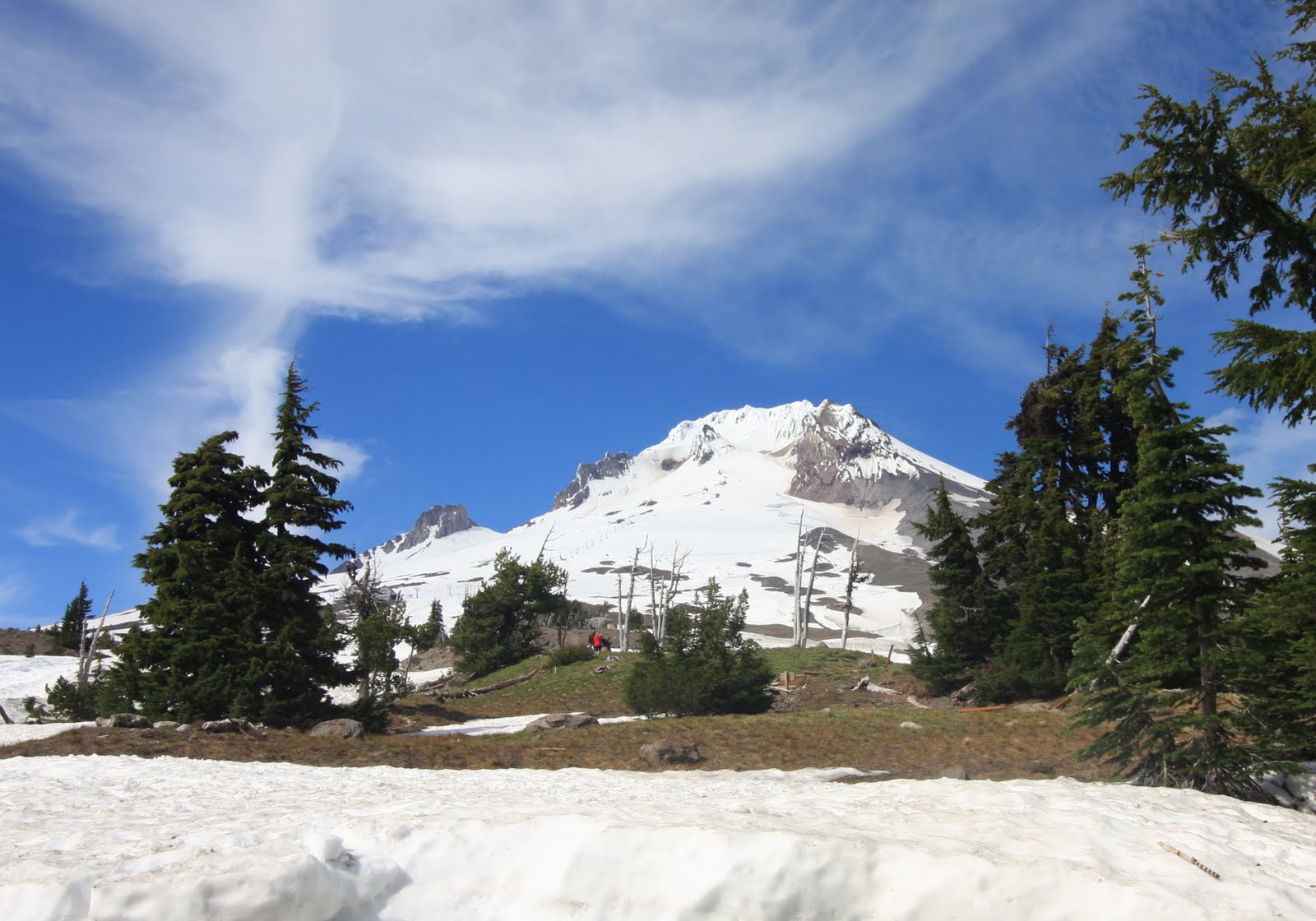
Wednesday was a break from wine – ok, we made a couple of stops. We drove the Columbia River Gorge, which I think is one of the most beautiful places I’ve visited in the U.S. After a couple of quick winery stops, we then entered Mt. Hood National park.

The day’s highlight was driving up the mountain to Timberline Lodge. It’s a pretty good day when you can sit at the 6,000 foot level of a 13,000 foot mountain and enjoy he view. We had a glass of Penner Ash Pinot Noir and soaked in the majesty of Mt. Hood.

I have a big photo album here with some expanded cutlines. And giving credit where it’s due, I’m visiting with a college senior who attends Wabash College where I work. Drew Casey, Portland, and his family are hosting me this week. Drew is really a great photographer. Most of the photos in the album are his work. I took a few.

Today – Thursday – it’s back into the Willamette Valley. We’ll start our day at Lange Estate Vineyards, and then visit Winderlea, Anderson Family Vineyards (with its spectacular view), back to Vidon to meet the winemaker and probably squeeze in another visit or two.

Send comment or questions to: hewitthoward@gmail.com

Willamette Valley, Day 1: Vidon Pinot & Republic of Jam

PORTLAND, OR – There is nothing more fun, educational, and exciting than visiting wine country for wine geeks.

One of my favorite places has become Oregon’s Willamette Valley. This is my third trip to the region and first solely focused on the wine, food, and people. In other words, I’m not here for work – just wine, food, and cultural appreciation.

After an ugly Monday Indianapolis to Dallas to Portland flight (not a route I’d recommend), my first day Tuesday was off the charts in diversity, fun, and enrichment.

Two of my favorite things – wine and food – took center stage. I’m not going to write wine reviews on these daily updates but, instead, mention places I really liked and what I enjoyed about each. And one of the biggest things about visiting a place like the Willamette Valley is not just the wine, but the people and the food.

See Drew and my photos in an album here. All of this week’s albums will be included in the link to the right.

Our day included four wine stops. We started at Dundee, just off Highway 99W, at Four Graces. I had visited the “Graces” two years ago and loved it. Tuesday the highlight was a white wine instead of their Pinot Noir. I found a rich, creamy and dry Pinot Blanc that just rocked. Their Pinots, a bit on the higher price side at $29-$45-$75, are nice wines.

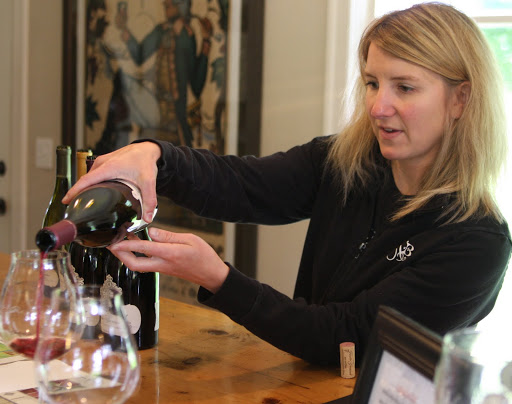
Our second wine stop was in downtown McMinnville – my first visit to the town at the heart of wine country. We sort of wandered into Willamette Valley Vineyard’s tasting room and were welcomed by the very knowledgeable and fun Mari Yeckel. Mari – (pronounce it like there are two “r’s” .. Marrr-ee)

Mari poured a really nice Syrah based Rose’ and several Pinot Noirs. Drew, my host in Portland, joined me with his mother for Tuesday’s fun. Drew is a senior in College where I work and has a pretty discerning palate for a 21 year old.

Drew and I both loved the 2008 Tualatin Estate Pinot with hints of black cherry and raspberry. I was taken by the wine’s smooth and rich mouth feel. This wine was worth the $45.

Mari exemplied customer service in a customer service industry. We learned just before leaving that she’s also a food blogger. Check her blog out here.

Wine stop No. 3 was at the Carlton Winemaker’s Studio. These collaborative wine operations are a good place for anyone new to the area to include on their itinerary. Jeff Woodard poured wines from 4-5 of the 11 winemakers represented. Many of these wine labels are names you may not know but offer real quality. Andrew Rich is the headliner and you’ll find his wines in many states.

Other labels include: Wahle, Lazy River, Dukes, Hamacher, Retour, and Brittan. Robert Brittan makes the wines of Winderlea and Ayoub as well. His $45 “Basalt Block” Pinot was the best of the lot being poured Tuesday.

In one of my most recent newspaper columns I recommended asking tasting room workers for recommendations on other wineries. We did that Tuesday and nearly everyone recommended Vidon, just north of Newberg.

We got to Vidon late in the afternoon after a mix-up on the tasting room’s closing time. The young man pouring, on his first day on the job, agreed to give us a taste of two Pinots. We tasted the 08 and 09. Many have called the 2008 vintage one of the best in Oregon’s recent history. But Drew and I both liked the 2009 best.

Vidon has bit of a cult status in the valley. The 09 was “silky” in texture with beautiful balance. I often admit struggling for the right words to describe wine. I’ve seen “silky” used before but never tasted it. I found the Vidon ‘silky’ Three Clones Pinot Noir easily the best wine of the day. Easily!

Our lunch, at Mari’s recommendation, at the Community Plate just down the street in McMinnville was another big highlight. The latest in the growing ‘farm-to-fork’ movement didn’t disappoint. A great menu with four cold and four hot sandwich choices made our day. The cool urban feel of the place, along with all the young people working the food, was a big highlight.

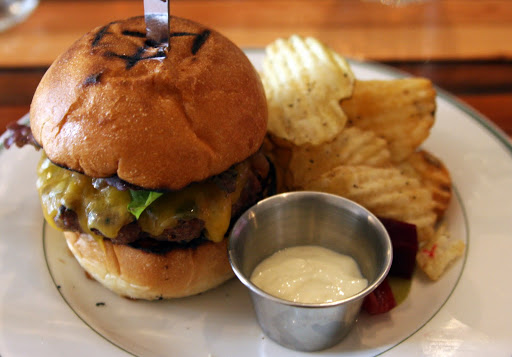
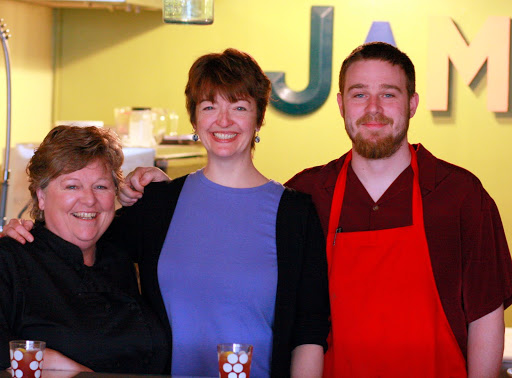
But even with the Vidon Pinot and Scott Cunningham’s insanely delicious hamburger, jam stole the day. Lynnette Shaw and Amy Wilder have created a sensation in Carlton known as the Republic of Jam. Lynnette’s secret, she laughs – “I don’t like sweet stuff.”

The ladies at ROJ take Oregon’s incredible fruits and combine them with the area’s wines,spices and create unbelieveable taste combinations that lean to the savory side. Many of the jams can be used for entrees or in ways you’ve never imagined using a jar of breakfast spread.

I did some video with the ladies and plan to incorporate that into a video I’ll do for Palate Press in the coming weeks. I’ve never had taste combinations – in jam or much else – like I enjoyed at the Republic of Jam. They run their small business like a winery tasting room when you visit. You can also order their unique combinations online.

I’ve simply never tasted anything like it.

Wednesday is a day away from wine. I’m going to drive the Columbia River Gorge, drive around Mt. Hood, go up the the lodge at about the treeline on the mountain, and maybe make one or two winery stops in that area. Then it’s back to Willamette Thursday and Friday to visit a few of the most iconic names in Oregon wine.

Send comment or questions to: hewitthoward@gmail.com
Off to Oregon’s Willamette Valley for Ton-O-Pinot

Hoping a long circuitous route later today to land in Portland late tonight and spend four days in Pinot Noir bliss.

This will be my third visit to the Willamette Valley. I’m planning on seeing some old favorites and friends and visiting new spots. Oh, and pick up some fresh hazelnuts and jam.

Visiting Willamette always has a different feel to me. It’s not as hectic, crazy, and commercialized as most of the California regions. Oh, and the Pinot Noir just rocks. Pinotphiles can drive from winery to winery searching for a bad glass and are unlikely to find one! That’s my kind of wine country.

I have an appointment to visit with Jesse Lange, Lange Vineyards. Lange is one of the premier producers in the valley. The same day I’ll make my first visit to Anderson Family vineyards with their spectacular views atop the Dundee Hills.

I have a private tour of Domaine Serene Friday morning. I plan on making my first stop at Domaine Drouhin. After interviewing Laurent a year ago in Indianapolis, Drouhin had to be on this year’s stop.

I will also meet with two interesting ladies doing fun stuff with Oregon’s beautiful wines and fruit and turning it into jam at the Republic of Jam.

I look forward to seeing old friends at Winderlea and making my first stop next door at Maresh.

There’s much more but that a small sense of the plans. I’ll be blogging each evening, doing updates on Twitter, and have lots and lots of photos.

Send comment or questions to: hewitthoward@gmail.com

Wisconsin Wine Story Now Up on Palate Press

I think I’ve become the roving “states” reporter for Palate Press. I’m happy to do just that, thank you!

Last summer I visited Michigan wineries and wrote a piece about that state’s wine efforts that was very well received. I had a ton of positive feedback. Earlier this spring I visited Wisconsin with a similar type of thing in mind.

The story is now featured on Palate Press.

(In photo at right, Steve Johnson and Maria Milano pour me a glass of Glacier White.)

Here are some links of blog entries and photos from my visit not included in the Palate Press Story:

Photo Albums:
Wollersheim Winery
Fisher King Winery
Ledgestone and Parallell 44 wineries

Blog Entries During My Visit:
Wollersheim and Fisher King Visits
Ledgestone and Parallell 44 Visits

Send comment or questions to: hewitthoward@gmail.com
Summertime and The Sipping is Easy

With apologies to George Gershwin, summer is the time living is easy and we all look for light summer wines.

Here are some of my latest summer whites and a rose’ I’ve been checking out.

Cristobal 1492 Verdelho – This wine and the Rose’ below were easily the big winners of the past week.

I had picked up a bottle of Cristobal Bonarda at Cork + Cracker in Indy and really liked it a lot. I saw this bottle of Portugal’s Verdelho grape from Mendoza in Argentina and knew I had to try it.

I loved this wine a lot. It had nice melon, foral and spicy flavors that were simply delicious. It’s not a wine to ponder and evaluate – it’s a wine to enjoy.

It picked up 90 points from one of the big wine publications and it’s not hard to see why. And for $10???? You’ve got to be kidding me!

(Cristobal 1492 Verdelho, $9.99, Grapevine Cottage, Zionsville, Highly Recommended)

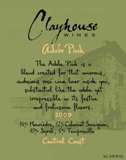
Clayhouse 2010 Adobe Pink – Sometimes I wish wineries producing really great Rose’ wouldn’t call them “Pink” only because it would be easier for me to get people to try Rose’.

But Clayhouse can call this really nice pink wine any color it wishes and I’d still recommend it. I haven’t consumed much Rose yet this summer but I have several waiting in the wine racks. The Clayhouse has set the bar pretty high.

The Adobe pink gets a head start with my heart and head because it’s such an interesting blend of 38 percent Mourvedre, 32 percent Syrah, and 30 percent Cabernet Sauvignon. Clayhouse is a Paso Robles winery that benefits from the rich flavors grapes give after a summer of hot days and cool nights.

Indeed, the wine is pink or maybe salmon is a better choice of words if you’d like a little more sophistication and avoid the “P” word. On the palate it delivered strawbertry and nice spice along with a dry finish. It was one of the most drinkable and well-made Rose’ wines I’ve had in several summers. I loved it.

(Clayhouse 2010 Adobe Pink, SGR $14, Trade Sample, Highly Recommended)

By the way, Clayhouse now has an Indiana distributor so you Hoosier wine drinkers should seek out the “Adobe” line of wines – they’re a great bang for the buck!

Cucao 2009 PX – Here is a new one for me and probably most of you. The PX in the wine’s name means Pedro Ximénez. Yes, that’s a grape kids! The grape has mostly been used for Spanish Sherry or even brandy.

For those of you looking for something different, here you go. This wine had a unique tartness on my palate. The taste was some cross between apricot, raisin, and lime, and definitely some minerality and pretty strong acid. I could see this wine with cold appetizers or maybe a salad. It is certainly on the dry side and you will notice the acid.

It’s worth a try. I really had trouble deciding whether I even liked it or not. On the first night, I didn’t care for it at all but on the second evening the acid had calmed down a bit and I found it sort of “intersting.” Definitely a wine for the adventurous.

(Cucao PX, $9.99 at Cork + Cracker, Indianapolis, No Recommendation)

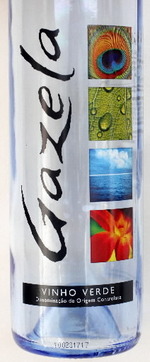
Gazela Vinho Verde – Here is an Albarino wine that is definitely different than others I’ve tasted. This is almost like a sparkling wine or at least a white with effervesence some would consider nearing carbonation. I found it a little odd.

It had bright flavors of grapefruit and a nice tangy citrus flavor that lingered on the palate.

If you like a little effervesence in your wine you’re going to like this one. Serve it chilled on a hot summer day and your guests will be impressed with your adventurous spirit.

(Gazelo Vinho Verde, $7.99, Cork + Cracker, Indianapolis, Recommended)

Send comment or questions to: hewitthoward@gmail.com
Have a Plan For Your Trip to Wine Country

Planning a trip to wine country doesn’t require a tour guide, limousine, or a lot advance planning.

Many travelers are including day trips into wine country as they visit regions around the world. Then there are the real wine geeks among us who plan most of their vacation time around wine.

Newspaper Columns like Grape Sense and many internet bloggers seek to demystify wine. Making wine travel simple and enjoyable can be a similar challenge. My wine travel includes two trips to Napa and Sonoma. I’ve made pre-planned trips to Paso Robles and Mendocino County. I’ve done three-day trips into Michigan and Wisconsin wine regions and a single day in Tuscany, Italy.

I’ll be making my third trip to Oregon’s Willamette Valley in mid-July.
While not claiming expertise, I’ve certainly learned some things you should and should not do!

– You should spend time on the internet and read about the wineries you’re going to visit. Double check hours, tasting fees, and tours.

– Do take a full vineyard tour at one stop. If you want to learn more about wine there is nothing better than a vineyard to winery and then tasting tour. One is enough; tours usually last 1-2 hours and cost double or more the cost of a tasting. Tasting fees range from $5 to $20 depending on the wine region. Some wineries will deduct tasting fees from a purchase and some will not.

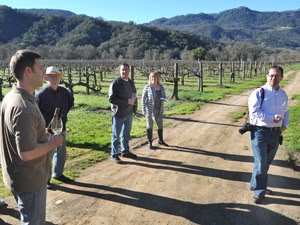
(In photo above right, I joined a group of wine writers in January touring Mendocino County, California. Here we are tasting the wines of Jeriko Vineyards. Copyright photo, Tom Liden 2011)

– Do ask a lot of questions. Anyone serving in the tasting room should be able to tell you the basics about the winery and each wine. If the servers can’t answer the basics – the type of grapes and how the wine is made – leave and go to another winery.

– Don’t over-plan your visit. I always plan on going to two or three wineries a day. I have done my internet research so I know others in the area I might like to visit. It allows some spontaneity. Three to four winery visits a day is plenty.

– Do not think of winery visits as drinking. It’s tasting wine. If you can, learn to spit – it’s how the real pros can taste so many wines in a day. If you can’t fully appreciate a wine without swallowing it, learn to stop after a sip or two and pour the remainder in the dump container on the counter.

– Do think outside the box. Sure, if you’re in Napa Valley visit Mondavi. But ask people in the tasting room, other visitors, your motel clerk, the waitress about the smaller wineries that don’t have tour buses in the parking lot. Such wineries will often be your fondest memories.

– Don’t assume all wine vacations start and end with Napa/Sonoma, Paso Robles, Mendocino, Oregon, Virginia, Michigan, and Washington state. Check out wine trails in your state and states nearby. A great start is the Uplands Wine Trail in Southern Indiana. Or, get that internet map out and make your own wine trail!

– Do not drink and drive. Many wineries will offer designated drivers some bottled water or a soft drink.

– Do not try to taste everything at each winery. I ask the tasting room personnel to pour their biggest selling red and white, maybe something that interests my wine palate, and always end with, ‘Is there something else you would have me taste?’

– Do have bottled water and some crackers or snacks to balance the alcohol throughout the day.

(In the photo above, our traveling group takes a vineyard tour with Chris Nelson of Nelson Family Vineyards. Copyright photo, Tom Liden 2011)

I will be in Oregon’s Willamette Valley July 19-22 tasting some of the world’s very best Pinot Noir. I will post a lot of photos and write about the experience here each day.

Get in the car this summer and try some new wines!

Send comment or questions to: hewitthoward@gmail.com

Mondavi, Duboeuf – Some Classic Wines

I’ve been spending a lot of time lately preparing for a trip to Oregon’s Willamette Valley wine country and it’s showed up by the scarcity of blog posts. More on the trip in a later post, let’s catch up on at least a couple of really easy to find wines.

Robert Mondavi 2008 Napa Valley Cabernet – Betty Crocker, Campbell’s Soup, Coca Cola, and Budweiser are all such iconic and classic brand names. Sometimes we have to go back to those brands to remember just how darn good they consistently are each and every time.

I sort of feel that way about Robert Mondavi wines. I have has several through the years and feel like I should blush to admit I had never had Mondavi Cabernet – his flagship wine. I got a bottle of his Napa Valley Cabernet as a trade sample recently and had it over the weekend with a bone-in rib steak I charred on the grill.

The wine, just like the name, is an American classic. It’s 85 percent Cabernet, 7 percent Merlot, 5 percent Cabernet Franc, 2 percent Syrah, and 1 percent Petit Verdot. The wine is big, smooth with a really nice texture and rich finish. Year in and out the Napa Cab gets a consistent 90-91 points from the major scoring publications.

I got hints of dark fruit flavors, particularly cherry, with beautiful balance. Now, before you think I’m going to gush on … this wasn’t the best Cabernet I’ve had for the price point. The Mondavi Cab was really good. Turning to Mondavi is a bit like stopping at Wendy’s or McDonalds on the interstate. You know exactly what you’re going to get! Good quality and value in a respected name is nothing to sneeze at.

(Robert Mondavi 2008 Napa Valley Cabernet, $28, Trade Sample – you’re most likely going to find it around $20 or even less. Recommended.)

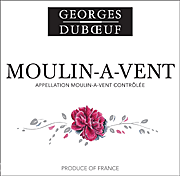
Georges Duboeuf 2010 Moulin-A-Vent – It’s exciting to get wines not yet released for sale to the general public – a perk of wine writing I suppose. I recently got a shipment of several of the iconic Beaujolais producer’s Cru Beaujolais wines.

George Duboeuf grew up a peasant boy into the Beaujolais region’s major negociant. (Neogicant is a wine merchant who purchases wine from much smaller producers and sells them under his own label.) While his name may not equal some of those in Bordeaux, Duboeuf’s wines have probably graced more dinner tables than most French Chateau’s namesakes.

The Moulin-A-Vent was very smooth and pleasingly light with grilled hamburgers on the Fourth of July! After all, the French were our major ally in the Revolutionary War. That makes Beaujolais and burgers a perfect pairing! It had hints of smoke and soft dark fruit. It did not feature the earthy characteristics that are often much-sought after in French wine but can be a bit gamey in Beaujolais.

The Cru Beaujolais wines are the area’s best. As I’ve written before, forget the Nouveau at Thanksgiving time and try the Cru wines and you’ll be a gamay grape fan!

(Georges Duboeuf 2010 Moulin-A-Vent, $16, Trade Sample, Highly Recommended)

Send comment or questions to: hewitthoward@gmail.com
Mondavi, Clayhouse, and Graffigna – Oh My!

Same old song – I have some catching up to do. So tonight I’m going to try to get current on a bunch of “trade sample” wine I’ve recently tasted.

Yes, people send me wine to review. There is a whole disclaimer process – including ‘no promises I’ll review it’ and more important ‘no promises I’ll like it.’ But I’ve written that before and would hope there has been enough credibility established for the skeptics.

Someone once asked why I don’t write much about real stinkers. Well, there are two answers to that one. First, I don’t go looking for real stinkers. I also consider that some wines I might not like, others might. With those wines, I try to review them for what they offer and how well I think they’re made.

I’ll throw in what I thought was a real stinker in tonight’s reviews just to make the point! How’s that?

Let’s start off with three wines from the legendary Robert Mondavi. It starts with an example of price point and style.

Robert Mondavi Private Selection Sauvignon Blanc – The grapes come from the Central Coast and make a nice light and lean Sauv Blanc. There are no big flavors or acidity clobbering your palate but still nice enough zest and fruit for the price point. This is nice wine for $11 and widely available. (Mondavi Private Selection Sauv Blanc, $11, Trade Sample, Recommended)

Mondavi 2009 Fume Blanc – Most people think of Cabernet when they think of the most iconic name in California wine. But this Fume Blanc has been a favorite of wine drinkers for a long time. It’s 90 percent Sauv Blanc and 10 percent Semillon. For those unfamiliar with Semillon it’s often used in blending and provide a very nice fruit and softness to any grape combination. The fruit is mostly Napa Valley in this one. This wine enjoys some time in oak and offers up a richness many Sauv Blancs often miss. If you love the strong citrus and acidity of Sauv Blanc but like it with a softer edge, you’d love this wine. (Mondavi Fume Blanc, $20, Trade Sample, Highly Recommended)

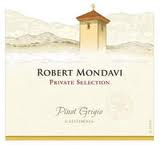
Mondavi Pinot Grigio – This is like a bad movie that starts with a disclaimer. I’m NOT a big Pinot Grigio fan in general. I just find it uninteresting. I opened this wine on a hot Hoosier afternoon after doing yard work. It was … okay … not a lot of fruiit on the palate …. the acidity was okay … it was good wine for $11 … just not memorable. (Mondavi Pinot Grigio, $11, trade sample, No recommendation)

Now some samples from marketing friend Rusty Eddy who represents Clayhouse Wines in Paso Robles. I visited the Clayhouse tasting room in downtown Paso when there in October 2010 and loved them. Rusty had the marketing arm send out their Adobe line of wines. Very good stuff!

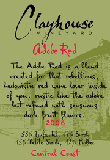
Clayhouse 2009 Adobe Red – This blend of 32 percent Zinfandel, 25 percent Petit Sirah, 13 percent Malbed, 11 percent Cab, 10 percent Syrah, and 9 percent Petit Verdot sounds like a kitchen-sink blend – and it might be. But I found it had a wonderful dark fruit, cherry flavor with soft tannins and extraordinarily drinkable. You won’t find this in every state – but ask! (Clayhouse 2009 Adobe Red, $14, Trade Sample, Recommended)

Clayhouse 2010 Adobe White – Have you ever opened a bottle of wine that you are “not supposed to like” by all standards – but you just loved it? Well, I’m not sure if the “not supposed to like” standard applies here but I loved this simple, rich, and soft white wine. It’s a lovely blend of Viognier, Sauv Blanc, Grenache Blanc, Princess, and Chenin Blanc. This has orange, lemon but above all it has a rich and smooth feel in the mouth that I think many wine drinkers would just fall in love with after a taste. This is damn fine juice. (Clayhouse 2010 Adobe White, $14, Trade Sample, Highly Recommended – nah, make that my second ‘Very Highly Recommended” wine of the year. Snobs won’t like it. Porch drinkers like me will love it!)

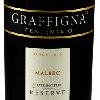
Graffigna 2008 Malbec Reserve – This great Malbec surprised me as it opened up. At first sip I thought ‘Okay, so-so Malbec and a nice little wine for the price.’ But as the wine opened up it really became a rich and interesting wine for the price. There’s pepper, spice, and maybe even some coffee. It was delicious! Robert Parker gave this wine 90 points! (Graffigna 2008 Malbec Reserve, $12-$14, Trade Sample, Recommended!)

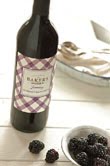
Baker’s Dozen Wines – Okay, I promised! I was sent these four samples from a marketing firm representing the winemakers who were introducing non-traditionally sweet wines … sweet Chardonnay, sweet Pinot Noir, sweet Cabernet (you read that right), and sweet Pinot Grigio. Indiana was a test state for the wine, which makes some sense considering Hoosiers taste for sweeter wines – particularly our homegrown ones. I just tasted the Pinot Noir and Cabernet – and to say they were an undrinkable mess would be an understatement. Cabernet should be dry – Concord is sweet. I like trying new things and respect people trying new things. This was a bad idea from the beginning. And don’t get me started on the labels which look an awful lot like a famous jelly and jam company. (Baker’s Dozen wines, Cheap, Trade Samples, Absolutely NOT Recommended, don’t think about it … buy local sweet wines from your state winery instead!)

Send comment or questions to: hewitthoward@gmail.com
Concannon Celebrating Its History with Petite Sirah

Tags

,

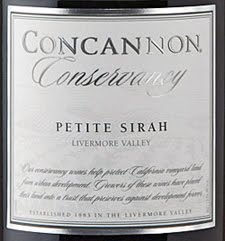
There’s nothing better than a glass of wine with a great background story. Concannon of Livermore, Ca., offers both to consumers with an eye on the environment and great wine.

The Concannon family arrived in California in 1883 and has been operating continuously by the ensuing generations down to John Concannon today. John’s father Jim Concannon is a California wine pioneer. Jim is also widely credited for America’s first 100 percent Petit Sirah.

“This is our flagship wine,” John Concannon said during a recent Indianapolis visit. “My father was the first to make Petit Sirah in 1961 as a varietal. For years before, it was a blending grape used in Burgundy. We’ve actually trademarked ‘America’s first Petit Sirah.’ So, we’re celebrating 50 years.”

Besides the bold, rich Petit Sirah, Concannon is also known for helping lead a conservancy movement in the Livermore region, which is just east of San Francisco. Concannon and other area vintners have placed their vineyards in an independent trust that assures urban sprawl will never take over the historic area’s farm ground.

Concannon makes four wines, soon to add a fifth, from the Conservancy properties – Cabernet, Merlot, Petit Sirah, and Chardonnay. They retail at $15 and represent some of the best value varietals you’ll find at the price point.

But Concannon is best known for the small purple grape with all the big flavor. “This is actually a very sacred process how we make our Petit Sirah,” Concannon said. “We harvest the fruit at night, let it cool down, we bring it in and throw it on the sorting table. We sort out the berries, throw them through the rubber impalers and release the juice. We add some yeast and we’re making wine like the Egyptians did.”

The grape can be difficult to work with for a 100 percent varietal wine. “This wine is a little devil,” Concannon said. “What we’ve learned in 50 years it’s all about controlling the oxidation rate. During the first six months we lock it down in stainless steel and then the next six months we’re putting it in American oak, medium toast (that’s our spice rack). This is where the old school winemaking comes in because during the last six months we’re putting the wine in these 55-year-old vertical, upright barrels. They are French oak from Bordeaux. The wood is inert so it’s not giving off any flavor but the porousness of the wood accelerates the oxidation rate, speeding up the aging process. That gives it a nice soft mid-palate.”

The end result of all that hand crafting is a wine that’s anything but petite. “This wine is the St. Bernard that wants to sit in your lap,” John laughed. “It’s a very friendly wine but it’s big.”

And while many people shy away from big red wines it’s easy to recommend Concannon’s version because of the roundness. Concannon shared recent A.C. Nielson statistics showing Petit Sirah as the second-fastest growing varietal in California behind Pinot Noir.

He suggests pairing the wine with any food that has spice or pepper along with steak, barbeque, or Asian food. “If you have heat in the meal, bring it on. This wine can keep up with it.”

I love this wine with a nice charred steak.

Howard’s Picks:

Concannon Conservancy wines

– At $15 each, you can’t go wrong with these wines distributed in all 50 states. The Cabernet and Petit Sirah are big flavored wines with a nice smooth mid palate and finish. The Merlot shocked me with its hint of spice. The Chardonnay doesn’t clobber you with oak. These are great wines. Concannon is about to release a new addition to its Conservancy lineup – “Crimson and Clover” to honor Jim Concannon. The crimson stands for the red wines and clover for the family’s Irish heritage. The red blend is expected in stores later this year.

Send comment or questions to: hewitthoward@gmail.com
Its Sounds Crazy, But Try Wine Cake

I love to cook but I’m certainly no baker. Like many of my generation my mother, now 85 years young, can whip up some pretty darn good baked goods.

And … I helped! (get the pop cultural reference?)

Any way … Mom and I have made this recipe with Strawberry, Raspberry, and Cherry fruit wine. I’m not a fruit wine fan generally but it makes darn fine cake!

I dressed up Saturday’s version of Strawberry wine cake with small bits of fresh strawberries as you can see in the iPhone pic I shot shown here.

Wine Cake:
1 box white cake mix with pudding (or regular works too!)
1 cup of berry wine
1 cup oil
1 small box of same berry jello
1 tsp vanilla
4 eggs

Combine all ingredients. Bake in greased and floured bundt pan at 325 for 50-60 minutes.

Glaze:
1 2/3 cup powdered sugar
1/4 cup berry wine

(I usually take 1/2 cup or more of the berry wine and cook it down to 1/4 cup to intensify the wonderful icing!

I’m tellking ya, this cake rocks!

Send comment or questions to: hewitthoward@gmail.com