Symon’s Lola Sets Cleveland Bar High

Tags

, , ,

CLEVELAND, OH. – Chef opens restaurant and sets off retail growth. Chef achieves national recognition and television contract. Restaurant booms. Chef gets even bigger and restaurant gets left behind.

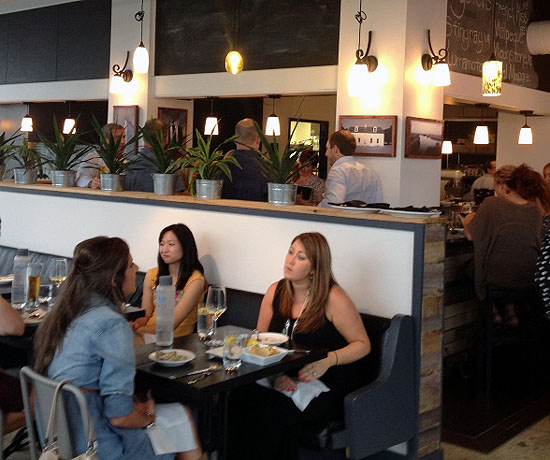
It’s not hard to imagine such a scenario. The first three statements are true of Cleveland’s Michael Symon. But now that he’s skyrocketed to food fame, his iconic Lola’s restaurant is just as good as ever. As a matter of fact, Symon now lives in New York at least partially because of his weekday talk/food show The Chew.

My job requires a bit of travel in fall and that brings our travel group to Cleveland where we usually enjoy Lola’s incredible dishes. Friday night was my fourth visit and it might have been the best.

It’s the combinations and attention to detail along with creativity that makes Lola’s and such restaurants so enjoyable. I had a wonderful ginger carrot soup with orange zest and bits of lobster. My dinner partners enjoyed oysters and shrimp.

The main attraction was lamb loin with cipollini onions and fingerling potatoes. It was cooked perfectly medium rare, juicy and flavorful. Those wonderful little onions made the dish. The other guys raved about their hanger steak and Symon’s signature pork chops.

Dessert was just as tasty as it was beautiful. The presentation at Lola’s is good as any modern American cuisine spot. I enjoyed a brown sugar panna cota while the others had a Lola’s smore, carrot cake, and tiramasu.

A glass of Drouhin Chard was great with my soup. For dinner, we shared a bottle of Spanish Crianza. The bottle was $52, or about 100 percent markup. The Lola wine list is extensive with a wonderful selection of very high end wines. But it also features really good selections in the $40-$60 range.

There are other wonderful restaurants in the city. But Lola’s is the standard in Cleveland.
Let’s Talk Merlot, People!

Tags

, , , ,

It’s time to move beyond the so-called “Sideways Effect” and try Merlot again.

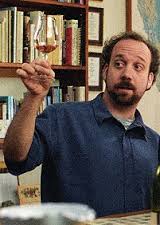
It’s been documented over and over how the 2004 movie “Sideways” wrecked Merlot sales and sent Pinot Noir sales skyrocketing. The truth of the matter is a little less dramatic. Those descriptions were always overstated, but certainly true.

Actor Paul Giamatti as "Miles," Sideways

Actor Paul Giamatti as “Miles,” Sideways

Up until that fun little movie when Miles uttered, “I’m not drinking any ******* Merlot” the grape was one of the nation’s favorites. It was the biggest selling wine in America in 2000. Nielsen statistics showed Merlot consistently holding around 14 percent of overall U.S. wine sales. Merlot even out sold Cabernet in 2001. Pinot Noir was really just a blip on the map.

Grape Sense LogoAfter the movie Merlot sales dipped, not as dramatically as you may have heard described but dropped nonetheless. According to 2013 statistics Chardonnay remains the grape of choice at 13 percent, Cabernet at 12 percent, then comes revenge of Merlot at 9 percent. Pinot Noir has certainly picked up market share now at 7.5 percent of U.S. Sales. Pinot Grigio and Muscato are surprisingly also in the top five in sales.

But we’re talking Merlot here people. There was a drop, after Sideways was released Merlot sales dropped two percent.

Alviso, spoke at the 2014 Wine Bloggers Conference.

Alviso, spoke at the 2014 Wine Bloggers Conference.

“After Sideways the market got focused,” said Merlot maven P.J. Alviso, Director of Estate Viticulture for Duckhorn vineyards in Napa. “We had to develop a tolerance for no bad wine and there was a lot of it out there. The market was flooded with bad Merlot.”

It might surprise the Pinot-sniffing, Merlot-bashing wine snobs or wine snob wannabes that Merlot is the most widely planted grape in the world at 720,000 acres!

As some might expect, France plants the most Merlot at nearly a quarter a million acres. The wonderful wine blends of Saint Emilion are dominated by Merlot. More surprising, perhaps, is that Italy is the number-two Merlot producer at 93,000 acres compared to the 55,000 acres in the U.S.

Merlot is believed to date back to 1748 in Bordeaux France. The word comes from the French word “merle,’ which means “blackbird.” The grape is genetically linked to Cabernet France and a sibling to Cabernet and Carmenere.

What do you get in a Merlot? The better question is what should you get from good Merlot? The textbook characteristics are black cherry, plum, olive, cedar, blackberry, currant, dark chocolate, cocoa, peppers, and an earthiness.

Merlot of the late 1990s and early part of this century were often flabby, thin wines or terribly out of balance. Many were musty to the taste and unfocused. That’s just not the case any longer.

Growers like Alviso believe Napa has some of the world’s best terroir for growing the grape. “Merlot is relatively easy to grow and that’s why so much is planted,” he said, “but it’s not easy to make great wine.”

You can find Merlot from many different states and parts of the world. Washington winemakers are making great Merlot wine and Merlot blends. If you want to try stunning Merlot at a stunning price for some folks, pick up a Napa Rutherford Hill or Duckhorn Vineyard Merlot. If you want something light with classic Merlot flavors, see if you can find a Northern Michigan cool-climate Merlot.

It’s time to drink some ******* Merlot!

Newspaper Column’s 7th Year Begins

Six years ago Grape Sense was born for the love of wine and love of column writing. Today’s column is the anniversary.

It seemed unlikely in October 2008 that the column would reach more than 20 newspapers. Just as unlikely was adding a regional magazine and contributing stories to a national online wine magazine. It seemed crazy to imagine wine travel to Paso Robles and Mendocino, CA., to learn more about wine. That was followed by travel to France not once but three times in 2012 to learn about Languedoc, Bordeaux, and Chablis wines.

Grape Sense LogoSo forgive the personal reflection. But there have been some clear trends learned through six years of wine writing which are helpful to the target audience. Grape Sense No.1 (this is No. 155) started with this: “I hope to offer a little wine education to those who may drink some wine and would like to take a step up without paying the big bucks. I will write about types of wine and specific wines.”

That focus hasn’t varied much through the years though the price point sneaks a bit upwards on occasion. But what has the journey yielded to benefit value wine consumers?

People want to learn more about wine. Statistics galore from varied sources document Americans are drinking more wine. Wine consumers want to know more about the wine basics than ever before.

Not all great U.S. wine has to come from California, Washington, or Oregon. And this remains one of the biggest misconceptions in the wine industry. New York’s Finger Lakes, Virginia, and Northern Michigan deserve a spot on your table.

Indiana has some great wineries as do other Midwestern states. Unfortunately, the wine industry boom has led to winery growth but many enter the business for the wrong reasons. A winery is a small, agriculture business. Running a winery is farming, chemistry, labor, marketing, and sales. Finding success isn’t easy for most new wineries in the Hoosier state or any non-traditional wine producing region.

There are great wineries in Indiana and those spots have been detailed in Grape Sense on many occasions. By the way, there is no better time for a drive to Southern Indiana wineries than the fall.

Many wine drinkers are still afraid to try new things. When visiting a wine shop, instead of the market or local liquor store, pick up a bottle of Argentinian Malbec or Carmenere from Chile. Wine novices should try the great Rhone grapes of France grown there or in California’s central coastal region. Those Rhone grapes are Syrah, Grenache, and Mourvedre. Those grapes together and alone make great red wines.

Maybe the most important advice is to have fun with wine. Get a group of friends together and blind taste a Cabernet, Merlot, and Syrah and see who can correctly identify each grape. The price point doesn’t matter. Or have a big party and have each couple bring two bottles of wine. One bottle of each is open and tasted blind. At the end of the tasting everyone votes for the best wine of the event and the winner takes home that extra bottle of each wine!

Most of all, thank you. Thank you for reading Grape Sense for six years.

Howard W. Hewitt, Crawfordsville, IN., writes about value wine every other week for more than 20 Midwestern newspapers. You can reach him at: hewitthoward@gmail.com

Fall is Great Brunello Weather

Tags

, ,

I just don’t drink enough Brunello!

But, other than those living in the heart of Tuscany, who really drinks enough great Italian wine?

brunelloThere are plenty of so-so or down right unpalatable Chianti wines. There are some good ones as well, of course. But for the true expression of the Sangiovese grape and Tuscany’s finest, you have to drink Brunello.

Now there is a drawback and that’s price. Brunello isn’t cheap. A decent bottle of Tuscany’s best expression of the great Italian grape starts at about $50 – and that is the low end. A really good bottle will probably cost you between $60-$90.

I had a tough week juggling personal, professional and more the past seven days then on Friday closed on a nice bungalow I shall live in for a few years before retirement. I painted and worked today only to realize I didn’t celebrate the closing.

Mild sausage, ground turkey, seasoned tomatoes, crushed tomatos, garlic, onion, splash of red wine, beef broth and cook the heck out of it!

Mild sausage, ground turkey, seasoned tomatoes, crushed tomatos, garlic, onion, splash of red wine, beef broth and cook the heck out of it!

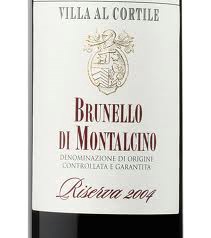
So after whipping up some pretty tasty pasta, I started sipping a killer Piccini Villa al Cortile 2008 Brunello di Montalcino Riserva. Full disclosure: This is an $80 bottle of wine in my wine rack as a trade sample.

The online ratings were all over the place but I liked it a lot. Picini is a very old name with more than 100 years of winemaking experience. The wine is aged in stainless steel and oak. It has a killer nose and wonderful dark fruit, chocolate, tobacco and earthiness.

Many will tell you not to touch a Brunello for 10 years. I’m not sure about that, but this bottle was doing some pretty great things at six years. It did improve with some decanting and time to open up.

Piccini is a brand that’s on many better wine shop shelves. But think about a Reserva and the price point when you want a great bottle of Italian Brunello.

Piccini Villa al Cortile 2008 Brunello di Montalcino Riserva, SRP $90, Trade Sample, Very Highly Recommended

Rose’ Growth; Vineyard Harvest Time

Tags

, , ,

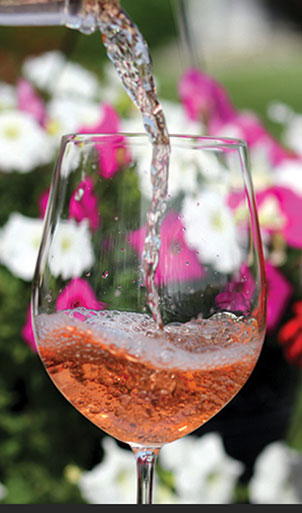
Long-time Grape Sense readers know of my passion for dry rosé. The latest numbers show more and more Americans are enjoying the dry pink passion.

Grape Sense LogoThe Nielsen growth statistics have been rather astounding the past few years. The last reporting period covered May 2013 to May of this year showed 20 percent growth in volume of imported Provence Rosé. If that’s not impressive enough, consider mid-summer sales ending June 21 for the previous 52 weeks showing an incredible 55 percent growth in Rosé imports.

But anecdotally I’ve witnessed growth beyond the French sales. At least two of the more prominent Indianapolis-area wine shops had a considerably larger rosé selection this summer than previous years.

RoseloresDuring summer trips to Oregon and California it certainly appeared more wineries were designating precious grapes for their first or second vintage of dry rosé.

So if you haven’t tried dry Rose, what are you missing? Rosé hits just the right spot between dry white and red wines. It may be the most flexible wine in your wine rack. You can enjoy rosé with a very wide range of meals well beyond reds and whites. It’s also the best sipper in the wine rack for those evenings of small bites and a glass of wine.

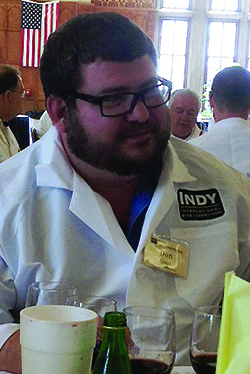
My other personal favorite wine is Pinot Noir and particularly Oregon Pinot. It’s always interesting to talk to winemakers and get their take on what’s happening in the vineyard this time of year. I met Don Crank, Willamette Valley Vineyards winemaker, a couple of years ago at the Indy International Wine Competition.

“The winemaking and vineyard team and I are now working around the clock to bring in fruit from our three estate vineyards,” Crank said of the on-going fall harvest. “The grapes have reached optimal ripeness from the evenly warm vintage, and have retained their naturally bright acidity from the cool nights. What sets 2014 apart from other warm weathered years is we didn’t experience heat spikes in the vineyard, sending the grapes into sun-shock. Instead, the fruit is healthy and near-perfection.”

Crank picks Pinot Noir and Chardonnay first to make his ‘traditional-method’ sparkling wine.

Don Crank

Don Crank

“The grapes were pressed immediately to avoid picking up color or tannin from the skins and are now fermenting. We will bottle this wine after some time in barrel, and then inoculate for its secondary fermentation, which creates the sparkle.”

Harvest time is always chaotic in any wine region. It’s a little extra chaotic this fall in Napa after the Aug. 24 earthquake. The estimated losses have constantly been upgraded to nearly $80 million.

You can support some of the hardest hit wineries by going online and buying wine. Look for Robert Baile, Page Cellars, Laird, and Yates Family Winery. There are many more but those are smaller operations which can really use your wine shopping dollars.

A Few Wine Tips Worth Repeating

Tags

, ,

Every now and then I get asked how I come up with ideas after more than 150 columns. Actually some of the best ideas have come from readers across the Midwest. Today’s column is an example of that. It seems lately I’ve been asked a lot of ‘wine basics’ questions.

Grape Sense LogoSo a list of suggestions, guidance, and ideas that may help you enjoy wine even more seemed like a good idea for this Grape Sense outing. You can find list after list available in wine books and the internet but I’ve selected some I think are most helpful.

Wine storage – Keep your wine in a dark, moderate temperature to cool spot. Ever wonder why wine comes in dark bottles? Light will break down the chemical structure of the wine. Buy a simple wine rack. They’re easy to find in most any home store. Keep it away from heat and away from direct sunshine or bright light and you should be fine. Never store wine on top of a refrigerator or near a heat source.

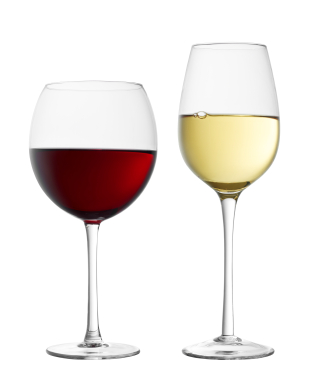
iStock_two-wine-glassesWine glasses – You can find wine glasses at Wal Mart or Target. You can also spend close to $100 apiece for Riedel crystal wine stems. But the best and least expensive advice is to buy two different kinds of glasses. Buy a big bowl wine glass for your red wines and a smaller glass for your white wines. It took me a long time but it makes a difference.

If you have advanced to wines which are a little more complex and expensive, then you can look to different shapes and better stemware. If you are getting serious about your wine, Riedel (and other companies) offer crystal wine glasses at a number of price points.

Washing wine glasses – You might say, huh? It’s important to clean your wine glasses thoroughly immediately after using them. Use mild dish soap sparingly, rinse thoroughly, and dry immediately. The slightest residue can affect the taste of your next glass of wine.

Wine Ratings – Ratings are one of the most controversial topics in oenophile circles. They are meant to be a guideline. If you buy highly-rated wines and like them, then the ratings are useful to you. I’d recommend you take advice from your local wine shop owner. Then when you return, tell them what you like and didn’t like.

Value wine – You like wine and want to enjoy it more often but don’t like the price of better wines? Go abroad! There are good U.S. made value wines. But if you look at South American wines, Spanish wines, and French Rhone wines, you’ll find some great bottles in the $9-$15 range.

wine-snobRestaurant wine – Unless you’re fabulously wealthy, buying a bottle of wine in a restaurant is seldom a bargain. Restaurant wines are often marked up 100 percent or more. I will order a glass of wine in a nice restaurant, but usually refuse to pay $50 for a bottle I know costs $22.

Chilling wine – There is more advice on wine temperature than you can sort out. Put a white wine in your refrigerator for an hour or less. For a lighter-style red wine, I’d open the bottle and chill about 10-15 minutes before serving. One old adage rings true, most white is served too cold and most red too warm.

It would take all of the pages of this newspaper for a comprehensive list. If you have a specific question, drop me a line at the email address below. If I don’t have a good answer, I’ll find one for you.

Indiana Vineyards Took Vortex Hit

Tags

, , , , , ,

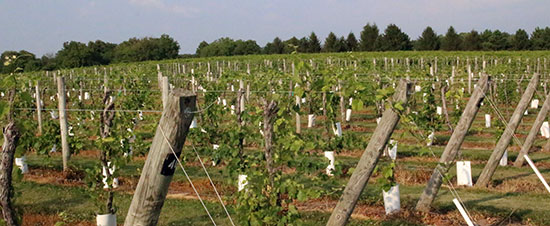
Creekbend vineyard vines in renewal.

Creekbend vineyard vines in renewal.

When most Hoosiers think of weather problems and crops it’s cornfields that come to mind. But the winter cold is the big issue of 2014 for farmers of a different type – vineyard managers.

Grape Sense LogoThe frigid cold of early 2014 damaged up to 25 percent of the state’s grape crop, according to Purdue’s Bruce Bordelon. “It’s very widespread in the northern part of the state,” he said. “From the Bloomington/Columbus line and north the damage is pretty severe.”

The extreme cold temperatures damaged the vine structure in many vineyards. “So a lot of us are retraining vines from the ground up,” Bordelon explained. What that means to those with the cold weather issues is that sections of the vineyard restarted may be out of production for two years. “We’ll have a light crop next year,” Bordelon said. “There should be a partial crop in two years then back to full production in 2017.”

Oliver's Parker

Oliver’s Parker

One of the hardest hit vineyards was the state’s second largest at Oliver Winery. The Creekbend Vineyard just west of Oliver’s tasting room on Hwy. 37 suffered damage to 20-25 percent of its vines, according to vineyard manager Bernie Parker. “We’ll be making less than half of the Creekbend (label) but Creekbend is only about three percent of our total production. There is an economic impact because we’re still having to put in the same effort in the vineyard to re-grow these vines. It may take more effort.”

Parker had to restart 9,000 of 36,000 vines in the 54 acre vineyard. The largest portion of the Oliver wines though are produced from grapes purchased to produce their signature and popular sweet wines. The higher-end Creekbend wines are grown in their vineyard. The bulk of that vineyard is planted in Chambourcin, Traminette, Vignoles, Chardonel, and other typical Indiana wine grapes.

BruceOthers who suffered damage may have been able to recover a crop with good vineyard practices. “Grapes are an amazing plant in their ability to produce fruit,” Bordelon said. “We always adjust the production through pruning and cluster thinning. We usually have way more fruit than we really need. With some of these (grape) varieties, with lighter pruning, we’ll still be able to have close to a full crop.”

Down south Ted Huber saw little damage in his vineyards atop the Ohio River Valley hilltops. We’re probably going to pull off an 85-90 percent grape crop,” Huber said. We had a little bit of minor damage in one vineyard so by choice we decided to do a renewal on it. It still had one-third to a half crop on it anyway, but it just made a lot of sense to take it out of production.”

Huber has the state’s largest vineyard but is the second biggest wine producer. Oliver is by far the state’s biggest wine producer with the second largest vineyard. Oliver buys the fruit for much of its 300,000 case production. Approximately half of the Oliver total production is the popular sweet wines.

The Best Cab from Your Market Shelf?

Tags

, , ,

Summer time is grilling time and there is not a better part of the year for some charcoal fire and beef!

If you’re a wine person that means you need a bottle of Cabernet. Now, Zinfandel, Merlot, Syrah, Petit Syrah, and more could match with your roasted beast. But nothing says summer like a great rib eye and a bottle of the king of grapes, Cabernet Sauvignon.

Grape Sense LogoBut what if you’re on a budget? Or maybe you just don’t have the palate or inclination to splurge on an expensive bottle of wine. Never fear, your faithful wine columnist and his Wine Dudes are here to help.

Yellowtail, Mondavi, Fetzer, Beringer, and Bogle wines can be found on most grocery store shelves and many wine shops and liquor stores. These wines ranged from $6.99 to $11.99. Those labels represent some of the biggest – and some would argue the best – in value wine.

My wine buddies got together recently to determine the best of the lot. All four wine drinkers are pretty serious about their vino and took the task seriously. I purchased five bottles of wine from a local Kroger and then bagged them. Another of the wine guys mixed the bottles up and then everyone picked up a number at random and stuck it on a bottle. So no one knew what we were tasting – we took notes.

We had a great time and great discussion about wine. But, to borrow a phrase, I wanted to kick it up a notch. So I added a sixth wine that was a $100 bottle of Bello Family Vineyards 2008 Napa Cabernet. That bottle was also wrapped, and randomly numbered.

The first task was to pick out the $100 bottle. I had told the guys I was including one and would never do that again if I repeat the exercise. Two of the four were able to pick out the $100 bottle rather easily. As I recall, the other two had the expensive bottle as their second pick.

The moral to that story is even experienced palates can be wrong or confused.

But what about the under-$12-value Cabs? All five wines were 2012 Cabernets. Keep in mind most had a little bit of Merlot, Malbec, Petit Verdot or whatever in the blend but were at least 75 percent Cabernet.

There was unanimous agreement that none of us cared if we ever tasted the value Yellowtail or Fetzer Cab ever again. Ever!

We probably disagreed the most on the Beringer Cab. The group loved it and hated it. That put it in the middle for us in the number-three slot. The Beringer needed time out of the bottle and just kept improving. Two of the group hated it, I think it’s a very solid choice for the price point.

The top two were Mondavi Central Coast Cabernet and Bogle Cab. The Mondavi was smooth with a balanced mouth feel and good Cabernet characteristics. Seldom do wines at this price point have much of a finish – or a pleasant one – and that was true with this bottle. A serious wine drinker would call the Mondavi thin. Still for a beginning wine drinker, I’d offer up the value Mondavi line to any one with great confidence.

So that means our winner was Bogle, but it was close. The Bogle could be described much like the Mondavi but with a little bit ‘more’ across the palate. The fruit was a bit bigger, there were secondary characteristics, mild tannins and a satisfying finish.

I’d call the Bogle pretty darn good juice. Try it with a rib eye.

High-End Restaurant Bottoms Out

Tags

, ,

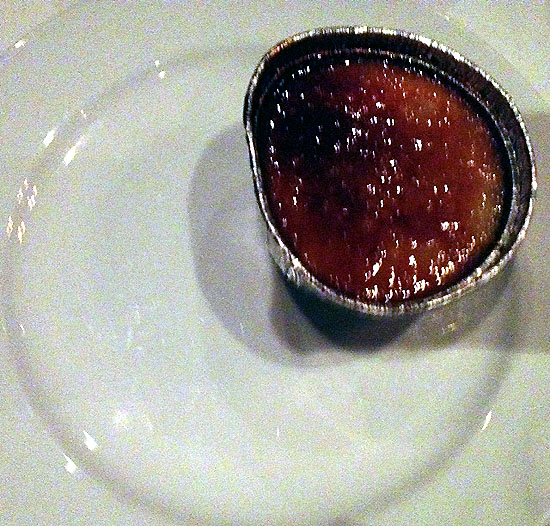
The much-anticipated creme brulee' came to the table on this blank white saucer and partially squashed. Oh, and burnt!

The much-anticipated creme brulee’ came to the table on this blank white saucer and partially squashed. Oh, and burnt!

INDIANAPOLIS, IN. – Indianapolis has been in a food revolution the past few years with the emergence of some great new farm-to-fork, innovative and national-attention getting restaurants. Meanwhile, there have been old standbys like St. Elmo’s Steakhouse, several great Italian restaurants and more continuing to serve excellence.

Dunaways, at Prospect and South St. and not far from Lucas Oil Stadium, used to be one of those standbys. A Saturday night visit was part embarrassing, second part shameful, and third part ripoff. Perhaps I should quit writing here in the second paragraph and let the photo above speak for itself.

The greens WERE good!

The greens WERE good!

Indy’s big dining promotion, Devour Downtown, offers a chance to eat at these high-end restaurants for $30-$40 for a special menu of dinner choices. I didn’t do my pre-visit look at Yelp, Urban Spoon, and Trip Advisor but now I wish I’d have taken the time.

The restaurant, in the really interesting old Indiana Oxygen Building, suffers from poor service, very poorly prepared food, and a seemingly “I don’t care” attitude.

My dinner companion had a “Caprese Tower” and I a “Mini Crabcake for appetizers. Her “Tower” was three half tomato slices – one virtually butchered – and a few thing pieces of warm mozzarella. My crabcake was about the size of a silver dollar and burned. The crab was nice, if you like singed as a secondary flavor.

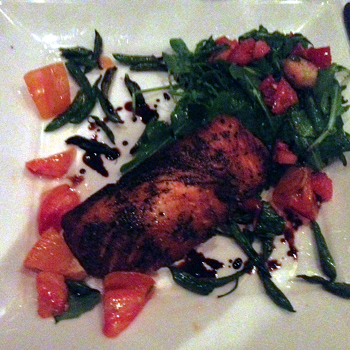
The entree’ selections were just slightly better. My friend’s beef tenderloin seemed to be a decent cut of meat but was overcooked. The Horseradish mashed potatoes were watery and no sign of the usually easy-to-find horseradish. My salmon was unremarkable but a tad over seared. The inside of the small piece of fish was raw. And I thought it was weird that it was served with diced tomatoes.

Unfortunately, the worse was yet to come. My frequent dining companion ordered a cheesecake-like dessert that was rubbery and inedible – to be kind. The photo of my creme brulee’ above should suffice, but I’ll note the small portion was tasty but the sugar on top was again burned.

Our first wine choice – Evening Land – was not available. The Siduri Pinot, at $65, was quite nice.

Our waitress was pleasant but a tad more Dennys than high-end dining. Each meal was $35 and honestly I think we could have found more tasty salmon and beef tenderloin at any national chain restaurant. I should note, most menu items are in the $30-$40 range on the regular menu. There were several wine selctions near $100 and over up to more than $200 for one Napa Cabernet.

After I got home, I saw online the place is for sale and the reviews are not as kind as this one. It’s a shame when a beautiful place like this, in a great location, falls to indifference and embarrassing service.

Do not go to Dunaways near Fountain Square. I hear there is a McDonalds not far away on Washington St.


Plow and Anchor Indy’s Newest

Tags

, , , ,

INDIANAPOLIS, IN. – The Indianapolis food scene just seems to get better and better with each new restaurant opening. It was no surprise when John Adams opened Plow and Anchor on Pennsylvania that it would quickly take its spot alongside the other city standout eateries.

Adams has worked at some of the city’s finest restaurants and drew accolades for his startup Bluebeard in Fountain Square. That restaurant was a James Beard Foundation nominee for Best New Restaurant. Adams left Bluebeard, spent some time in Louisville but has returned to focus on his unique combinations and seafood at the old Ambassador Hotel. The restaurant fills a space briefly occupied by The Bar at the Ambassador.

photo (10)An early Saturday evening visit, because the more reasonable dinner hours were booked solid, was a roller coaster for the taste buds. Perhaps the photos above better illustrate the adventure than any words but it’s best to offer a few details of my dinner companion and our appetizers, entree’, and shared dessert.

I started with serano and melon – wonderful salty Spanish ham with fresh Indiana watermelon and cantelope. Foodies might call the presentation ‘deconstructed’ versus the normal presentation, I just called it delicous.

My friend had the really unique and tasty Bean Salad featureing potatoes, green beans, grape tomatoes, celery, bacon, egg and dill ranch. It was a real treat and very reasonably priced appetizer at just $7.

I usually like scallops as an appetizer, but made it my dinner choice. The seared scallops – nearing ‘well-done’ but not over cooked – were served with braised dandelion greens, roasted tomato, and a cauliflower puree’ for $32. It was magical. The only flaw in the dish were bits of the braised dandelion missed seasoning or something and was quite bitter.

My friend had the pork snitzel which tasted fresh, tender and crispy. The traditional German favorite took a modern twist with Adams’ roasted cauliflower, eggplant, pickled onion, raisins, fennel almond sauce, and harissa.

Dessert didn’t disappoint with more flair for the unusual pairings which has made Adams a trendsetter in Indy. We shared the lavendar biscuit dessert with strawberries, rhubarb, pea anglaise, pea shoots. Yes, pea anglaise and pea shoots on a dessert. All I can say is it made sense in the mouth.

We enjoyed a bottle of Gerard Bertand Picpoul white with dinner, with a typcial markup from about $15 to $35. Restaurant service was polite, professional and well-timed.

The unusual mixing of ingredients presents a delightful challenge to the palate. Plow and Anchor now takes its rightful spot along several Indy dinner spots like Black Market, the aforementioned Bluebeard, and Cerulean.