• About
  • Indiana Wineries
  • Michigan Wineries
  • Wisconsin Wineries

Howard W. Hewitt

~ … The "W" stands for wine!

Howard W. Hewitt

Category Archives: Organic

Pinot, Pinot, and more Pinot Noir

09 Tuesday Oct 2018

Posted by Howard in Food & Travel, Organic, Uncategorized

≈ Leave a comment

Tags

Alloro Vineyards, Carl Giavanti, David Bellows, Michelle Kaufmann, Stoller Estate, Tom Fitzpatrick, Vidon Vineyards., Wayne Bailey, WordPress, Youngberg Hill Inn
IMG_1844

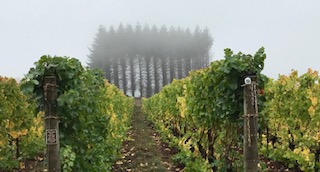
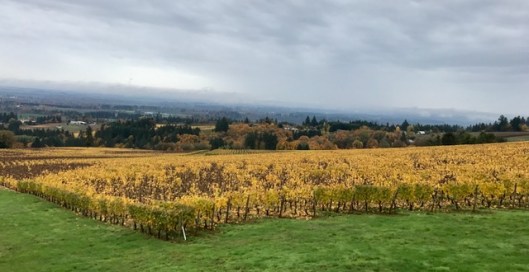
A beautiful view of a stand of tall trees through the Alloro vineyard

McMINNVILLE, OR. – I normally advise people not to do more than three winery stops in a single day. So on my first full day in Oregon’s Willamette Valley I was able to stick to that rule but stretched things a bit on the last stop.

Alloro Vineyards, Vidon, and Stoller Estate filled my first day of tasting capped off by a great evening at Nick’s Cafe in McMinnville. Wayne Bailey, owner and winemaker of Youngsberg Hill Winery and Inn, hosted me, marketer Carl Giavanti, and a personal friend who owns a small winery north of Chicago. It was a great day.

I was most anxious to visit Alloro Vineyards up in the hill of Willamette Valley just outside of Portland. Two blind tastings with friends rated Alloro the best of four or five small production wines tasted earlier this year.
IMG_1850

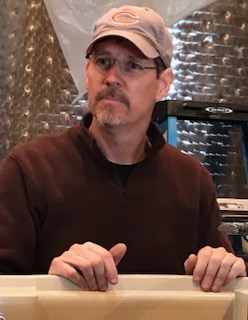
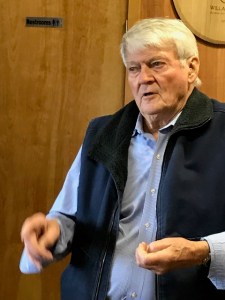
Alloro’s Fitzpatrick

General Manager and winemaker Tom Fitzpatrick is meticulous in overseeing winemaking operations. We chatted in the winery and tasting room. He uses carbonic maceration in the winemaking process which really shows off the fruit.


The wines are reasonably priced at $40 for the entry level estate wines. I found the Pinot to be well-balanced, bright fruit, and perfect to sip or with food. Alloro also does Chardonnay, a dry Riesling and a dessert wine.

I  talked with Fitzpatrick about Oregon’s warming growing season and about price pressures with the Valley’s booming success. His thoughts and comments will be feature in a future post.

After a quick lunch stop at the Alison Spa and Inn, we headed to Vidon Vineyards, always a favorite stop. Don was off to California trying to sell wine so we spent time with Don’s winemaker David Bellows. Bellows holds a in PhD in Molecular Biology from Johns Hopkins School of Medicine. That’s some serious winemaking science.
IMG_1860

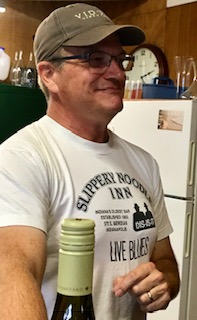
Vidon winemaker Bellows

David, resplendent in his Slipper Noodle t-shirt (Indianapolis iconic blues bar), tasted us through a vertical of Vidon’s classic 3 Clones wines – a 2013, ’14, and ’15. We also barrel tasted the 2017 Apollo Chardonnay which was outstanding – perhaps one of the best Oregon Chardonnay’s I’ve had in previous visits. The wine is part of a series of wines highlight Don’s time with the NASA space program.

Bellows was very insightful on the challenge of the warming climate and what it could mean to Oregon wineries. His thoughts will be included in the future post mentioned above.

The ‘we’ throughout the post represents myself and Carl Giavanti. Carl helped arrange interviews with several of these winemakers whom I interviewed via email earlier this year. I wrote a series of pieces about the challenges of the small guys fending off the big-money investments happening in the Willamette Valley. Carl was my guide throughout the day providing valuable background about each winery and the Oregon industry.

Our last stop was “for comparison’ purposes” contrasting the small wineries to Stoller Estate. Stoller recently was honored with USA Today’s “Best Tasting Room in America” honor. From Stoller’s website: “Our tasting room and winery combine environmental sustainability and high-efficiency design, and harvests 100 percent of its energy through a 1180-panel solar panel installation. Notable design features include a green roof, skylights, salvaged timber, and an EV charging station for electric vehicles.”

Stoller produces 68,000 cases of wine under multiple labels compared to the typical 2000-3,000 case operations of the smaller wineries I’m visiting on this trip. Communications Director Michelle Kaufmann was our host for the tasting and share all of Stoller goals of sustainability and growth.

I’ll write something independent about Stoller. Their efforts are setting the bar for how one grows, treats employees, and build a brand with integrity and  purpose.

Today, we’re off to Lenne Estate, JL Kiff, and back to Youngberg Hill for a tasting with owner/winemaker Wayne Bailey.
Share this:

  • Click to share on X (Opens in new window) X
  • Click to share on Facebook (Opens in new window) Facebook
  • More
  • Click to share on LinkedIn (Opens in new window) LinkedIn
  • Click to email a link to a friend (Opens in new window) Email
Like Loading...

Oregon Day: Don, Drouhin, & Mo

31 Monday Oct 2016

Posted by Howard in Food & Travel, Organic, Uncategorized

≈ Leave a comment

Tags

Ayoub Winery, Domaine Drouhin, Don Hagge, Mohamad Ayoub, wine travel

fullsizerender-15

The beautifully manicured vineyards of Domaine Drouhin

SOMEWHERE IN THE WILLAMETTE VALLEY’S ROLLING HILLS, Or. – Ok, there is no such dateline but it’s an accurate description of our past three days in Oregon wine country.

img_0209

Don Hagge

It seems like our daily wine adventures got better by the day. We began our Sunday with a visit to Don Hagge of Vidon Winery. Don should be considered the eighth wonder of the world. The man worked for NASA, earned winemaking in Burgundy, and has a lifetime of accomplishment and interesting connections that should have some author writing a book.

Vidon, named for Don and his wife Vicki, is a small boutique winery – the type where the wine is great, production small and sometimes fly a bit under the radar. Spending a little time with Don is great story after great story. And, his wines probably represent the best QPR in the valley – quality to price ratio. Don works with French clones and makes wonderfully balanced and satisfying wines.

A testament to Don’s work would be that we bought more wine for shipment home than we did from any other winery.

fullsizerender-14

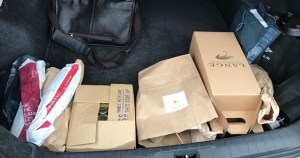
Some of our stash – some!

So let’s do a lesson here. It is easiest to let the winemaker ship you the wine if you’re buying six bottles or more. Shipping can run from $60-$100 a case. There are almost always some available deals. Often times if you’re buy six to 12 bottles you’re getting the shipping covered by that discount. I belong to a wine club and get six bottles twice a year. If I buy another six for the same shipment I only pay shipping on six bottles for 12. Most all wineries offer that deal.

Our second Sunday visit was next door at J. Christopher Winery. Dr. Loosen, of Reisling fame, invested in Christopher a few years back and the investment shows in the barrel tasting room. We found a couple Pinots we liked but this is the only stop where we paid the tasting fee and moved on.

Two of us organized most of the details for this trip. Our two buddies making their first trip were assigned to pick a winery they wanted to visit. Alex chose Trisaetum on Saturday and Patrick B. wanted to visit the iconic Domaine Drouhin winery.

Drouhin’s vineyards are stunning and the winery beautiful. We tasted a couple of Roserock wines, their new 200-acre vineyard south of McMinnville. The Chardonnay and Pinot were both good solid $30 wines. The Drouhin wines are always good. The Arthur chardonnay even better than I remember. The signature Laurene ($70) is a stunning wine Our tasting room associate pulled out a 2008 Willamette Valley entry level wine that was one of the best we tasted during our whole trip.

We wrapped up at a winery you’ve probably never heard of – Ayoub Winery, in the Dundee Hills. Mohamad “Mo” Ayoub is a native of Lebanon. He only makes 2,000 cases of wine annually and sometimes slightly less. He recently stepped down from a long career in tech and is focusing for now on his winery. His wines are superior. And, that’s not just me saying that. We tasted about 7-8 different Pinot wines half of which had scores of 93-95 from Wine Spectator and Wine Enthusiast.

Why did Mo go into wine? Why does he make a fabulous Cab Franc/Pinot Blend? Why? Why? Mo’s standard’s answer: “Because I do things.”

Not a man of many words, but a man of an extremely dry wit and talent for wine making. Oh, his tasting room is his kitchen table in his home. Quite an experience.

Dinner was in our hilltop rental with an evening of relaxation.

Today, Monday, one of our party heads back early. The other three of us are headed for a Columbia River Gorge and Mount Hood drive. We all have redeye flights home tonight.

I think I’ll be spending next few days trying to figure out how much money I spent on wine! Yikes!


Share this:

  • Click to share on X (Opens in new window) X
  • Click to share on Facebook (Opens in new window) Facebook
  • More
  • Click to share on LinkedIn (Opens in new window) LinkedIn
  • Click to email a link to a friend (Opens in new window) Email
Like Loading...

Three Bold Reds for Summer Grilling

17 Wednesday Jul 2013

Posted by Howard in Australia/New Zealand, Organic, South America, Washington State

≈ Leave a comment

Tags

Chateau Tanunda, GrandBarossa, Powers Spectrum, Zuccardi Malbec

steakThere is nothing like a grilled steak or other beast off the charcoal during these hot summer days. After lots of Rose’ and white wine, it’s time for a taste of red.

Fire up the grill, add a little BBQ rub to those thick ribeyes and enjoy any of these three wines. Here are three diverse choices with Argentinian Malbec, Australian Cabernet, and a wonderful red blend from Washington state all making the grade.

zuccardi_serie_a_malbec11Zuccardi Serie A 2011 Malbec – There are a lot of so-so and uninteresting Malbecs on the market – but even those are good QPR (quality to price ratio) wines.

The Zuccardi really delivers big dark fruit, some will argue a little over-ripe or jammy, but the finish had enough tannin to cut through the fat of the ribeye.

The silky mouth feel and lighter tannins make a great steak pairing. The winemaker ages 70 percent of the juice in oak. It comes in at 14 percent alcohol.

This wine earned 90 points from Robert Parker.

Zuccardi Serie A 2011 Malbec, online at $12-$20, widely available, Highly Recommended.

GBCabSavChateau Tanunda Grand Barossa Cabernet Sauvignon – Like many Americans I haven’t been drinking much Australian wine in recent years. Much has been written about the decline of Australian imports. Fingers are often pointed at the critter wines which brought Australian wine to prominence but were of lesser quality.

So I was prepared for a so-so Cabernet and found myself pleasantly surprised and pleased with the Tanunda Cab. The winery dates back into the late 1800s and the nice balance of this wine suggests a long tradition of winemaking.

The grapes are a blend from several vineyards in the Barossa region. Once into the winery the wine is aged 16 month in oak for a big structure and body that holds up great for any grilled beast.

Ratings from Australian reviews put the wine at 89 points, and I’d say that’s about right.

Chateau Tanunda Grand Barossa Cabernet Sauvignon, $17 average online price, Trade Sample, Recommended for the price point.

09_PW_SPECTRUMPowers 2010 Spectrum – I liked all three of these reds alot. The Spectrum was my choice of the three though. It’s big enough to please regular wine drinkers, rounded enough for wine novices, and pairs great with about any dish.

The blend is 39 percent Merlot, 33 percent Syrah, 22 percent Malbec, 6 percent Cabernet Sauvignon. Rich red fruit and a hint of herbs makes this a great drinking wine. It’s oaked in a combination of new and neutral wooden barrels.

It registers in with 14.5 percent alcohol but didn’t taste hot on the palate at all.

Powers has a very nice line of wines. They have been a leader in organic and low-impact farming.

Powers 2010 Spectrum, $10-$13 online, Highly Recommended.

Share this:

  • Click to share on X (Opens in new window) X
  • Click to share on Facebook (Opens in new window) Facebook
  • More
  • Click to share on LinkedIn (Opens in new window) LinkedIn
  • Click to email a link to a friend (Opens in new window) Email
Like Loading...

Celebrate Earth Day With Organic Wines

22 Sunday Apr 2012

Posted by Howard in Organic

≈ Leave a comment

Tags

The Organic Wine Company, Veronique Raskin

As we delight in warmer springs, stay surprised by drier winters, and brace for blistering summer, it makes one wonder what we’re doing to Mother Earth!

Earth Day, celebrated on this date annually, is a time to reflect and think about the products we eat and drink and how they’re produced. After attending in January the Millesime Bio in Montpellier, France, I’ve become a fan. I’m not a fanatic but a big fan of the wines, the Languedoc, and the importance of buying food products – and wine – from producers who care about what they’re doing to their soils, steams, and air.

Organic wine does not use chemicals – pretty simple isn’t it?

You can find organic wines in the U.S., mostly from California along with biodynamic wines. In your wine shop you might have to make an effort to find a bottle. Too often the organic wines are stuffed in a corner with Kosher wines, state wines, and “other” bottles.

French wines are labeled “made with organic grapes.” The French do add minimum sulfites while U.S. producers do not.

That is a discussion for another time and you can read more about it in the story I wrote for Palate Press after returning from France.

But for today think about organic wines. Try a few. If you have trouble finding them then I’ll direct you to my friend Veronique Raskin’s wonderful The Organic Wine Company website. The  Bousquette, Mas Janiny, and Ventoux wines are a great starting point. Keep your eye open for wines imported by Paul Chartrand, also a friend, and one of the leading organic wine importers in the U.S.

Frankly, I’d challenge you to set up a blind tasting and see if you or your friends can taste any difference.

Most organic wines are wonderful. And, they’re wonderful for Mother Earth.

Send comment or questions to: hewitthoward@gmail.com

Share this:

  • Click to share on X (Opens in new window) X
  • Click to share on Facebook (Opens in new window) Facebook
  • More
  • Click to share on LinkedIn (Opens in new window) LinkedIn
  • Click to email a link to a friend (Opens in new window) Email
Like Loading...

Why Organic Wine is a Smart Buy/Pick

19 Monday Mar 2012

Posted by Howard in France, Newspaper Column 2012, Organic

≈ Leave a comment

Tags

Domaine Joly, Langeudoc, Millesime Bio, organic wine, Theirry Julien

Telling a kid to eat something because it’s good for them is usually a good way to make sure it never passes their lips.

At the same time, if you suggest trying something that is good for an adult and/or the environment many will assume it must be tasteless or an inferior product.

A January trip to Southern France to the Millesime Bio organic wine trade show proved nothing could be further from the truth. Organic wine is a growing movement stifled by regulation, misunderstanding, and greed.

The story begins in the 1980s when wine labeling laws were enacted in 1987 requiring “sulfites added” be printed on wine labels. The organic wine movement started largely in the early 1980s. The two have been linked ever since. Simply put, there is no relationship.

Sulfites are used in wine to fight bacteria or fungi which can occur in the winery or winemaking process. There are all sorts of old housewife tales and stories about the ills of sulfites in food. But the facts are there are hundreds of packaged foods in your kitchen right now which probably contain sulfites. Wineries have to put a label on the bottle that proclaims sulfites, most products do not.

The profiteering and greed started in the U.S. when some wineries, which had previously worked toward organic standards in the late 1980s and early 90s, realized there was a profit to be made if they insisted organic wine contain no added sulfites. The argument goes that would keep big wineries out of the business.

Wines without added sulfties have a very short shelf life and are often very thin wines. European standards allow mimimum sulfites which makes for better wine that can be aged. By comparison, the U.S. law allows no more than 10 parts per million in sulfites. EU regulations permit 100 ppm. Wines that aren’t organically produce may have up to 350 ppm. So European Union wines must be labeled “made from organic grapes” to be sold in the U.S.

AIVB President Thierry Julien chatting about organic wines

French winemakers claim opponents of changing the U.S. standards are merely protecting market. Most aren’t afraid to name specific wineries and individuals. But they have become frustrated and even dismissive in recent years while suggesting consumers should focus on the benefits of wines made organically. Essentially, the definition of organic wines should be wines that have no chemicals added – no pesticides, fertilizers, herbicides, or other chemicals in the winemaking process.

Such practices are better for the farmer, consumers, and for Mother Earth. The concept enjoys more widespread acceptance in Europe than the U.S.

Theirry Julien, president of Southern France’s organic wine growing association, outlines a progression that happens with organic products.

“You start with baby food then you do bread and pasta,” Julien suggested. “The wine comes toward the end. I’m not at all waging war against other wine growers who produce wine traditionally. The truth is organic wine growers have had trouble supplying organic wine to meet demand.”

He also makes an interesting comparison. European consumers think about what is good for their health while U.S. consumers seem more motivated by what’s good for the environment.

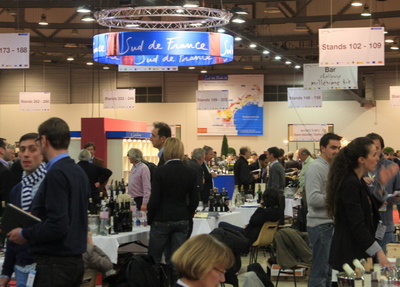
The Millesime Bio featured 587 wineries from 13 different countries. I probably tasted close to 300 wines in a five-day period. I don’t think any average consumer would know they were tasting “organic wines.” While there were a few sub-par bottles, I’d say more than 90 percent of the wines were good to outstanding.

Southern France’s Languedoc-Roussillon region is France’s biggest organic region. The red wines are most often blends of Syrah, Grenache, and Carignan. They are tremendous table wines and great values at prices usually at $10-$20 a bottle.

I wrote a more detailed story for Palate Press – The National Online Wine Magazine on organic wines and the fight over the details. Go to palatepress.com and search organic wine or my name to find that story.

Howard’s Picks: Labels to look for include Italy’s Perlage, Domaine Joly (which will soon be available) or check out The Organic Wine Company online for a wide selection of organic wines.

Send comment or questions to: hewitthoward@gmail.com

Share this:

  • Click to share on X (Opens in new window) X
  • Click to share on Facebook (Opens in new window) Facebook
  • More
  • Click to share on LinkedIn (Opens in new window) LinkedIn
  • Click to email a link to a friend (Opens in new window) Email
Like Loading...

Young Guns Boosting Organic Wine Growth

24 Tuesday Jan 2012

Posted by Howard in France, Organic

≈ Leave a comment

Tags

Cyril Bonnet, Luigi Di Tuccio, Millesime Bio, Montpellier

MONTPELLIER, FRANCE – There are 587 wineries from around the world participating in the 19th Millesime Bio here and there seems to be just as many stories.

Men of 70 and 80 years old with domaine and chateau names which just sound historic are plentiful. But you also see the young guns. There are a substantial number of 30-something and even 20-something year old winemakers. Some are following in their father’s footsteps while others sought out the life of vineyard work and winemaking on their own.


Cyril Bonnet

Cyril Bonnet is a very young winemaker with a very long history. He is the seventh generation to make wine. Most of that history is in Champagne where his father and family still live making the iconic bubbly at Chateau Bonnet-Ponson. But Cyril wanted to go out on his own and now has Chateau Bonnet in Villaudric, just northwest of Toulouse.

Bonnet is one of those 587 producers trying to make a name for himself. He grows an odd little variety most outside of Southwestern France have never heard of before. He blends Negrette with other more common varietals and even makes a 100 percent Negrette wine.

Being a young winemaker at 28 with an obscure grape means marketing is important. He also is a believer in organic practices and is fully certified.

“It’s very, very important, to be exported to the clients and be here at Millesime Bio,” Bonnet said. “If you can’t come to this type of fair it’s impossible to make contact to customers. My father told me this one is important because it’s very professional, very simple and we love it.

“Maybe 30 years ago it was possible to make it just working in your vineyard with what you sell there at the farm. But now maybe 50 percent of the work is to go to find customers and the other 50 percent is to make a good wine.”

Bonnet is serious about organics and grew up knowing nothing else. His father started organic practices in Champagne in 1979. “My father is very sensitive to all ecology and puts more of an emphasis on being all organic. I agree with this position, but I don’t like the extreme side when it goes toward biodynamic.”

The wines were interesting. I liked the Negrette grape and it definitely has a different flavor profile. The wine was light on the palate and it made for very drinkable red table wine. Bonnet is producing about 2,200 cases of wine each year.

I was able to do 6 interviews and get a lot done today for future blogs, Palate Press, and the newspaper column. I am getting together with U.S. importer of organic wines Paul Chartrand, who works out of Maine, to taste our way through more wineries Wednesday.

Another Young Gun

Luigi Di Tuccio

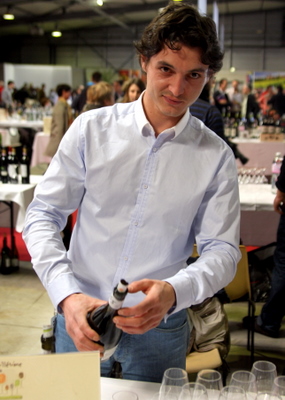
Antica Enotria – Luigi Di Tuccio was handing the pouring, sales, and marketing chores mid afternoon at his family winery’s table. He could also be described as a young guy. He was worked every aspect of the business with his father. His father was one of first in Italy’s Puglia to make the move to organics and became a leader in the region.

The winery has some great varietals that aren’t household names – Nero di Troia, Aglianico and white wine grape Falanghina. His wines are available on both coasts. The family makes approximately 8,000 cases annually.

Other stops …

Romain Bouchard – Two young brothers with no real family history in the wine business decided to buy a winery that had gone out of business in the Chablis region. They are now making two Chablis and have found some success with wines being exported to New York.

Chateau de Fosse Seche – This fun young couple are making wines in trhe Loire Valley’s famed Samur region. I tasted their Samur Chenin Blanc and found it not as light as others I’d enjoyed but sure tasty. They also had a very nice Cabernet Franc.

Sitios De Bodega – This started out as a case of mistaken identy. I was looking for a winery I would find later then the language barrier with a Spanish woman and my confusion gave us a laugh. I ended up tasting and liking her first vintage of Verdejo which I liked very much. Export manager Alejandra Sanz was a good sport, with pretty good English, in telling me about the new effort.

Domaine de Picheral – Boxed wine in France seems a pretty ridiculous opposites attract kind of thing. But I’ve seen lots of boxed wines at the fair. I approach with my typical Tew Parl Ongleah? “Do you speak English?” to get two shaing heads and plenty of laughs for the three of us. What the heck, we used hand signals and pointing – a universal language – to taste a pretty darn good Rose, and a rather forgettable red. It was fun.

Ploder-Rosenberg – Austrian winemaker Freddy Ploder was the most congenial host of the day. The short, stout man was an enthusiastic wine tour guide through is tasting. Sharing just the right amount of wine geek talk, history, and good humor. I liked the entire line. Chardonnay, Sauvignon Blanc … with several of he wines done in different winemaking styles.

As I wrote yesterday, I visited quite a few more wineries but these were the most interesting stops. And I visited several and did interviews which will turn up in future writing.

Send comment or questions to: hewitthoward@gmail.com

Share this:

  • Click to share on X (Opens in new window) X
  • Click to share on Facebook (Opens in new window) Facebook
  • More
  • Click to share on LinkedIn (Opens in new window) LinkedIn
  • Click to email a link to a friend (Opens in new window) Email
Like Loading...

Recent Posts

  • The other White Burgundy – Aligote!
  • Some wine gifting advice
  • Real Indiana Chardonnay?

Categories

Enter your email address to follow this blog and receive notifications of new posts by email.

Join 2,063 other subscribers

Photography

Friend Me On …

Archives

My Summer With Lymphoma: Lymphoma - My Third Battle 2024

Scan: ‘No Evidence of Disease Progression’

That’s a nice way to say it. Yesterday, Mar 27, I had a PET scan (nuclear medicine) to look for cancer after my 60-day CAR-T cancer treatment. The headine here was the second sentence in the technical and detailed report. I really didn’t need to read anymore. I am cancer free and now can wear […]

Fighting Disappointment, Wrist Pain

Most of the past week or so has been dealing with the disappointment. I ended my 60 days of restrictions from cell therapy cancer treatment. But I learned a severely broken wrist can even out do cancer. I fell Sunday Feb. 19 in an icy parking lot. I had surgery the following Wednesday then Thursday, […]

Blog at WordPress.com.

  • Subscribe Subscribed
    • Howard W. Hewitt
    • Join 87 other subscribers
    • Already have a WordPress.com account? Log in now.
    • Howard W. Hewitt
    • Subscribe Subscribed
    • Sign up
    • Log in
    • Report this content
    • View site in Reader
    • Manage subscriptions
    • Collapse this bar
 

Loading Comments...
 

    %d