Four Great Indy Restaurant Choices

Tags

, , , , , , ,

No matter where you read Grape Sense, odds are you occasionally travel to Indianapolis. Next to wine recommendations, I probably get asked as frequently for fun and interesting dining options in our state’s capital.

Grape Sense LogoThere has been a real revolution and emergence in fine dining in recent years. Chef-driven restaurants are the craze across the nation and certainly in downtown Indianapolis.

I’m offering just four options with descriptions here. These are spots I’ve dined once or several times.

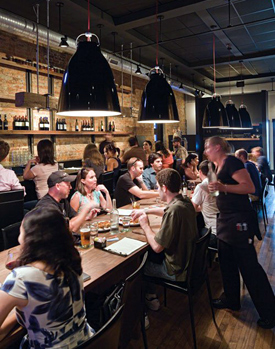
Bluebeard's casual and hip dining room.

Bluebeard’s casual and hip dining room.

Bluebeard, 653 Virginia Ave., in the Fountain Square district is probably my top choice. Chef John Adams started this hot spot but has now moved on. The restaurant tantalizes in a setting inspired by Kurt Vonnegut. Lots of snacks, charcuterie, sides, soups and small plates get the diner started. The choices then come down to small, medium or large plates. It’s a perfect place to mix, match and share with your fellow diner. Small plates run $10-$18 featuring sashimi, frog legs, and usually a salad among the choices. The $14-$40 medium plates offer up Halibut, Ceviche, Octopus and foi gras. The large plates, $26-$42 are exciting. Current large plates are a killer Pici with Bolognese. Lamb loin, skirt steak, and a ribeye Portobello are on the current menu.
BLACK-MARKET-REVIEWBlack Market, 922 Massachusetts Ave., is a smaller spot on the opposite end of downtown. There are some similarities between Black Market and Bluebeard. The menu is smaller than many spots. Starters of pate’, salads, beef heart or lamb tongue range around $10. Dinner runs in the $20-ish range with trout, brined pork chop, chicken, and crispy duck leg confit currently the star attractions.

One of the things I appreciate most about these spots is a growing wine list. Both offer a wide variety of wine styles, regions, and price points. The wine-by-the glass offerings are much more diverse than I find in most restaurants and even other cities. Remember full bottles of wine will usually be marked up 100 percent and that’s why wine-by-the glass represents a real bargain.

With a bottle of wine, dinner for two at either of these places can easily reach $125-$200 plus tip.

So how about something a bit different? Indianapolis has lost two long-time French restaurants on the city’s southside in recent years. But there is a new bistro on Mass Ave. sure worth a visit. The other spot is good for dinner but I think even better for a lunch – and a great buy.

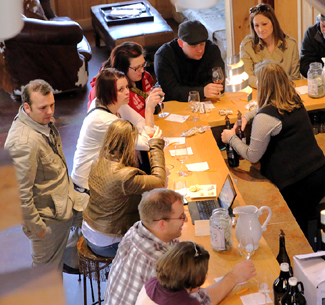
The dining area, including this bar, can seat up to 80.

The dining area, including this bar, can seat up to 80.

Cropichon et Bidibule, 735 Mass. Ave., One of the newest entries in Indianapolis is this French couple’s bistro on the popular Mass Ave strip. Never mind the restaurant’s name, no one else can pronounce it.

It’s actually French gibberish nicknames for the owners’ children. The specialty is crepes – sweet and savory and wow they deliver! The pricing for the crepes is very reasonable around $10 or less. The dinner menu features contemporary French classics like duck and boeuf bourguignon. The wine list is mostly French, no surprise, but a large selection of French wines by the glass. UPDATE to newspaper column: I dined here just a few days ago and dinner surpassed the lunch.!
Yum!

Yum!

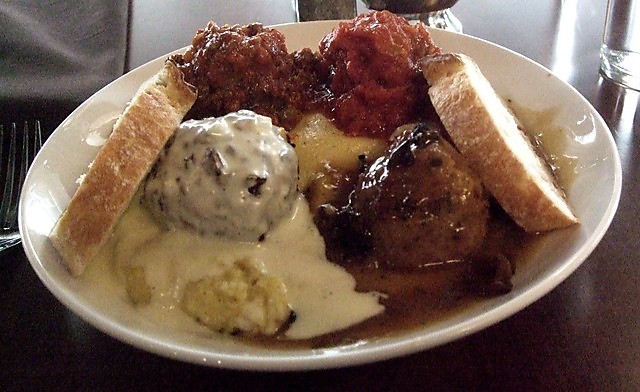
Mimi Blue, 874 Mass. Ave does lunch and dinner. The city’s new meat ball restaurant has really taken off. Classic, Turkey, Veggie, and Beef meatballs are always on the menu. But you’re also likely to find another meatball or two of many possible international origins. The price is right too. You can choose a four-ball plate with a choice of sauces for $11. The side dishes of linguine, polenta, white beans, and potatoes are equally great. Mimi Blue had a more limited wine selection that didn’t excite me, but plenty of choices.

There are so many great choices beyond the four offered here. It’s also exciting to see real diversity come to Indy’s wine lists. Perhaps we’ll revisit restaurant recommendations in a future column.
Saturday on North Wine Loop

Tags

, , , , , ,

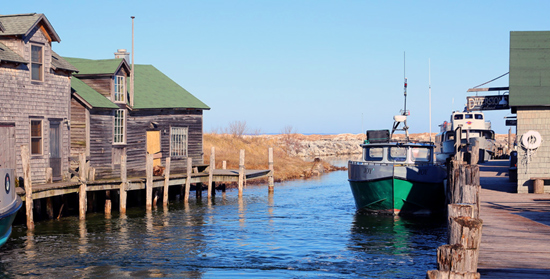
Leland's historic Fishtown on Lake Michigan.

Leland’s historic Fishtown on Lake Michigan.

LELAND, MI. – Charming fishing village and wine country don’t always seem to go hand in hand but this small town along Lake Michigan achieves both.

Leland has a historic fishing village still intact and a very small charming downtown. It’s more summer home to the well off and summer vacation spot than fishing village but nonetheless still worth a visit.

Leland also is at the heart of Leelanau wine country. It’s my third visit to this far northwest corner of the state. I’m here as a guest of the Leelanau Northern Wine Loop. I’ll be visiting four or five wineries today and tasting the 2014 new releases. Tonight, I’ll confer with other visiting judges to pick the best of the best then join a big release party tonight at the small town’s historic Bluebird restaurant.

See photo album here from my Saturday visit.

Michigan wine? You’re not familiar? In short, particularly northern Michigan, produces white wines as good as any label you’ll find. Because of the short growing season, the area struggles in reaching a red wine identity. I expect to taste Pinot Noir, Cabernet Franc,  and Merlot as the winemakers continue to search for a signature red. The Resiling and Pinot Blanc are outstanding usually.

My intent is to add a paragraph or two here throughout the day as I make those four or five stops. I’ll try to add an iPhone pic or two along the way but will add a full album later today or in the next day or so.

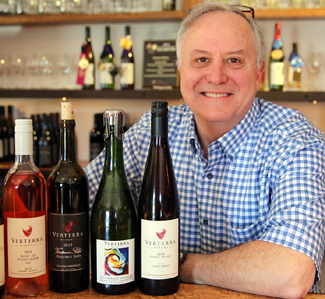
Paul Hamelin, owner of Verterra Winery in Leland, Michigan.

Paul Hamelin, owner of Verterra Winery in Leland, Michigan.

Verterra Winery, Leland Mi. – A great start to my day tasting Paul Hamelin’s wines at Verterra Winery. His dry Rose rocks. He sold out of his 2013 – 100 percent Pinot Noir – I bought six bottles last year. The big winner today was his killer Pinot Blanc – very pronounced fruit with big acidity in a tough growing year for Northern Michigan vintners.

Boathouse Vineyards, Lake Leelanau – Beautiful tasting room in a small village which – yes, indeed – looks a bit like a boathouse. Nice wines across the board. I really enjoyed the 2012 Pinot Noir. It was varietally correct, nice pinot taste – light on palate as you’d expect from cool climate red wine. But the real winner was Dry Dock Reisling, a dry and crisp citrus mouthful of goodness. This is type of white wine that puts Michigan on the map – at least for their whites.

Fresh carved roast beef, swiss and a very tasty cole slaw.

Fresh carved roast beef, swiss and a very tasty cole slaw.

Next on my day’s agenda was a quick sandwich in Lake Leelanau. I’m gobbling down a very nice roastbeef, swiss cheese Sammy with great cole slaw on top at The Thunderbird.

Blustone Vineyards, near Lake Leelanau – This was my second visit in two years to Blustone which is fast becoming one of my Michigan favorites. Owner Tom Knighton found a great hilltop piece of property and built a beautiful, modern tasing room in the midst of vineyard and cherry trees.

Like most others, they’re white wines are great. I tasted an unreleased Pinot Blanc that was among the three best wines I tasted all day. Blustone also is at or near the top of any Pinot Noir on the Northern Loop. They’re getting there. The vines are only 10 years old and they need age. But the Pinot is varietally correct and gaining a little bit of character each year.

The busy April 11 tasting room at 45 North.

The busy April 11 tasting room at 45 North.

45 North Vineyards – Apparently no one got hit harder from last growing season’s killer frost than 45 North. During my April 11 visit they were the only one of five stops not even pouring a red wine though there were a few on the shelves. Nonetheless, 45 did have one of the best wines I tasted all weekend and that was a Pinot Gris fermented in the now-popular cement egg. The cement egg – and that’s exactly what it looks like – gives the already outstanding wine a crazy creamy mid-palate. It’s unique and well worth the mid-$20 price point. It won’t be released until May.

Aurora Cellars – Just up the road, literally, from 45 north is an older winery under new management. Their standout bottles were the whites with a semi-sweet Reisling best of what I tasted. They’re not afraid of cooking up some unique blends and are on to something with a mid-teen red and white sure to please the masses.

The Non-Controversity on Arsenic

Tags

What is the mostly likely result of a few glasses of Two-Buck Chuck, Simply Naked Moscato, or FlipFlop Pinot Grigio?

Will you end up with arsenic poisoning or just a dull headache and a few regrets? Frankly, all responsible scientific research indicates regrets and a rough morning is far more likely than any issue with arsenic.

Grape Sense LogoA lot of buzz was created about two weeks ago when a lawsuit was filed in Los Angeles County Superior Court against a group of wine producers claiming labs found some wines exceeding what is allowed in drinking water.

Essentially the wines in question are low priced, and pretty sweet supermarket labels.

The lawsuit was filed after more than 1,300 wines were tested by a California lab. They found several wines that had arsenic levels above the 10 parts per billion allowed in drinking water. The highest they found in one wine was 50 parts per billion. A wine with an arsenic concentration of 50ppb would require consumption of 1/5 of 2 liters or 400mL of wine (roughly 13 ounces) to reach the recommended limit.

Please note the word “billion.” So should wine drinkers be alarmed ? No.

AntonellaThe United States sets no limits for arsenic in wine. Canada does set a limit of 100 ppb for arsenic in wine. Does that add some perspective? Additionally, of those 1,300 California wines tested 90 percent of them came in at under 10 ppb. And of those wines, 99 percent were under 25 ppb.

Arsenic is poison found in the Earth’s soil. So if you’ve ever eaten anything grown from God’s green Earth, you’ve likely ingested some arsenic. Some pesticides have very small amounts of arsenic as well.

By the way, that arsenic standard for water deserves closer inspection. Federal regulations limit arsenic at 10 ppb in drinking water and that’s based on the consumption of two liters per day. Folks, if you’re drinking two liters of wine a day you have alcohol poisoning – don’t worry about the arsenic.

It’s like many of the early cancer research studies which showed this or that can cause cancer in lab rats. In truth, you’d have to consume massive quantities of the carcinogen daily to replicate the cancer from those early studies.

So there are two solutions to the arsenic and wine dilemma.

One, limit your intake to less than two liters a day. Really, do it for your family and liver.

Second, drink better wine.

Join Me for Drink & Eat Oregon

Tags

, , , ,

When I started writing a wine column seven years ago there was no intention of getting into the wine tour business. But there is a desire among many to travel to wine country with all of the arrangements taken care of by an insider.

Grape Sense LogoWhile I won’t quite claim insider status just yet, my first trip of 2014 treated my eight guests to fabulous food, accommodations, and wine tasting with owners and winemakers.

The 2015 trip runs June 15-20, or five nights and four full days. Drink & Eat Oregon is designed for anyone with a wine interest. We’ll be drinking some of the best Pinot Noir along with Oregon’s signature Pinot Gris and emerging light-bodied Chardonnays.

Here is how the trip works. Participants are responsible for their own transportation to get to Portland, Oregon. A room will be reserved for each couple at a major downtown hotel. We being with a reception Monday night June 15 and then take off for the Willamette Valley the next morning. Once you arrive in Portland – all expenses are covered by the trip fee until the trip ends Saturday morning, June 20.

Again, all expenses – lodging, transportation, meals, wine tasting – are covered by the registration fee. The only thing not covered is the wine participants might purchase. That’s made easy too! You can have wine shipped home by the winery or join a wine club. Additionally, I cover the shipping costs, and all the handling, of one case of wine for each couple on the trip. You can buy a bottle or two here and there and your registration will cover the cost of having it delivered to your door.

Last year we visited Lange Estate, Winderlea, Domaine Drouhin, Vidon, Alexana, Saffron Fields, and Hawk’s View Cellars. We dined at McMinnville’s iconic Nick’s Italian Café and Recipe in Newberg.

Additionally, we take a break from all the wine tasting on Thursday and drive the stunning Columbia River Gorge. If you’ve never seen it, you are missing one of the most beautiful spots in the United States.

The cost per person is $2600, double occupancy. Just look for other similar trips and you’ll see it’s very reasonably priced for a boutique wine tour. As a matter of fact, when I checked search engines the closest thing I could find was a 3-day trip for $2700. A trip similar this one was $3800.

Besides the great tasting experiences led by winemakers and owners, I’ll be along to answer questions and give some insight on Oregon wine and the spots we visit.

You can find more information about the trip on my wine blog – www.howardhewit.net – at the top of the page just click on “Drink & Eat Oregon 2015.” You can write me with questions at: hewitthoward@gmail.com

I already have considerable interest on a potential trip to Burgundy, France, for next year.

French Bistro Will Find Indy Niche

Tags

, , , ,

Bonjour Indianapolis! Tu parle Francais?

Speaking French certainly isn’t necessary for a stop at Indy’s newest restaurant – Cropichon et Bidibule. A taste for French food, a love of crepes, or even a slight sense of adventure will serve diners better than linquistics.

The dining area, including this bar, can seat up to 80.

The dining area, including this bar, can seat up to 80.

Musicians and French nationales Stephane and Cathy Coueffe have renovated a beautiful spot near Mesh restaurant on Mass Ave. The restaurant opened Mar. 3 so they’re still working out a few kinks.

A mid-afternoon lunch was a delightful experience. The bright dining room with hints of black and red – and a few Parisian decor items delivered while I ate – is most attractive.

The menu features starters like charcuteries and fromages – or meats and cheeses. Any of five choices in either category cost $12.

But the highlight  of my lunch was clearly the crepes. I had a wonderful Gallette Complete for $9 of cured ham, gruyere cheese, and a soft-centered fried egg. It was a perfect ham and cheese lunch if you want to dumb it down a bit. But with the beautiful presentation its a shame not to put on your best French accent, or even Pepe le Pew, and soak up the relaxed atmosphere.

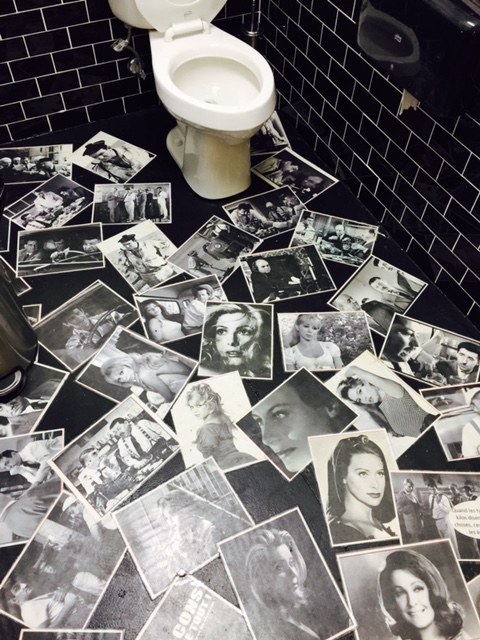
The whimsical floor of the men's room - covered in photos from French films.

The whimsical floor of the men’s room – covered in photos from French films.

Crepes come in two variations – the Gallettes are a buckwheat flour crepe that nationally gluten free and goes well with savory foods. The restaurant imports its buckwheat flour for a real authentic feel.

The crepes you may, or may not, know will be more familiar on the opposite side of the menu. Ranging from $5-$7, the traditional crepe makes an excellent snack or dessert. I enjoyed the $6 Le Crepe a la Creme de Cirton Faite Maison – or a crepe with lemon cream and red raspberry. It’s a treat you just can’t find at your local tenderloin joint.

The dinner menu features small and large plates of traditional French cuisine. The small plates range $6-11. The large plates, or dinner items, features many French staples like beef burgundy, duck breast, cured pork and pork belly, poached cod, and steak frites. Dinner entrees range $18-26.

The food was really delicious. Not being a huge crepe consumer, I can just say I liked them a lot. They have a traitional billig – or crepe making device. The crepes can be served open faced, which is traditional, or even as a wrap known as street style. And if you never have had a crepe, just think really light pancake.

There remain a few kinks but the staff was extremely cordial and responsive. I ordered the Gruyere/Onion soup. It was delivered with a warning it might have too much pepper.  It did and the staff quickly brought a beautiful salad of fresh greens. They later brought me a bowl of the chef’s take on French onion soup revisited and it was wonderful. That soup alone is reason for me to return.

The wine list impressed me for the variety and dedication to French wines. There were a few non-French choices, wines from most of the major wine producing areas were available at reasonable prices – most at $8-$10 per glass.

The by-the-glass program featured seven whites and nine reds. General Manager Scott Ramsey, who also manages the wine list, wants to serve primarily French wines but also wanted a big by-the-glass list to introduce French wines to his restaurant guests.

Indianapolis once had two or three really great French restaurants – all now gone. There is a spot or two doing crepes and the Bijou in Lebanon still going strong.

Cropichon et Bidibule brings something to Indy badly needed – authentic French cuisine. Oh, the name? Well folks are going to struggle with that but its the nicknames of the couple’s two children.

Au revoir!

Visiting Two Different Indiana Wineries

Tags

, , , ,

Carpenter Creek Cellars and Hopwood Cellars could not be more different. Carpenter Creek, in Jasper County, sits off I-65 in north central Indiana in the midst of some of the state’s best farmland. Hopwood is just off the charming brick Main Street of Zionsville.

Grape Sense LogoOne of my goals for Grape Sense is to get to more Indiana wineries than I have in past few years. Grape Sense will offer up a take on the spots throughout 2015. And we’ll revisit some old friends too.

Carpenter Creek Cellars is a three-man partnership housed in a historic barn built in 1919. Winemaker Joe McKinney, a Purdue ag grad, poured the lineup on a blustery, snowy day in late February. The winery sets just a few miles off I-65, the Remington exit. There are enough signs to get you there.

Hopwood Cellars tasting room in converted barn.

Hopwood Cellars tasting room in converted barn.

Most of the fruit for Carpenter wines come from vineyards around Indiana and Lower Michigan. I found the Chardonel to be among the best I’ve tasted in the state. At $15.99 it was light melon and tropical fruit with a soft finish.

The biggest selling wine called Gunny – a Chambourcin/Merlot blend – was sold out. The Riesling was a bit sweet for my palate but the $14.99 Traminette was spot on. The Traminette was rich and smooth, a hint of orange, but not over the top like so many Indiana efforts with the floral grape.

The basic sweet red of Concord grapes, just $11.99, will certainly deliver for sweet wine fans. It was a tad softer and mellow than many. They also make a line of locally-sourced and seasonal fruit wines.

The bottom line, sitting in the middle of a cornfield in an old barn, the winery surprises. I was skeptical but found the wines, even the ones that don’t suit my palate, very well made. The winery has a small plot of Traminette near the old barn but McKinney would love to expand the vineyard holdings. The area feels a bit desolate on the plain but it’s some of Indiana’s richest crop property.

Hopwood Cellars, Zionsville

Hopwood Cellars, Zionsville

Hopwood Cellars isn’t much older than Carpenter Creek but certainly sets in a different environment. Hopwood, 12 E. Cedar St., is located just off the beautiful Zionsville Main Street. It has a cozy tasting room and a really wide selection of wines. Most of Hopwood’s fruit comes from Indiana, Ohio, and Michigan.

The biggest hit for me was a 100 percent bottling of Michigan Chancellor. It’s a hybrid grape known to deliver its strong fruit flavor. The dominant thing in my pour was a wonderful smoke flavor with hints of dark, dried fruit. The Bekkar, Chambourcin/Chancellor, is one of the biggest sellers. It was very nice wine with low alcohol. It wasn’t very memorable but it was quite quaffable.

The best, and most interesting white, on the Zionsville winery list was its Aefen Brucan Vidal Blanc. By the way, Aefen Brucan translates into “Have a Good Evening.” The wine would make any night better. The Vidal Blanc is grown in Indiana and has a very rich and smooth mouth feel with a buttery finish. I did taste two other whites Seyval Blanc and Chardonnay that did not live up to the quality of others on the tasting list.

Visiting two new wineries continues to affirm the quality of Indiana wine remaining on a sharp upward curve.

Rose’, Pinot, & Idiot Legislature

Tags

, , , , , ,

There are numerous websites and publications detailing everything happening in the world of wine. Sometimes those issues are worth sharing.

Grape Sense LogoIndiana Senate Bill 113 – The Indiana Direct Shipping bill remains in House committee. The bill would remove the ridiculous 2006 restriction on Indiana wineries requiring a face-to-face purchase before wine can be shipped in state.

CrazyThe bill is a double-edged sword opening up an important stream of revenue for small wineries but increasing the licensing fee from $100 to $500. Contact your local legislator asking the fee be restored to $100 as Sen. Phil Boots intended.

There’s a pattern here if you pay attention. The big alcohol related legislation of the session is Sunday sales but the same thing has happened. The legislation actually failed this week because the liquor lobby (read wholesalers/some retailers) objected. The bill was weighed down with the unruly burden of requiring supermarkets and drug stores to build walls. No one could make this stuff up.

RoseloresRose, How We Love Thee. Dry Rose, and particularly dry French Rose, is one of the biggest success stories of the last decade. For too long pink meant sweet but now pink, or a light salmon color, means great dry French wine.

For the 11th straight year exports to the U.S. of Provence Rose’ wine increased by double digits. In 2014, Rose exports went up 29 percent on volume.

Oregon Stature Grows. The last two years have established the importance of Oregon Pinot Noir above and beyond some of its founders wildest expectations. When the ‘big boys’ start buying up properties it’s easy to label Oregon Pinot a worldwide success story.

Domaine Drouhin started the foreign investment in the 1980s but recently it has exploded. Drouhin bought nearly 300 more acres of vineyard about a year ago. Louis Jadot more recently acquired a 32-acre vineyard and hopes to buy more.

Jackson Family Wines, probably better known to the average consumer as Kendall-Jackson, has purchased nearly 500 acres of Oregon vineyard in two separate acquisitions. They are operating a winery near Yamhill under the name Gran Moraine.

Joseph Wagner, think Caymus, has purchased the Elouan Brand while Bill Foley picked off 35,000 case boutique brand Four Graces.

The interest shows Oregon is making great wine and has a great future. The purists must continue to hope some of these big boys don’t destroy the boutique feel of the Willamette Valley.

Alexana winemaker Bryan Weil sharing barrel tastes.

Alexana winemaker Bryan Weil sharing barrel tastes.

Join Me on Oregon Tour. I’ll be hosting my second trip to Oregon’s Willamette Valley in June. It’s a five-night, four day boutique visit. We taste with winemakers and winery owners, stay in a fabulous bed and breakfast and eat in a couple of Oregon’s best restaurants. The trip is all inclusive one you arrive until you leave.

You can find full details of the wine trip on the Grape Sense blog (www.howardhewitt.net). Click the link at the top “Drink & Eat Oregon” for full details or write me at the address below.

Join Drink & Eat Oregon 2015 Trip

Tags

, , , , , , , ,

I have all the details up on my 2015 Oregon Tour – this year called: Drink & Eat Oregon. Last year’s wine tour group was so taken by the fool they said I had to add food to the title. So be it.

The trip is all set for June 15-20. Read all of the details at the top of the blog under the header: Drink & Eat Oregon!

Legislature’s Smoke & Mirrors

Tags

, , , ,

There is a bill moving through the Indiana Legislature which, on the surface, appears to help Indiana wineries. The Senate approved a measure removing restrictions on in-state shipping by eliminating the face-to-face requirement established in 2006.

Grape Sense LogoBut like the old adage ‘no good deed shall go unpunished’ the legislature resorted to its usual ways of big bucks win and stuck it to the state’s smaller wineries. Fortunately, it’s not too late if wine enthusiasts will reach out to their legislators.

Senate Bill 113, sponsored by Phil Boots, Crawfordsville, removed the silly face-to-face requirement. Boots left the licensing fee at a reasonable $100. But in the Public Policy Committee members boosted the fee to $500.

“So for an Indiana winery, we already have to pay a $500 annual Farm Winery Permit, and now in order to ship wine we’ll have to pay for another $500 license,” said Jim Pfeiffer, owner/winemaker at Turtle Run Winery, Corydon.

PfeifferLow

Pfeiffer

“The idea behind the $500 license is to discourage direct shipping, especially from wineries outside the state.  A few other states have similar laws, such as Missouri and Michigan, two states in which we don’t ship wine due to the cost of procuring their licenses.”

Frankly, I disagree with my friend Jim. The wholesaler lobbying effort could give a hoot about where wine comes from as long as it passes through their hands for their cut. When I asked Boots if the fee was increased simply to appease the wholesaler’s lobby, he said, “Sure.”

And that lobby makes political contributions, albeit small ones in many cases, to virtually every legislator in the statehouse.

The antiquated three-tier liquor system does nothing but cost Indiana wineries profit. If small Indiana wineries go through a wholesaler, they must significantly reduce the cost of the product so the wholesaler, then retailer, get their cut. If the small winery can ship to your door, they make all the profit. And most wholesalers have little to no interest in carrying Indiana product any way.

If passed, with or without the higher fee, some legislators will brazenly thump their chest for helping out small Indiana business. That is a crock of you know what and Boots agrees.

Boots

Boots

“There have been a lot of people say (… the legislature has given then taken away,)” the Crawfordsville legislator said. “That’s the highest license fee in the nation. It will not help the real small guys. They can’t afford that.”

Boots is encouraging supporters to contact House members and get the fee restored to $100. I’ve visited nearly half of Indiana’s 70-something wineries and have learned a few things about the economics. There are probably a very small handful of Indiana wineries which can afford another $500 license.

The committee moved the bill with a 9-0 vote then the full Senate passed it with a 40-10 roll call. It’s now in the House Public Policy Committee.

You can help by writing members of the House Public Policy committee and your own representative. Thomas Dermody is chair. Timothy Wesco is vice chair. Committee members are: Edward Clere, Sean Eberhart, Todd Huston, Matthew Leman, Jim Lucas, Ben Smaltz, Matthew Ubelhor, Philip GiaQuinta, Terri Jo Austin, Charlie Brown, and Vanessa Summers. You can easily find their email and phone numbers on http://www.iga.in.gov website.

Write these Reps, write your Rep. ask they set the fee in Senate Bill 113 at the original $100 and help all 70-plus Indiana wineries.

Legislature Could Boost Wine Sales

Tags

, , , ,

UPDATE: The bill passed the Indiana Senate this week, 40-10, and now goes to the House. I’ll have an update this coming week on the bill’s status. I’ve also learned of some controversy of an increase in the licensing fee – $100 to $500 for Indiana wineries if bill passes.

Wine enthusiasts have read about the great wines of Huber, Butler, Oliver, and Turtle Run wineries in Southern Indiana. But what if you’re reading Grape Sense in Marion or Peru Indiana? You just can’t pick up the phone and order some wine to try these great bottles. It’s prohibited by state law. And let’s admit, it’s a long drive.

Grape Sense LogoThere is seldom good news in Indiana on direct shipping laws but there is hope in the ongoing session of the Indiana legislature. Current law, in place since 2006, requires consumers to visit on site and make a face-to-face purchase before they can order online. It hurt Indiana wineries significantly when enacted and winery owners are excited it could disappear.

Such statutes used to be fairly common across the country but are now disappearing. Indiana Senate Bill 113, introduced by Crawfordsville Senator Phil Boots, would require customers to provide name, address, phone number and proof of age but remove the onsite restriction.

The good news is the bill passed out of the Senate Public Policy Committee, 9-0. But Jim Butler, who often is involved on behalf of Indiana wineries on governance matters, knows there is still a long way to go.

Jim Butler

Jim Butler

“It’s a great start, but the session is never over until the last hour of the last day, and as you know adult beverage legislation is always a labyrinth,” said Butler, who owns a winery near Bloomington. “Back in 2006 we lost the shipping rights that we had had for over 30 years and as a result we lost about 90 percent of our shipping business and have never really regained it.  This bill will be a great help to our customers as well as us as a business.”

So any Hoosier who supports free commerce should support the bill. You need to encourage those ‘pro-business legislators’ to support Senate Bill 113.

Besides killing profit, the 2006 change created more bureaucracy for Indiana wineries, which already are burdened with regulations and mounds of paper work.

Huber, Ted

Ted Huber

Ted Huber, one of the state’s biggest producers and most-visited wineries, said the current system has been a mess. “Obviously, this type of tracking is cumbersome and complicated,” he said. “It is hard for Huber’s to track Indiana customers among the other visitors that we have traveling through from other states.

“This process becomes frustrating to our Indiana guests as they often leave our tasting room and forget to sign the affidavit.” Huber’s welcomes more than 500,000 annually.

The usual suspects have lined up against the change with tired arguments which have never been proven to have merit. The Indiana Beverage Alliance represents retailers and wholesalers and doesn’t want to lose any business. While that’s understandable, don’t we all support a free marketplace?

“There are lots of Pinot Noirs on the shelf at Indiana retailers,” said Marc Carmichael on behalf of the Alliance. Sure there are lots of choices on those shelves. But Indiana wines take up a tiny portion of the inventory of most retail outlets. If you want to drink Indiana wine, shouldn’t you be able to buy it conveniently?

You can bet the underage-drinking crowd will chime in with their hysterics. Such organizations do an important and great job educating young people about alcohol. That argument gets most of us who support direct shipping de-regulation the most riled up. There is no documented evidence this has ever happened – any where!

Today’s column is a call to action, winos! Contact your local legislator and ask them to support Senate Bill 113 and to change this terrible anti-business law.