Louie’s, Pioneer Great Indy Additions

Tags

, , , , ,

INDIANAPOLIS, In. – It is fun to try new bars, restaurants, and Indy’s entertainment options. My usual dining companion and I keep a written list of places we’d like to visit. I visited Dec. 30 Louie’s Wine Dive on Mass Ave. and then joined my friend for dinner at Pioneer in Fountain Square. I’m happy to report both scored big!
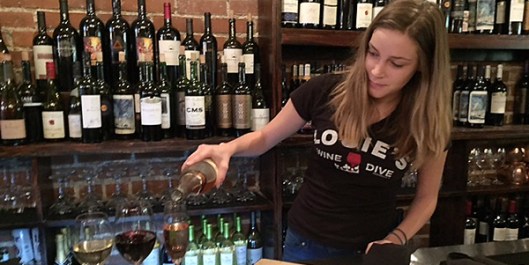
LouiesPour

Louie’s Wine Dive, 345 Mass Ave.

This contemporary wine/dining spot is on the south end of Mass Ave and has only been open a few months. It certainly offers some of the best wine by the glass choices in Indy and what looked like promising food options.

By my count, the wine list had 40 wines by the glass and even more labels available by the bottle. The prices were pretty reasonable at $7-$17 a glass. The pour was generous at six ounces! Service was impressive when informed the one Pinot Noir I wanted was out of stock. It turns out the bar is about to make some changes in the by-the-glass lineup so the wonderful bartender offered up 4-5 new bottles. One of those was a Santa Barbara Byron Pinot – a great wine. I asked if there was any way to buy it by the glass and not the $59 bottle, and she said ‘sure, that’s our policy.”

The delightful young lady explained that a guarantee of buying two glasses at ¼ the full price and they’ll open anything on the wine list. And isn’t that the policy any wine bar should offer customers?
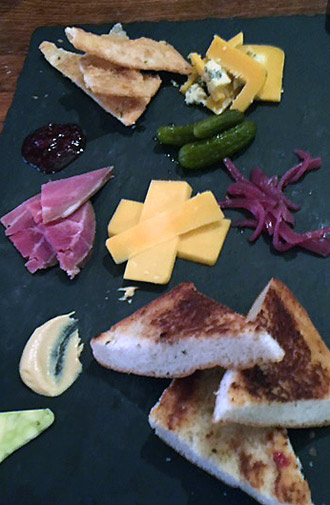
LouieCharcut

Great bread, cheese, sausage.

We shared a wonderful charcuterie plate and scanned the menu which had a limited but nice variety of options.

For anyone who enjoys wine, I can’t recommend this place enough. The wines run the range of varietals, style, countries, and price points. The most expensive bottle on the list is Joseph Phelps’ wonderful Insignia blend. The current 2012 release has an SRP of $240 so imagine my surprise Louie’s had it on their wine list for $275! That’s a lot of money for a bottle of wine for most people. But with Louie’s by-the-glass policy you could have a glass of great, great wine for $68.75.

Now while the Phelps’ example is a bit of an extreme, the chance to drink anything on the menu makes this a must-visit stop for wine lovers.

Pioneertartar

Pioneer’s ribeye tartar was beautifully seasoned and presented.

Pioneer, 1110 Shelby St.

If Louie’s was great, Pioneer was a few adjectives better than that.

Pioneer is, perhaps, one of the more unique restaurants in Indianapolis. In their own words: “features the food of northeastern Italy and its Alpine neighbors Austria, Germany, and Switzerland.”
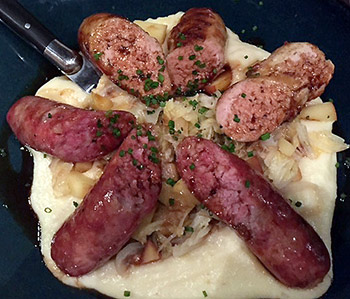
Pioneersausage

One of Pioneer’s signature dishes – sausage

My dining friend and I dubbed it fine dining comfort food. There’s no other way to put it. The menu is made for sharing. There are currently 12 choices on the “plates” portion of the menu running $8-$15.

We enjoyed the steak tartar ($15) and the wonderful German potato pancakes ($8). The tartar was seasoned perfectly with shallots, radish, Dijon, croutons, fried capers, and chives. The heat was a bit much for me but the steak was wonderful.

The potato pancakes were crispy on the outside and wonderfully smooth with rich and buttery potato flavor inside. The garlic aioli rocked!
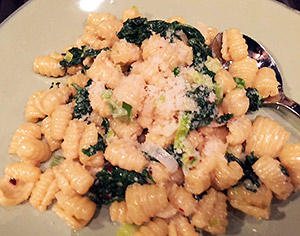
pioneerpasta

Delicious pasta with a little kick.

We order the Cavatelli pasta and the sausage plate for our entre. The Cavatelli ($13) with leeks, chili flakes, white wine, and butter sauce had wonderful flavor. I’m not of fan of heat with a white sauce pasta but the flavor was delicious. The only misstep of the night was the pasta arrived warm with a few bites cold. That was a big disappointment I shared privately with our wonderful waitress.

The sausage plate was killer if not a tad overpriced at $35. All sausages are made in house. Boudin Blanc (pork and chicken) and Bratwurst were serves as an ample protein entrée. Pureed potatoes, cabbage, beer-braised apples, and pork jus finished off the dish. The two sausages were a nice ying-yang for the main dish. The bratwurst was seasoned to a full flavored polka in your mouth. The Boudin Blanc was much softer in flavor but tasty.

We finished off with a good apple strudel ($9).

PioneerWineThe wine list is not extensive but features the expected Riesling and Gruner Veltliner. The surprise is the restaurant bar program seeks out small production wineries. I thought the Berger Gruner was an incredible value for $29. The wine has wonderful minerality with a light palate of citrus and stone fruit.

The restaurant is in the heart of Fountain Square occupying the old Deano’s Vino location. The ownership has essentially gutted the building exposing some great brick walls. They’ve made a significant investment to create an inviting dining space. A small stage welcomes weekend live music.

Pioneer is a must visit. It certainly is something a bit different. A night before New Year’s Eve the restaurant was very busy. Our waitress said it was actually fewer guests than the two previous nights.

Pioneer is a welcome addition to Indy’s dynamic dining scene.

Yes Virginia, Drinkable $10 Wines

Tags

, , , ,

Grape Sense started as a wine column to educate consumers they could be drinking better than supermarket wines. There are so many wonderful and well-made wines in the $12-$18 range. But an e-mail arrived after a recent column as a reminder some people have no desire to spend more than a ten spot or can’t afford it.

Grape Sense LogoThere are plenty of good wines in the category. The only drawback is if you avoid names you know and pick up a bottle for an interesting name or cute label, you might be picking up one of the worst things you’ll ever drink.
So, today’s column is intended to shine a light on some sure-fire winners.

There are a handful of supermarket, liquor store labels which consistently deliver great value and decent wines. I have two favorite value labels – Robert Mondavi Central Coast and Menage a Trois.

Menage a Trois is a mass produced wine which doesn’t offer a lot of complexity but will surprise with its balanced flavors, good finish, and ability to pair with food. The label, with some 15 different wines, is one of the fastest growing brands in the value category.

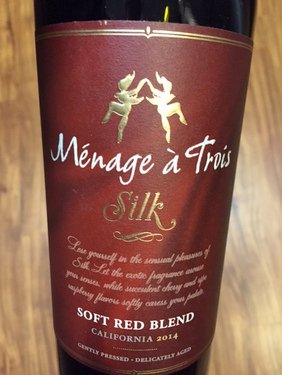
IMG_0940 (1)Menage a Trois is all about red blends. The red and white blends have been around for a number of years. The more-recent Midnight and Silk have really expanded the portfolio. The Midnight is bigger and bolder while the Silk lives up to its name of super smooth sipping goodness.

Midnight, a blend of Cab, Merlot, Petite Sirah, and Petite Verdot was the most successful new red blend of 2014.  Silk is a crazy-sounding blend of Pinot Noir and Malbec which works. This is the red wine for your non-red-wine-drinking friends. It has the nose of a Pinot and the rich flavors of a Malbec on the palate. It’s a bit of a stunner.

The Menage a Trois brand is owned by wine giant Trinchero Estates. Trinchero also owns the second-largest U.S. wine brand, Sutter Home.

The Menage a Trois wines are almost always under 14 percent alcohol, a rarity. But more impressive is that the tasty and drinkable wines have a suggested retail price of $11-$13. But wait, I don’t think I’ve ever seen Menage a Trois on a shelf over $10. A price check the week of Dec. 7 showed the Midnight, Red, and Silk all at $8.99 or less locally.

Menage a Trois is consistently in the Top 20 wines in the value wine category. Google the name and you’ll consistently find reviews with words like “great value label, wonderfully balanced, medium bodied wine, and great finish.”

Mondavi’s Central Coast scores with its line of wines selling at $9.99. Mondavi’s wines are individual varietals. They score big in my book for consistently delivering value wine which is varietally correct. In other words, the Cab tastes like Cab and Pinot tastes like Pinot. That can be a big problem with many wines under $10.

Other labels delivering for less than $10 include: Bogle, Blackstone, Mark West, Mirrasou, and Clos du Bois.

There’s nothing wrong with many $8-$9 wines. Just buy names you’ve heard before. Hopefully these suggestions will provide some guidance.


A Few Of My Favorite Things

Tags

, ,

Thanksgiving is over and no one punched Uncle Harry. You survived or avoided Black Friday. It’s time to take a deep breath and get ready for the gift-giving and holiday-party season.

Grape Sense LogoOne of many discoveries from eight years of writing a wine column is readers are always asking my favorite wine, or how I save open wine, and many other basic questions. So today I’m offering gift-giving ideas based on a few of my favorite things.
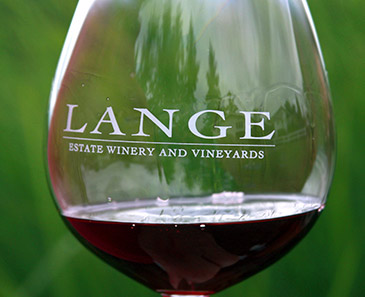
Riedel stemware – Many experienced wine drinkers will scoff at the difference between wine glasses until they do a side-by-side taste comparison. I know, I was one of those people.

Riedel glassware is the gold standard for wine glasses. The company has no competitors. The company is being managed by the 11th generation of the Riedel family with 300 years of Austrian glass-making experience.

Riedel introduced the concept that the shape of the glass can profoundly change the taste of the wine. It works. There are no words a writer can choose to convince a skeptic. Do the taste test with same wine, different glasses and one Riedel varietal-specific glass. The taster will then reach for their credit card.

Riedel manufactures wine glasses at very affordable to ridiculous price points. I recommend the Vinum series. Riedel also offers a Tasting series of three different glasses for three different wines. The glasses mentioned run $30-$40 a glass. But again, they make less expensive selections to much-more expensive glassware, hand-blown from the original Austrian factory. A good houseware store will have Riedel collections for $20-$50. But if your wine drinker is a geek, they need the varietal-specific glasses.

LangeSavino wine storage – How to keep that half bottle of left-over wine? What is left-over wine? Okay, we all face that challenge. You can buy the pump, re-cork, and a zillion other ideas. The best thing I’ve found is the Savino. It’s a glass container big enough to hold one bottle of wine. The secret is a cylinder which floats atop the saved wine 1/100th smaller than the inner circumference of the bottle. A lid seals the Savino shut. The Savino doesn’t work quite as long as the company suggests. But it keeps wine several days longer than any other system.

The original glass Savino can be found in stores and online for $59.99. This year the company smartly introduced a plastic version for $29.99. Nothing keeps your wine tasting like the original sip better than the Savino.

Pinot Noir – Okay, for years I’ve always said I like them all and I do. But if I’m honest, Pinot is my favorite varietal. Pinot makes a great gift for a wine-drinking friend, or to take to a party. Great Pinot starts at $20-$30 a bottle. But if you want something easier, buy a Mark West or Mirassou Pinot at the market for under $10.

A great bottle of introductory-level Oregon Pinot Noir can be nabbed for $25-$30. Personally, the best under-$30 bottle of wine, any varietal, I’ve ever found is Lange Willamette Valley Pinot Noir. It’s widely distributed in Indiana and the rest of the Midwest. A great buy!


Easy-Drinking Thanksgiving Wines

Tags

,

Thanksgiving is just days away and holiday entertaining is about to hit in a big way.

Grape Sense LogoIn the early years of Grape Sense, I’d frequently include specific wine choices I could highly recommend. It dawned on me recently I hadn’t done that in a couple of years.

Thanksgiving Wine: The first rule is really rather simple – just match the wine to the entire dinner and not just the turkey. Think about spice, bold flavors, and how your wine choice might pair up with the entire table of goodies.

Specific and safe pics would be Chardonnay and Pinot Noir. Both work well with fowl and the usual side choices. If you’re feeling more adventurous look for a white Chenin Blanc or a Spanish Tempranillo red wine. A good French Rose or Oregon Rose would be another excellent pairing.

Here are a few wines or types of wine I’ve been drinking lately. They were all purchased or are available in Indiana.

IMG_2627

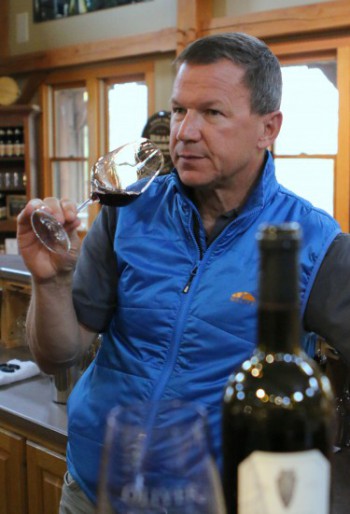
Oliver Winery: I spent some time with Bill Oliver a few weeks ago and tasted through his Creekbend vineyard wines. Several of those wines would make outstanding Thanksgiving wine and you can brag to your guests is grown and made in Indiana. The Creekbend Vignoles is a big winner in my book. It’s soft enough for the non-wine drinker and interesting enough for the more serious wine geek.


The Oliver Chambourcin is light like a Pinot Noir with good earthiness for any meal.

Red Blends: There is nothing hotter in the wine world right now than red wine blends. They tend to be softer and more drinkable than many red choices. Rook Washington Red is a wine that has strong dark raspberry flavor and a smooth delivery. It’s a steal at $14.99.

Go to your wine shop and look for Washington State red wine blends and you’ll seldom be disappointed with the many choices available for under $15. Of course, you get up to $20 and that’s where the quality difference becomes more pronounced.

Spanish Reds: There are few categories which over-deliver like Spanish red wine. Most Spanish wines will be predominantly the native Tempranillo grape. If you think of a light mouth feel, but full flavored-wine you’ve started a good description of most Spanish wines. Spain ages its wines before release so many are ready to drink right off the shelf.

Black Slate Porrera Piorat and Cogolludo Guadalajra Tempranillo-Syrah are great wines I purchased in state. If you want something really tasty go for the Tocs Priorat which is 100 percent Garnacha (or Grenache) for $20.

Tasty Whites: Alsatian Pinot Blanc from France, Rousanne from France or California’s Central Coast, Stoller Estate Chardonnay from Oregon, or a Grenache Blanc from southern France would be great pics for Thanksgiving or a holiday party.

These wines are meant to be crowd pleasers. The wines here should appeal to most any palate.

If you have specific wine questions, don’t hesitate to write.

Two Hoosier Wineries Visited, 40 To Go!

Tags

, , , , ,

Indiana wine producers now boast 80 wineries with more opening their doors annually. Most important, Indiana wine quality has significantly improved over the past 5-10 years.

Grape Sense LogoA real emphasis on quality has no doubt driven sales and brought more people to Hoosier tasting rooms. The state’s wineries fall into a few different categories. There are a few which make truly great wine, a few that really should re-consider corn and beans, a few who grow grapes and many who don’t grow anything.

But it seems there is a vast emerging middle of the pack producing very consumer friendly, if not arguably boring, wine. Now, there is not anything wrong with that approach. If you make a soft easy-to-drink wine, you’re probably going to sell a lot of it.

Two such wineries, located in central and south-central Indiana, are Mallow Run and Cedar Creek. Recent visits on a rainy Saturday found both tasting rooms bustling with activity and brisk sales.

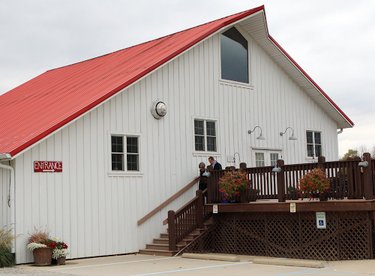
Mallow Run, just south of Indianapolis on Whiteland Road near Highway 37, has been around for about 10 years. Mallow Run has made a name for itself with event marketing. The winery grounds feature eight acres of vineyard and a huge outdoor entertainment venue.

Mallow Run Winery on Indy's southside.

Mallow Run Winery on Indy’s southside.

Mallow Run hosts all sorts of music, movie nights, and many other special events. It’s close to Indianapolis and packs in the visitors. The wines are definitely well made if not remarkable. I started with the semi-sweet Traminette which was just that. The Rose’ of Corot Noir was nice with just a hint of sweetness. The Chambourcin poured had clearly gone bad. The attendant quickly and politely popped open a fresh bottle. The wine was light on the palate and light on fruit but nicely balanced.

The best of the lot was the dry Traminette. It seems more Hoosier winemakers are moving to the drier versions. The prominent grapefruit-like flavor was very tasty with the dry approach.

There isn’t much variance in Mallow Run’s prices. All wines are in the $11-$19 range. Nothing on the tasting list sampled disappointed. But none stood out beyond the dry white.

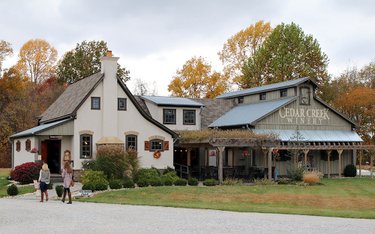
Cedar Creek Winery just off 37 near Martinsville.

Cedar Creek Winery just off 37 near Martinsville.

Cedar Creek Winery & Brewery is also just off Highway 37 near Martinsville. Despite attempts, there are no grapes grown near the scenic creek turned into wine. All of the fruit comes from California for this Hoosier winery – but frankly, that’s not unusual.

The wines fall into a similar category with Mallow Run, but not as well made. I tasted a Pinot Gris that had nice honey suckle hints on the palate but a musty, unpleasantness on the nose. The Pinot Noir was also a bottle which had gone bad. The busy person in the tasting room said she would check it out later but didn’t offer to open a bottle for another pour.

The Merlot might have been the best wine of the visit. It was very light in the mouth and I couldn’t detect much oak, if any at all. It would be a great wine for beginners trying to move beyond the sweets. I was intrigued that the winery offered a Valpolicella. The Italian grape can be magical. The California version was disappointing and not varietally correct.

The best pour at Cedar Creek was the Harvest Moon desert wine made with Cabernet Franc showing flavors of honey, currants and strawberries. Though a bit sweeter than I would have liked, the spicy characteristics came through strong for a pleasant sip.

Prices at Cedar Creek run $12-$14 with its dessert wines priced $25-$28.

Two stops on one Saturday afternoon show overall quality continues to improve but consistency is still an issue for the Indiana wine industry.

Oliver Sources High-End Grapes

Tags

, , , , , , ,

BLOOMINGTON, In, – Any discussion of Indiana wine has to always include Oliver Winery. The iconic Hoosier winery, synonymous with sweet wines, is Indiana’s biggest player on a big stage. Oliver is one of the nation’s biggest producers not located on the West Coast.

Bill Oliver, who took over from his pioneering father in the 1980s, has grown the winery and expanded the operation’s wine footprint beyond Soft Red and White wines. I spent a couple of hours Friday morning with Bill Oliver at the winery. He was cordial, excited about the future, and enthused about a new higher-end venture that might surprise a few wine purists.

Oliver chatting, tasting Chambourcin in the tasting room.

Oliver chatting, tasting Chambourcin in the tasting room.

Anyone dismissing Oliver Winery as ‘that sweet stuff’ is missing the mark. Yes, Oliver is a leader in sweet Concord red and Niagara white wines on a regional level and perhaps a national level in the next decade. But Oliver Winery is also producing very well-made wines from its nearby Creekbend Vineyard. Traminette, Vignoles, Chambourcin and more are featured at wineries across the state. But few, if any, are making those wines any better than Oliver.

The initial purpose of my visit was to talk to Oliver about his “Flight” series of wines featuring carefully sourced fruit from California vineyards. The current release getting lots of deserved attention is a 2013 Pinot Noir from the legendary Bien Nacido vineyard on California’s central coast. That name may not mean much to many wine drinkers but to real wine geeks Bien Nacido is one of the most sought-after vineyard designate wines in the Santa Barbara area.

Bill and I tasted wines with winemaker Dennis Dunham. We tasted the 2015 which had not even made it to the barrels yet. We sipped the 2014 which has seen its time in oak and now rests in stainless steel before bottling. And we tasted the mid-summer release of the 2013. I had previously tasted the 2013 and thought it was outstanding. The 2014 is going to be even better with a more extracted fruit flavor. It’s too early to tell on the 2015 juice.

The Oliver Bien Nacido Pinot sells almost exclusively in the Oliver tasting room for $45. That’s a big price jump for a winery known for the under-$10 sweet wines. But the solid Creekbend entries sell in the high-teen to mid-20s range. Oliver said one of the reasons to make the Pinot was to show people what his team could do with really great fruit.

An aside for the wine geeks, buying California fruit for Hoosier-made wine is nothing new for Oliver or many others. Oliver has access to some great California Central coast fruit and scored with his catch of Bien Nacido Pinot. It’s an expensive experiment but one the winemaker and owner clearly are enjoying.

At the other end of the spectrum is Oliver’s new Bubblecraft red and white wines. The $9 “fizz” is in the traditional Concord and Niagara grapes and in grocery stores already. Oliver produced and expects to sell about 10,000 cases this year with an expectation of nearly 25,000 cases in sales next year.

I have several story ideas from my time at Oliver today. Most of those will be posted or promoted here. There is even some bigger news coming from Bill Oliver not mentioned here.

Stay tuned.

Think French to Upgrade Your Vino

Tags

, ,

There are those who believe if you continue to drink wine over a number of years you will eventually drink more French vino than others. Those folks just might be right.

There are many affordable choices in French wine, well-balanced wines which deliver great QPR – or quality to price ratio. The Old World style of wine making often offers more balance, less alcohol, and a smoother taste than found from many of the world’s other regions.

Grape Sense LogoThe French set the worldwide standard for great wine long before other countries planted a vine. The great French Rhone wines are some of the finest values and best drinking wines in the world. It’s not difficult to find an awesome Cotes du Rhone in a decent wine shop for $15.

The Languedoc, or Southern France, offers even more choices with wonderful red blends of Syrah, Grenache, and Carignan. The wines offer an earthier characteristic or perhaps more rustic appeal than the silky Rhones. Languedoc wines also come with a mid-teen price point. Even though it’s a large producer, try the wines of Gerard Bertrand as an outstanding introduction to the Languedoc.

The French’s best known wine regions are Bordeaux and Burgundy. Getting into those wines at a reasonable price point has always been a major challenge. An experienced wine drinker can pour a student of wine a $15 wine and then a $50 wine and few may be able to tell the difference. The taste difference between those price points in Bordeaux and Burgundy is much wider than most other regions.

If wine drinkers want to drink, arguably, the world’s greatest wine it means drinking Bordeaux. There are two problems with drinking great Bordeaux wine. The first is the confusing labels and the French’s hard-headed policy of making those labels difficult for the rest of the world to understand. Just try to find the words Cabernet or Merlot on a bottle of Bordeaux. That isn’t going to happen.

CruBourgeoisThe second problem is price. The top Chateau of France’s Left Bank Medoc wine region, can earn anywhere from $500-$1,500 per bottle. A more concrete example would be a winery of one of the five first growths classified in the 1800s – Chateau Margaux. Margaux’s varied offerings start at just over $500 a bottle up to $2400 a bottle for its best Grand Cru Bordeaux blend.

It has taken decades for French winemakers to address its consumer problem and still be profitable. The top Chateau will always be selling that expensive wine. But that leaves many properties fighting for a growingly smaller piece of the wine consumer dollar or Euro as the worldwide wine market expands.

The Cru Bourgeois was first drawn up in the 1930s and it has come and gone a few times since. The current version of Cru Bourgeois has grown and expanded by finding a niche with a value wine market for more serious wine drinkers.

The Cru Bourgeois du Medoc wines are produced in one of the eight prestigious regions on the Garonne River’s left bank – Médoc, Haut-Médoc, Listrac-Médoc, Moulis en Médoc, Margaux, Saint Julien, Pauillac, or Saint Estèphe. The difference with Cru Bourgeois du Medoc is that the average price point is $25.

The wines are made from the same grapes as the great examples from the Medoc region – Cabernet Sauvignon, Merlot, Cabernet Franc, and Petit Verdot. Most Cru Bourgeois are Cabernet-Merlot Blends.

The French got serious about the category in the last decade while market share continued to dip with the emergence of great wines from other growing regions outside France’s borders. At last count, nearly 200 different labels were distributed in the U.S. as Cru Bourgeois. So they’re out there folks, you just have to go looking.

Give Peace (Water Winery) A Chance

Tags

, , ,

All 80 Indiana wineries offer something a bit different. Sometimes that’s good different and sometimes not. Many have a unique niche’ in the Indiana wine industry.

Grape Sense LogoPeace Water Winery, Carmel, is one of the state’s newest and probably most unique wine operations.

Owner Scott Burton owns a winery in Northern California. He employs a California winemaker. His wines aren’t sold there. The Peace Water Winery tasting room is in downtown Carmel, Indiana.

“Indiana has many wineries,” Burton said. “But several (of those wineries) source fruit and juice from outside of Indiana to supplement grapes grown in state. We grow all our grapes from the vines and do everything in Napa. The entire process from vine to bottle occurs in California but we sell all of our wine here in Carmel; therefore, making us the only locally-owned California winery in Indiana.”

Scott Burton

Scott Burton

The concept is certainly unique but it doesn’t stop there.

Burton, a very successful corporate lawyer and entrepreneur, opened the winery in the fall of 2014 as a family business and as a philanthropic endeavor. He designates 50 percent of his winery’s profit to seven different local charities. His seven children picked the charities which would benefit from wine sales.

The unique twist is when a consumer buys a bottle of Peace Water wine at the tasting room they are given a ticket. They drop the ticket in a basket representing one of the seven charities of their choice. Burton uses the customer picks to determine the percentage of profit each charity receives.

“It’s an interactive experience,” Burton explained. “A lot of businesses have a charitable aspect. Here, you have to physically go make your donation instead of participating in a mindless transaction where you have no concept of who you’re helping. It resonates a lot better when you make that decision yourself. Hopefully, it creates a more lasting impression.”

Buy a bottle then select a charity.

Buy a bottle then select a charity.

The business has been a success in its first year. Burton said wine insiders said he’d be successful if he could sign up 100 wine club members in his first year. In late August, his wine club membership was more than 200. “Local restaurants have been talking to us about our wines so we’ll be on menus soon. That’s the next phase of our growth.”

His urban-feel tasting room was filled on a late August Thursday evening. The newly opened patio was also busy. His wines have done well already in the wine competition business. The high-end Cabernet and Sauvignon Blanc both scored well at the World Wine Tasting Championships in Chicago.

The Cabernet Sauvignon “Passion” has been his biggest seller. The $32 bottle is a good representation of California wine. The wines are definitely made in a consumer-friendly, fruit-forward style. The winery tasting notes suggested a lusty red with notes of blackberry and plum – right on target.

Most of the Peace Water wines range from $25-$48. The white, Rose’ and two reds tasted during my visit were all well-made wines. I particularly enjoyed the reds.

There is one indulgence and that’s “Nirvana” – a Howell Mountain, Napa Valley Cabernet which sells for $120. Howell Mountain fruit is one of the most sought-after regions in all of Napa.

Peace Water Winery, 37 W. Main St., Carmel. www.peacewaterwinery.com

Wine World’s Most Important Book

Tags

, , ,

The book market is flooded with more wine books than any average wine consumer could ever imagine. And, there are actually two worth picking up online or at a good bookstore.

Grape Sense LogoKaren MacNeil’s Wine Bible is an encyclopedia of wine. The noted wine writer released a second version of the book this year and the paperback version is well worth the $20. Author MacNeil covers everything you ever wanted to know about wine. From the great wine regions, their quirks, and to every wine grape imaginable it’s a resource book any wino will get a big kick out of owning.

The other book, and a breezy read, is Judgment of Paris. George Tabor’s epic tale of the 1976 tasting of French and California wines is educational, fun, and even inspiring.

The gist of the story starts with a British man who owned a small French wine shop. Steven Spurrier was the wine merchant, now wine writer and critic, at the heart of one of the world’s most important wine stories. To spur interest in his small Paris shop he decided to host a tasting of great French wines and wines from upstart Napa Valley, California.

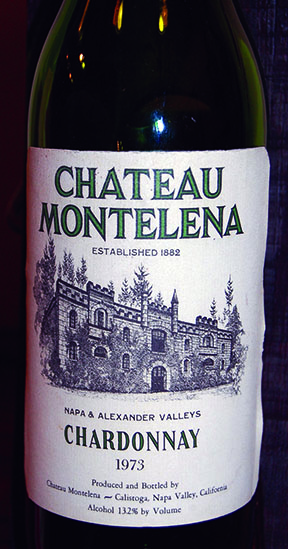
MontelenaSpurrier sought to get the snooty French press and others to the low-key tasting event but couldn’t attract any French reporter. He insisted at the time it was not a competition but chance to compare the colonies efforts against the grand stature of French wine.

The only reporter present was Tabor. At the time of the tasting, Tabor was a Time Magazine reporter with no real background in wine. His historic reporting changed the wine world. In reality, his short magazine piece was just four paragraphs but its impact gave California gravitas against Old World Wines.

Tabor did not write his landmark book about the tasting until 2005. The heart of his book is how he details the career of Spurrier up until the time of the tasting and, more importantly, shares the history of the wineries involved in the Paris showdown. The fascinating chapters are the stories of the California winemakers who made the wine which put U.S. vintners on the world stage.

It’s tough to spoil the ending of a story nearly 40 years old. But to the shock of the celebrated French palates that day, we won. The panel of judges, in a blind tasting, picked Stags Leap Cabernet the best red and Chateau Montelena as the best Chardonnay.

George Tabor

George Tabor

Many of those pioneers are gone now but many of the wineries still exist. The men who made California great live on in this book. A few, in their 90s now, are revered in California wine country.

There is an entertaining movie called “Bottle Shock” about the tasting. It’s beautifully filmed in Napa Valley and is fun for any wine lover. Be warned the movie fictionalizes large parts of the story to create an entertaining piece of cinema. The basic story is true but livened up a bit for the big screen.

I’d strongly recommend the book. The movie is fun with a nice glass of California Cabernet – maybe even one from Stag’s Leap!

Carmel Wants Share of Spotlight

Tags

, , , , , , , , ,

This slideshow requires JavaScript.

CARMEL, IN. – This affluent Indianapolis suburb certainly raises the connotation, and rightfully so, of an affluent and growing community. Its progressive Republican mayor is constantly grabbing the headlines with big ideas.

Carmel conjures up a lot of images – but as a foodie destination? Indianapolis’ dining scene has claimed all the headlines in recent years but Carmel wants to step out of the big city’s shadow with its own eclectic dining options.

Hamilton County’s Tourism office sponsored a foodie tour for Midwest food writers, and one wine writer Thursday evening. The tour was hosted by Small Potatoes Catering. The company not only caters but leads private foodie tours of Carmel, Indy, Mass Ave, and soon Fountain Square.

I was joined by two area Chicago food writers, the Indy Star food writer, and Cincinnati’s Food Hussy. Heather, aka the Food Hussy, is one of Cincy’s top food writers and was lots of fun. It helps when your press contingent has an adventurous and congenial attitude.

We made four stops Thursday night – Peace Water Winery, Divvy Restaurant, Uplands Brewery, and Chocolate for the Spirit. Most of us stayed over for breakfast at Eggshell the next morning. Each of the fives stops helped the tourism pros illustrate how unique and local can make any suburb or small town a food/beverage destination.

Peace Water Owner Scott Burton

Winery Owner Scott Burton

Peace Water is certainly the most unique of Indiana’s 80 wineries. Owner Scott Burton owns a winery in California, buys his grapes from California vineyards, and employs a winemaker in California. His tasting room is in Carmel. His wines are not even sold in California.

For Burton, it’s all about giving back to community after an obviously successful career as a corporate lawyer. He has a unique approach to giving back – when you buy a bottle of wine in the downtown Carmel tasting room you are given a token. Then you decide which of seven charities shares in Burton’s philanthropy. The winery earmarks 50 percent of all profits to the seven charities.

The wines were pretty solid too! He poured four of his several wines during our brief visit. His Sauvignon Blanc was pleasant enough, crisp, but definitely on the acidic side. A Sonoma County Rose had pronounced strawberry flavors and was an easy sipper. His red blend and Cabernet were the really quality winners for my palate. While both saw substantial time in oak, the tannins on the reds were smooth. The wine is definitely in the ‘fruit-forward’ style popular with so many consumers.

His price points range $20-$40. Through his winemaker’s family winery on Howell Mountain, Burton acquires a limited amount of fruit from one of the regions considered holy grail in wine circles. His Howell Mountain cab, which we did not taste, sells for $120 for the real wine aficionado.

Owner Woody Rider

Woody Rider

Divvy restaurant was our second stop inside Carmel’s City Center Complex on Rangeline Road. The best way to explain the concept is the old adage “divvy it up.” The staff explained that we not think of their restaurant as “appetizer, entrée, and dessert” but that everything on the menu was an appetizer, entrée and dessert.

It’s a fascinating concept that is essentially small bites as a meal. I loved the beer cheese with an assortment of breads and the bacon bites which was pork belly, maple bourbon gastrique with Applewood smoked sea salt. The porterhouse steak bites were tender and juicy.

According to staff, their most popular dish is a corn crème brulee with romano, jalapenos and red sea salt. I am adverse to heat/spice and took just a small bite of the corn which was yummy. The bites range from $6 to $16. Our Small Potatoes’ staff hosts said an order for two people is usually 4-5 of the bites.

Owner Woody Rider joined us briefly to talk about the restaurant. He also owns the popular Woody’s Library in downtown Carmel on Main Street.

champagne veleveUplands Tap House Brewery, which has several Indiana locations, was our third stop for a taste of some Hoosier brewed beer.

Our hosts served up their historic Champagne Velvet and popular Dragon Fly IPA. I’m a wine guy and seldom a beer drinker but really enjoyed the Champagne Velvet.

The Uplands staff soffered some creamy Mac-n-Cheese made with wheat beer. That was accompanied by one of the best, rich-tasting pulled pork sandwiches I’ve ever had.

Julie Bolejack

Julie Bolejack

Our final stop of Thursday night was with old friend Julie Bolejack and her Carmel Chocolate for the Spirit location on Carmel Dr., just off Rangeline.

Julie educated and entertained as always. She talked about the different chocolates she uses in her creations and gave us a taste of three different chocolates. Julie has access to the world’s rarest chocolate – Pure Nacional.

We toured the kitchen where Julie makes her beautiful creations and bought some take-home chocolate as well. Julie sent each of us on our way with a box of three truffles.

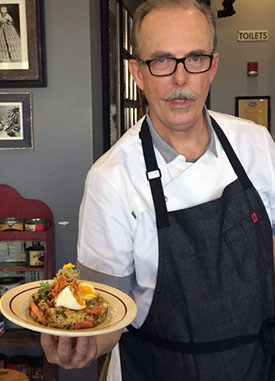
Eggshell Bistro, also in City Center, was our Friday morning and final stop of the foodie tour. Chef Larry Hanes wowed us with his breakfast creations. Now I’ve read the word “wowed” in far too many food/restaurant reviews for years. I can honestly say this might be the first time I felt confident using the jargon.

Hanes is not just a chef at all. He designed the small bistro space, picked out the art, collected numerous kitchen antiques and pieces with interesting history to stock his café. Click on the restaurant link above and go to the “About” section to read more about this remarkable man.

Our brunch started with Blue Bottle coffee that was one of the best cups I’ve had in years. I have to admit that I had never heard of Blue Bottle but a couple of the food writers were quite impressed.

Larry Hanes

Larry Hanes

Chef Hanes wowed us with dish after dish he served up family style so we could get a taste of many different breakfast entree’s. We had frittata’s, quiche, a Morocan inspired dish, and more.

My two favorites were a rosemary/ham frittata and fish and grits with a soft boiled egg on top.

This restaurant has received accolades but remains a bit of a hidden gem in my estimation. The small dining room was only half full on a Friday morning at about 10 a.m. It’s one of the most remarkable dining experiences you’ll find in the city.

It should also be noted that Chef Hanes cooks everything. He is the only person in the kitchen and does it all himself. The antique equipment, art, and atmosphere are worth the drive if you’re elsewhere in the city.

Don’t be in a rush at Eggshell, the service can be a bit slow based on our experience and a few Yelp reviews I read after visiting. Go anyway, Eggshell is a treasure.

NOTE: I plan on writing more on a couple of these businesses. Those posts will go up in the coming week or two. We didn’t have the time on a tour to stop and interview the owners. Our hosts did provide some notes that I will use to tell you more about a couple of these businesses. And I’ll note appropriately that the material was provided.